


Adopt a Ruthless Mindset
The first and most important hack has nothing to do with folding or rolling. It’s a mental shift. Most airlines that enforce a 7kg limit are strict, so you must be ruthless. Ditch the 'just in case' mentality that leads to overpacking. Every single item
must earn its place. Ask yourself: Will I definitely use this? Can something else serve the same purpose? This mindset is the foundation of light travel. Plan your outfits in advance, focusing on versatility. A good rule is to pack items that can be mixed and matched to create multiple looks from a few core pieces. This isn't about deprivation; it's about strategic selection.
Choose Your Bag and Organizers Wisely
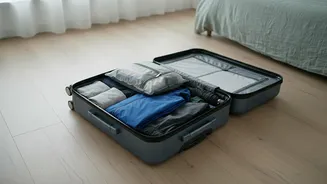
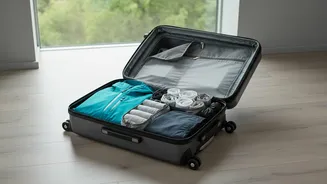
Your packing journey begins with the bag itself. A heavy bag can consume 1-2kg of your allowance before you've even packed a single sock. Opt for a lightweight, minimalist travel backpack around the 30-40 litre mark. Next, invest in packing cubes. These fabric organizers are non-negotiable for maximizing space. Compression cubes are even better, featuring an extra zipper that squeezes air out, reducing the volume of your clothes. Use different cubes for tops, bottoms, and underwear to stay organized. Also include a dedicated wet/dry pouch or even a simple plastic bag to isolate damp clothes or a wet umbrella from your dry items.
Fabric Is Your Secret Weapon
When packing for rain, fabric choice is everything. Cotton is your enemy; it's heavy, absorbs moisture, and takes forever to dry. Instead, build your wardrobe around quick-drying, lightweight, and moisture-wicking materials. Merino wool is a superstar—it’s light, keeps you warm even when damp, and is naturally antimicrobial, meaning you can wear it more and wash it less. High-quality synthetics are also excellent choices for both base layers and pants. A week's worth of clothing could look like this: three merino or synthetic t-shirts, one pair of quick-dry travel trousers, one other bottom (like leggings or a second pair of lightweight pants), and enough quick-dry underwear and socks for the week.
Master the Art of Layering
Instead of a single bulky sweater or heavy jacket, think in layers. A layering system gives you the flexibility to adapt to changing temperatures throughout the day. A typical three-layer system for rainy weather includes a base layer (your merino or synthetic tee), a mid-layer for warmth (like a thin fleece or a lightweight wool sweater), and an outer layer for weather protection. This approach is far more space-efficient than packing one thick, single-purpose garment. You can wear all three layers if it's cold and rainy, or just the base layer if the sun comes out. Remember to wear your bulkiest items, including your jacket and heaviest shoes, on the plane to save weight and space in your bag.
The All-Important Outer Shell
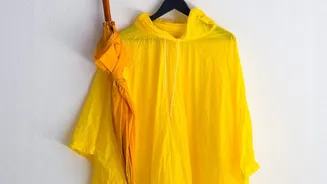
Your rain jacket is the most critical piece of gear. Look for a jacket that is designated as 'waterproof', not just 'water-resistant'. It must be lightweight and packable, ideally folding down into its own pocket. A hood is essential. Some travellers advocate for a poncho for maximum coverage, but a high-quality jacket offers more mobility and can double as a windbreaker. Ditching a bulky, unreliable umbrella in favour of a truly waterproof jacket that you can wear on the flight is a major space and weight-saving move.
Solve the Footwear Dilemma
Shoes are often the heaviest and bulkiest items in any bag. For a rainy week, you need a two-pair strategy. Your primary pair, which you should wear on the plane, must be comfortable and waterproof or at least highly water-resistant. These could be waterproof boots or treated leather sneakers that can handle city walking in the rain. Your second pair should be extremely lightweight and packed in the bag. This could be a pair of packable flats, sandals for your accommodation, or minimalist sneakers for dry moments. Always pack an extra pair or two of quick-dry wool socks; dry feet can make all the difference in comfort.
Downsize Toiletries and Tech
Liquids are heavy. Decant all your essential toiletries into travel-sized (under 100ml) reusable bottles. Better yet, switch to solids. Solid shampoo, conditioner, and soap bars weigh less and aren't subject to liquid restrictions. For technology, be minimalist. A power bank is essential, especially as rain might mean more time indoors on your devices. Instead of multiple charging bricks, get a single multiport GaN charger that can power your phone, power bank, and any other device from one plug. Keep your documents and electronics protected in a waterproof pouch.