

NASA's Pivot to Commercial Partnerships
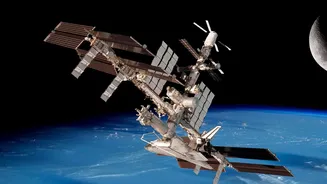
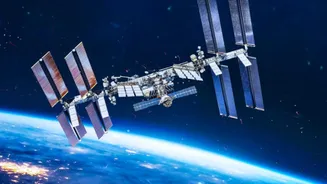
For decades, government agencies were the sole proprietors of addresses in low-Earth orbit (LEO). Now, in a strategic shift, NASA is moving from owner to customer. Through its Commercial LEO Destinations (CLD) program, NASA is funding several private
American companies to design, build, and operate their own space stations. The goal is to create a robust commercial economy in orbit, where NASA is just one of many clients purchasing services like research time and astronaut accommodations. This approach frees up NASA's resources to focus on deep space missions, such as the Artemis program to the Moon and Mars, while ensuring the U.S. maintains a continuous human presence in LEO without a gap after the ISS is gone.
The Logic of Modular and Inflatable Design
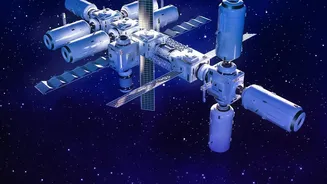
Unlike the International Space Station, which was a massive, multi-launch construction project, the next generation of habitats heavily favors modularity. This 'building block' approach offers greater flexibility, allowing stations to be launched in stages and expanded over time as market demand grows. Components can be manufactured and tested on Earth, minimizing complex assembly in space. A leading-edge version of this is the inflatable habitat. Companies like Sierra Space are developing flexible, fabric-based modules that launch in a compressed state and inflate in orbit to the size of a multi-story building. These soft-sided structures are surprisingly durable, with multiple layers of high-strength materials like Vectran offering better protection against micrometeoroids than traditional aluminum hulls. The primary benefit is a massive increase in habitable volume for a fraction of the launch mass and cost.
Axiom Space: The First Mover
Axiom Space has a unique head start. The company is already sending private astronaut missions to the ISS and has a contract with NASA to attach its own modules directly to the station. The plan, updated in late 2024, involves launching a Payload Power Thermal Module to the ISS as early as 2027. A habitat module will launch separately around 2028, at which point the power module will detach from the ISS and connect with it, forming the seed of a free-flying commercial station. This strategy allows Axiom to test its hardware in the real environment of space while leveraging the ISS's life support systems, before going independent. Once fully assembled, Axiom Station will serve as a hub for research, manufacturing, and private spaceflight.
The Competitors: Orbital Reef and Starlab
Several other major players are vying for a piece of the orbital real estate market. One is a powerhouse partnership between Blue Origin and Sierra Space, called Orbital Reef. Envisioned as a "mixed-use business park in space," it will offer services for research, manufacturing, and tourism. Sierra Space is contributing its inflatable LIFE habitat, a large, flexible module, while Blue Origin provides its New Glenn heavy-lift rocket for launch. Another key contender is Starlab, a joint venture from Voyager Space and Airbus. Starlab is being designed for a single launch to become a continuously crewed station focused on science and research. A central feature is the George Washington Carver Science Park, a dedicated research facility with a terrestrial analog lab at The Ohio State University to support experiments on the ground and in orbit.