



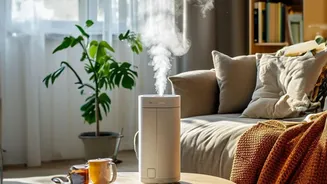


When a thick blanket of smog covers the city, we retreat indoors for safety. But is the air inside our homes truly clean? Pollutants can easily seep in, making it crucial to understand how to protect your family.
Understanding the Two Key Strategies
Protecting your indoor air comes down to
two distinct actions: filtering and ventilating. Though they sound similar, they do opposite things and are not interchangeable, especially during a smog event. Filtering involves cleaning the air that is already inside your space. Ventilation is the process of exchanging stale indoor air with fresh outdoor air. Getting the strategy wrong—like opening a window to 'ventilate' on a high-pollution day—can make your indoor air quality worse, not better.
Filtering: Cleaning the Air You Have
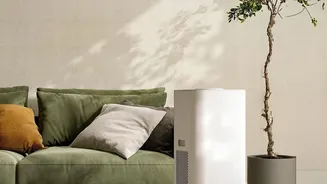
Air filtration is the process of removing harmful particles from the air within a room. This is typically done using an air purifier, a device that pulls in ambient air, passes it through a series of filters, and circulates the cleaned air back out. The most critical component for combating smog is the HEPA (High-Efficiency Particulate Air) filter. These filters are engineered to capture at least 99.97% of particles as small as 0.3 microns. This is vital because the most dangerous component of smog is PM2.5—particulate matter smaller than 2.5 microns—which can penetrate deep into the lungs and enter the bloodstream. A good HEPA purifier effectively traps these invisible particles, significantly lowering their concentration indoors.
The Role of Activated Carbon
While HEPA filters are masters of capturing particles, they do not remove gases, odours, or volatile organic compounds (VOCs). That’s where activated carbon filters come in. These filters use a process called adsorption to trap gas molecules on their porous surface. Smog is not just particles; it's a mix that includes harmful gases like nitrogen oxides and ozone. For comprehensive protection, the most effective air purifiers combine a HEPA filter for particles with a substantial activated carbon filter for gases and smells. This dual system addresses both the visible haze and the invisible chemical threats of smog.
Ventilating: Exchanging Air with the Outside
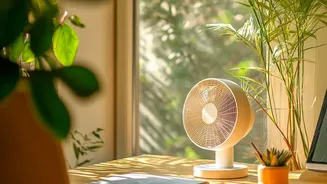
Ventilation simply means bringing outdoor air inside to replace the stale air that has accumulated. In normal conditions, this is a healthy practice. It helps reduce the buildup of indoor pollutants like carbon dioxide from our breath, moisture from cooking and showers, and chemicals released from furniture and cleaning products. You can ventilate naturally by opening windows and doors or mechanically using exhaust fans. The goal is to dilute indoor contaminants with fresh air from the outside.
The Smog Dilemma : When Not to Ventilate
The core rule during a severe smog episode is to avoid ventilation. Opening windows or using fresh air intakes on your AC will actively pull heavily polluted outdoor air into your home, defeating the purpose of seeking shelter indoors. Studies show that while indoor air is not perfectly clean during smog events, it is generally safer than the air outside, provided the home is sealed. Modern, airtight homes are better at keeping pollutants out, but even in older homes, keeping windows and doors shut is the first and most important step. Ventilating should be reserved for periods when the outdoor air quality significantly improves.
The Right Strategy : Filter First , Ventilate Selectively
During periods of heavy smog , your primary strategy should be to seal your home and filter the air inside . Close all windows , doors , and any other openings to the outside . Run a high - quality air purifier with both HEPA and activated carbon filters continuously in the rooms you use most , such as bedrooms and living areas . Only consider ventilating your home when outdoor air quality reports show a significant drop in pollution levels , for instance , after a strong wind or rain has cleared the air . Even then , it ' s best to do a ' purge ventilation ' — opening windows wide for just 5 - 15 minutes to quickly exchange the air — before sealing the house up again and resuming filtration .
Additional Tips for a Cleaner Indoor Space
Beyond filtering , you can take other steps to protect your air . Avoid activities that create more indoor pollution , such as burning incense or candles , smoking , and heavy frying or broiling . Use exhaust fans in kitchens and bathrooms to remove moisture and specific pollutants at their source , but remember this also pulls air from outside , so use them sparingly during peak smog . Regularly clean surfaces with a damp cloth to remove settled dust particles that can become airborne again . Sealing cracks around windows and doors can also help prevent polluted air from infiltrating your home .