


A Ghost of a Star
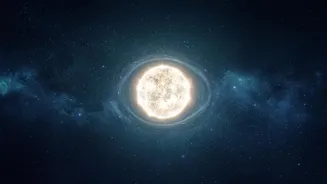
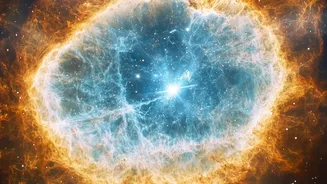
At the heart of this discovery is a celestial object known as a white dwarf. Think of it as the cosmic ember left after a star like our Sun runs out of fuel. After swelling into a red giant and shedding its outer layers, all that remains is a super-dense,
Earth-sized core that slowly cools over billions of years. This violent transition from a normal star to a white dwarf is typically catastrophic for any nearby planets. Worlds in close orbits are often engulfed and destroyed. For a long time, these stellar remnants were seen as the final, quiet chapter in a star's life. But new evidence suggests that for some systems, it might just be the beginning of a new story.
Cosmic Detectives and a Cold Case
The clue to this cosmic rebirth came from a place familiar to astronomers: the vast data archive of the Hubble Space Telescope. A team of researchers, led by University of Warwick astronomer Jamie Williams, revisited observations of a white dwarf named HS 0209+0832, originally captured back in 1999. At the time, scientists had noted about 100 unidentifiable chemical features in the light from the star. Using updated chemical databases, Williams cracked the cold case: many of the mystery signatures belonged to niobium, an element rarely seen in such high abundance around a white dwarf. The amount detected was over 1,000 times higher than that found in our Sun, a discovery that demanded a special explanation.
Rising From the Ashes
This is where the idea of a 'second-generation' planet comes in. The planets we know in our solar system are first-generation; they formed from the same cloud of gas and dust that created our Sun. A second-generation planet is a world formed much later, from the material a star expels as it dies. The theory is that as HS 0209+0832 went through its death throes, it shed its outer layers, which contained heavy elements like niobium forged inside the star. This material could have then formed a new 'protoplanetary disk' around the white dwarf. From this disk of recycled stellar dust, a new world may have been born. This 'phoenix' planet would naturally be rich in the unusual elements now being detected as they fall onto the white dwarf's surface.
More Than Just a Hunch
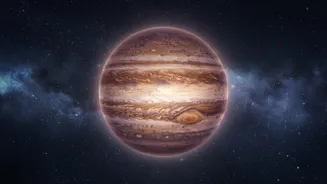
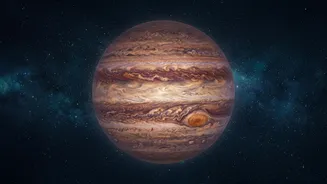
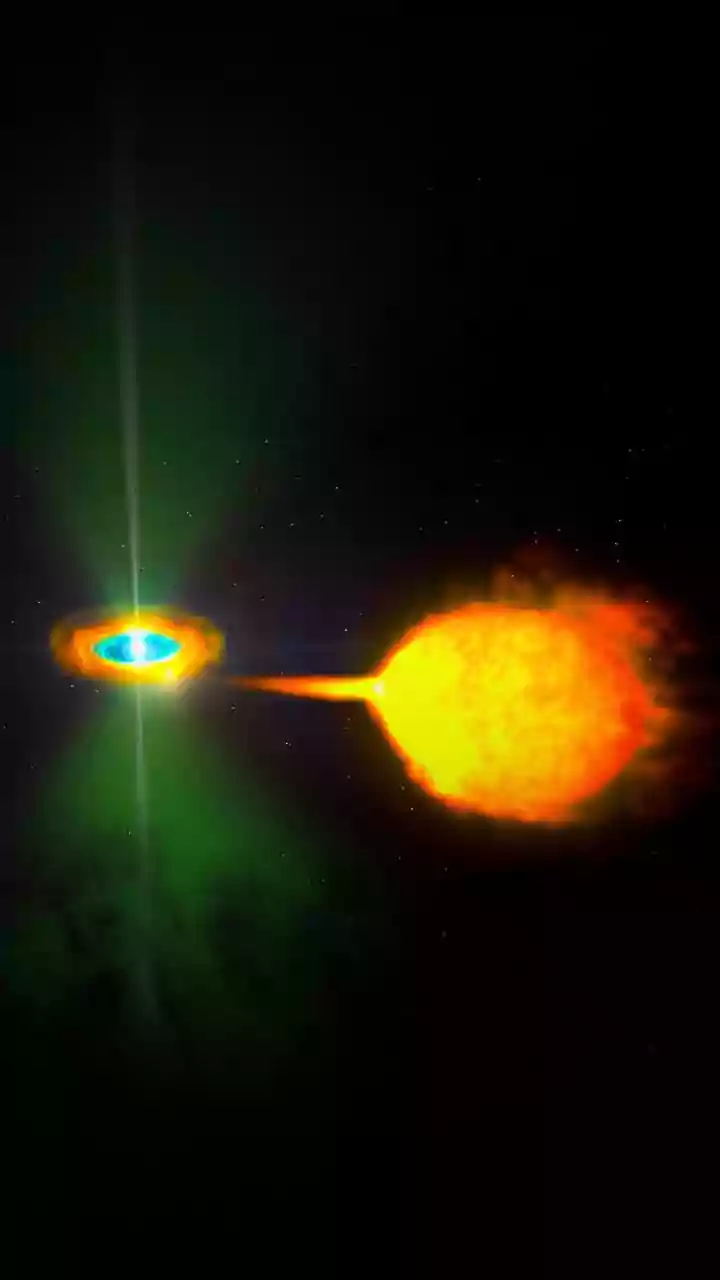
The niobium signature wasn't the only clue. Further evidence came from NASA's Transiting Exoplanet Survey Satellite (TESS), which observed the white dwarf for four months. TESS detected regular dips in the star's brightness, consistent with a Jupiter-sized object orbiting it every 4.4 days at a very close distance. The researchers propose this candidate planet is so close to the hot white dwarf that its atmosphere is being blasted away, creating a comet-like tail of material. This material then forms a disk and rains down onto the star, which would explain why Hubble was able to detect the signature elements in the first place.
Why This Discovery Matters
If confirmed, this would be the first discovery of a second-generation planet around a white dwarf, the most common type of stellar remnant. While such planets have been suspected to exist around pulsars (rarer, more extreme dead stars), finding one here suggests that planetary rebirth could be more common than previously thought. It challenges our understanding of planetary evolution and shows the incredible, enduring value of scientific archives like Hubble's, where decades-old data can fuel new discoveries with modern tools. It opens up the incredible possibility that even after our own Sun dies in billions of years, a new generation of worlds could form from its ashes.