







The Comfort-Cost Paradox
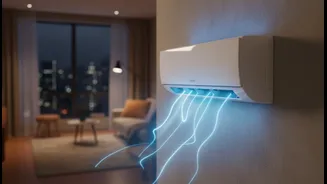
The relationship between indoor comfort and your electricity bill is a delicate balancing act. Air conditioners are among the most power-hungry appliances in a household. Their primary job is to remove heat from your home, and the harder they have to work,
the more energy they consume. This is why cranking the AC down to its lowest setting doesn't cool a room faster; it just forces the unit to run longer, driving up costs. The goal isn't to sacrifice comfort for savings, but to make your cooling system work smarter, not harder. By understanding the factors that influence both comfort and energy use, you can achieve a pleasant indoor environment without the financial strain.
Finding Your Thermostat's Sweet Spot
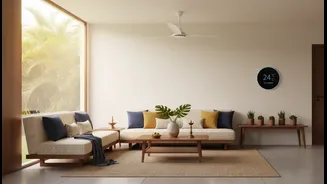
One of the most impactful habits you can adopt is setting your thermostat wisely. For Indian homes, experts recommend a temperature range of 24°C to 26°C as the ideal balance between comfort and energy efficiency. Setting your thermostat within this range prevents the AC's compressor from working overtime, which not only saves electricity but also extends the life of your unit. According to the Bureau of Energy Efficiency (BEE), every degree you raise the thermostat can result in significant energy savings. Paired with a ceiling fan, which creates a wind-chill effect, you can often set the thermostat a few degrees higher and feel just as cool. Remember that fans cool people, not rooms, so turn them off when you leave.
The Power of Smart Maintenance
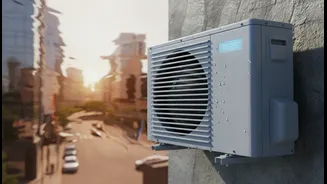
A well-maintained air conditioner is an efficient one. Over time, dust and debris accumulate on filters and coils, restricting airflow and forcing the system to work harder to cool your home. This not only increases energy consumption but can also lead to premature system failure. One of the easiest and most effective maintenance tasks is regularly cleaning or replacing your air filters—ideally every one to three months depending on usage. Additionally, ensure that both indoor and outdoor vents are clear of obstructions like furniture, curtains, or overgrown plants. An annual professional service before the peak summer season can help detect minor issues before they become major, costly problems.
Let Technology Do the Work
Modern technology offers powerful tools for managing your home's climate. Smart and programmable thermostats are game-changers, allowing you to automate your cooling schedule. You can program the AC to run less when no one is home and have it cool down just before you return. Many smart thermostats learn your daily routines and adjust automatically to maximize efficiency. Some models even use geofencing to detect when you're leaving or arriving home, further reducing energy waste. While the initial investment may seem high, a smart thermostat can often pay for itself in energy savings within a couple of years.
Low-Tech Tricks for a Cooler Home
Beyond the AC unit itself, simple changes to your home environment can make a big difference. During the hottest parts of the day, use curtains or blinds to block direct sunlight, especially on west-facing windows, to reduce solar heat gain. Sealing air leaks around windows and doors with weather stripping or caulk can prevent cool air from escaping and hot air from entering. Harnessing natural ventilation by opening windows during cooler morning and evening hours can also help flush out accumulated heat. Even adding indoor plants can contribute to a cooler environment through transpiration.