


A Bold New Partnership
In a move that signals a major shift in the space industry, NASA has awarded a contract worth approximately $12 million to Relativity Space for its Mars Escapade mission. Scheduled to launch as early as 2024, the mission will send a pair of small spacecraft,
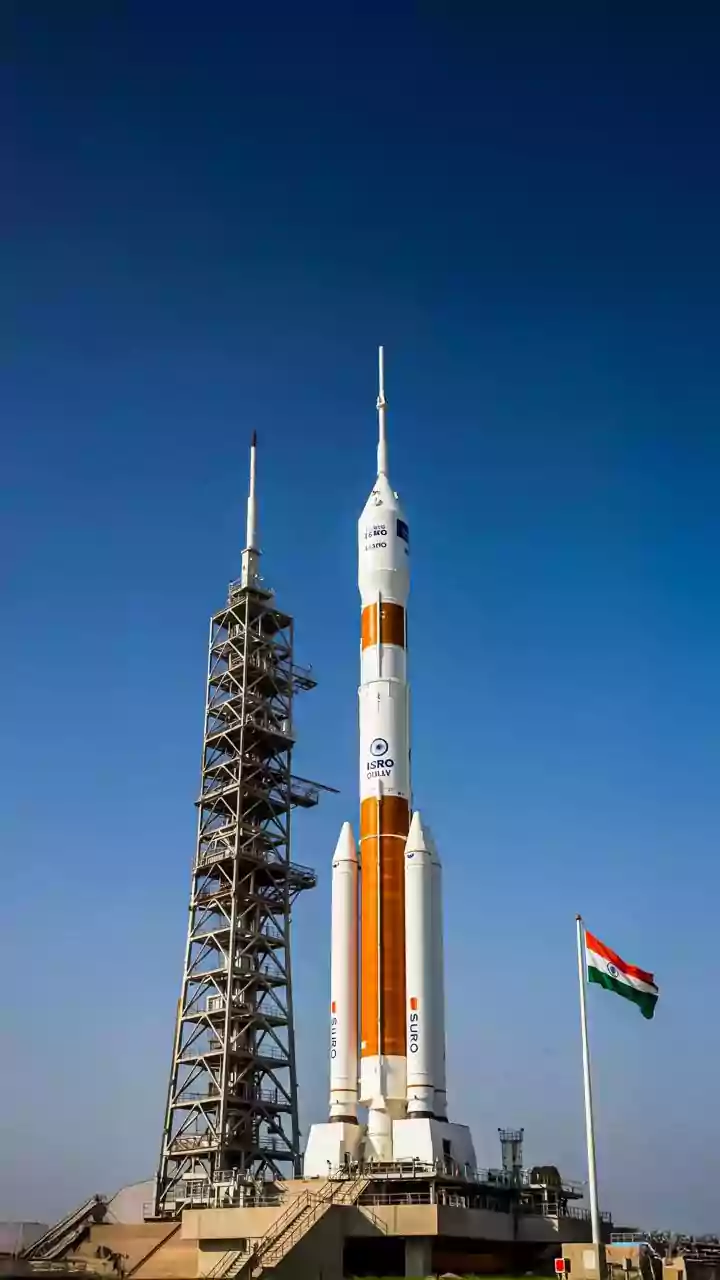
or orbiters, to study the Red Planet's unique magnetosphere. The ride for these orbiters won't be from an established giant like ULA or even SpaceX. Instead, NASA is placing its trust in Relativity’s Terran R, a rocket that is not only new but built using a radically different manufacturing process: large-scale metal 3D printing. This decision isn't just a routine contract; it's a powerful vote of confidence from the world's premier space agency in a company pioneering the future of manufacturing.
Who Is Relativity Space?
Founded in 2015, Relativity Space has a bold ambition: to 3D-print an entire rocket, from engines to fuselage, in less than 60 days. The company argues that this approach dramatically reduces complexity, cost, and production time compared to traditional rocket manufacturing, which involves millions of individual parts and complex supply chains. Their first rocket, the smaller Terran 1, made its debut launch in March 2023. While it failed to reach orbit due to a second-stage anomaly, the launch was widely seen as a success for proving that a 3D-printed primary structure could withstand the immense stresses of liftoff. The company has since pivoted its focus to the much larger, fully reusable Terran R rocket—the one NASA has now selected. For Relativity, securing a NASA contract for an interplanetary mission before the Terran R has even flown is a monumental achievement, providing crucial validation and revenue.
The Mission to Mars
The mission itself, named Escapade (Escape and Plasma Acceleration and Dynamics Explorers), is part of NASA's Small Innovative Missions for Planetary Exploration (SIMPLEx) program. It consists of two identical orbiters designed to circle Mars and study how solar wind interacts with its atmosphere. Understanding this process is key to figuring out why Mars lost most of its atmosphere and water over billions of years, transforming from a potentially habitable world into the cold, dry planet we see today. This research not only helps us understand the evolution of planets but also provides crucial data for planning future human missions to Mars, as it informs our understanding of radiation exposure on the Martian surface and in orbit.
Why 3D Printing a Rocket Matters
The concept of 3D printing a rocket sounds like science fiction, but the advantages are very real. Traditional rockets are built from thousands of precisely machined parts, a process that is slow, expensive, and inflexible. Relativity's 'Stargate' 3D printers, some of the largest in the world, can build massive rocket components as single pieces. This reduces the part count by a factor of 100, which in turn minimises potential points of failure, simplifies assembly, and allows for rapid design changes. If engineers spot a flaw or an opportunity for improvement, they can update the digital file and print a new version, rather than re-tooling an entire factory. For NASA, this means a potentially faster, cheaper, and more reliable way to get its science payloads into space.
NASA’s Strategy: Fostering Competition
This contract is part of NASA's broader strategy to cultivate a diverse and competitive commercial launch market. Through programs like the Venture-Class Acquisition of Dedicated and Rideshare (VADR) contracts, NASA is intentionally spreading its business among a new generation of launch providers, including Relativity, Astra, and Firefly Aerospace. By acting as an anchor customer for these smaller companies, NASA helps them secure funding, prove their technology, and challenge the dominance of established players. This creates a healthier, more resilient launch ecosystem, driving down costs and spurring innovation across the board. It’s a playbook that worked wonders with the Commercial Crew program, which brought SpaceX to the forefront, and NASA is now applying it to the small and medium-lift rocket market.