





A Sudden, Startling Decline
For a long time, Antarctica presented a confusing picture to climate scientists. While Arctic ice was in a well-documented retreat, the sea ice surrounding the southern continent was surprisingly stable, even expanding in some years. This phenomenon was known
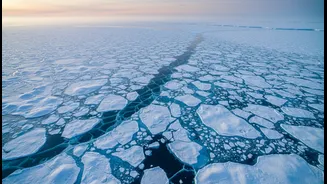
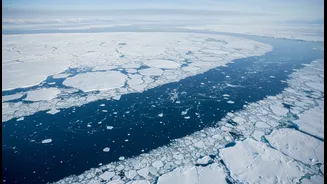
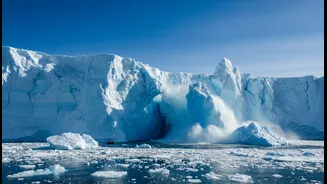
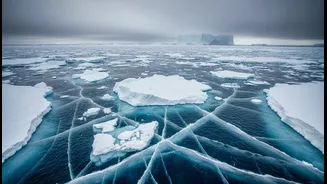
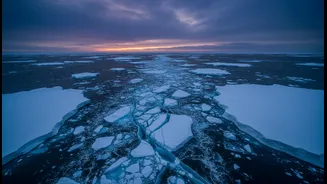
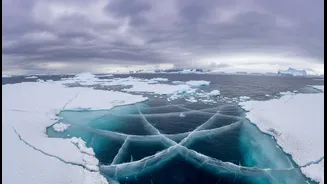
as the 'Antarctic paradox'. However, since 2016, that stability has shattered. The continent has experienced a series of record-low sea ice years, with the decline accelerating dramatically. In recent years, an area of sea ice far larger than Pakistan or Western Europe has simply failed to form, an unprecedented event in the 47-year satellite record. This abrupt shift has led scientists to believe the system may have flipped into a new, lower-ice state.
The 'Triple Whammy' of Causes
Scientists are working to pinpoint the exact cause of this rapid change, but a consensus is emerging around a 'triple whammy' of factors. First, strengthening winds around Antarctica, influenced by greenhouse gas emissions, have begun to churn the ocean. This has disturbed the ocean's natural layers, which historically kept cold, fresh water at the surface and trapped warmer, saltier water deep below. Now, this warmer deep water is being hauled up to the surface, where it is melting the ice from below. This creates a dangerous feedback loop: as more ice melts, the dark ocean surface absorbs more sunlight, further warming the water and making it harder for new ice to form.
Why What Happens in Antarctica Matters Everywhere
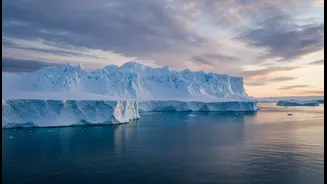
The loss of Antarctic sea ice is not just a remote polar issue; it has profound global consequences. The vast white sheet of sea ice acts as a giant mirror, reflecting the sun's energy back into space and helping to regulate the planet's temperature. As it vanishes, Earth absorbs more heat. The melting also impacts global ocean circulation patterns, the massive currents that move heat and nutrients around the world, influencing weather systems far and wide. Furthermore, while the melting of floating sea ice does not directly raise sea levels, it has a worrying knock-on effect. Sea ice acts as a protective barrier, or buttress, for the enormous land-based ice sheets. Without it, the flow of glaciers from land into the sea can accelerate, which does contribute significantly to global sea-level rise.
A Connection to the Indian Monsoon
The climatic changes at the South Pole have a direct, if complex, link to weather patterns in India. The climate system is deeply interconnected, and major shifts in Antarctica can influence atmospheric circulation across the globe. Research has shown a teleconnection between sea ice conditions in the Indian Ocean sector of Antarctica and the strength of the Indian summer monsoon. Changes in the temperature difference between the pole and the equator can alter large-scale wind patterns, including those that govern the monsoon, which is critical for agriculture and water security for hundreds of millions of people. While the relationship is complex, with some studies showing declining Arctic ice has a more immediate effect, the destabilisation of the Antarctic system adds a significant and worrying new variable to monsoon prediction.