





The Hidden Cost of a Bargain
The true cost of a fast-fashion garment isn't just the number on the price tag; it's the lifetime cost of owning it. An inexpensive dress that requires frequent and expensive trips to the dry cleaner is no bargain at all. The fast-fashion business model
is built on rapid production and trends, which often leads to the use of lower-quality materials that don't withstand regular washing. Globally, more than half of all fast-fashion items are thrown away in less than a year, and some garments are discarded after only seven to ten wears. Part of this is due to ever-changing trends, but a significant factor is poor durability and difficult care requirements. A delicate top that fades, a knit that pills instantly, or a shirt that warps after one cycle in the machine contributes to a cycle of waste and repurchase. Understanding an item's care needs before you click 'buy' is the first step to breaking that cycle, saving you time, money, and laundry-day frustration.
Become a Digital Detective
In the past, checking the care label was something you could only do in a physical store. Today, online retailers are providing more transparency, empowering you to investigate before committing. On most product pages, scroll past the main images and look for tabs or dropdowns labelled 'Details', 'Composition', or 'Fabric & Care'. This is your new first stop. Here, you'll often find the material breakdown (e.g., 90% Polyester, 10% Spandex) and written care instructions like 'Machine wash cold' or 'Hand wash only'. Some brands even include images of the actual care tag. This information is a goldmine. A 100% cotton t-shirt will behave very differently from a 100% viscose blouse. Learning to spot materials that fit your lifestyle is key. If you know you don't have the time for hand-washing or trips to the dry cleaner, you can filter out those items immediately.
Decoding the Symbols in Seconds
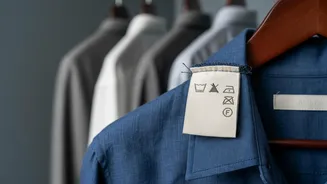
What if the website only shows the small, cryptic care symbols? These pictograms, which represent washing, bleaching, drying, ironing, and dry cleaning, are a universal language for clothes care. While they can look confusing, you don't need to memorise them all. Many tools can now do the translation for you. If you're on an iPhone, you can simply take a screenshot of the symbols, and the Photos app can often identify them and tell you what they mean. There are also dedicated free apps, like GINETEX’s 'My Care Label', designed to help consumers instantly understand what each symbol means. For in-store shoppers, this is even more powerful. Apps like Garma use your phone's camera to scan a label and instantly give you a score on its sustainability, quality, and ease of care. This allows you to compare two different items in real-time to see which is a smarter, more durable purchase.
From Care Needs to Conscious Choice
Once you get into the habit of checking care needs, you'll naturally start making more conscious choices. You’ll begin to connect certain materials with their care requirements. For example, you’ll learn that polyester and nylon, while durable and often easy to wash, are petroleum-based plastics that shed microfibres. You'll recognise that linen and high-quality cotton, while they may require ironing, are breathable and often last longer. This simple check opens the door to a more mindful approach to shopping. It forces you to think beyond the initial purchase and consider the garment's entire lifecycle. The goal isn't just to avoid a 'hand wash only' tag; it's to build a wardrobe of pieces you can wear and love for years, not just a few weeks. By prioritising fabrics that are both durable and easy for you to care for, you actively move away from the disposable nature of fast fashion.