


The Challenge of The Unknown
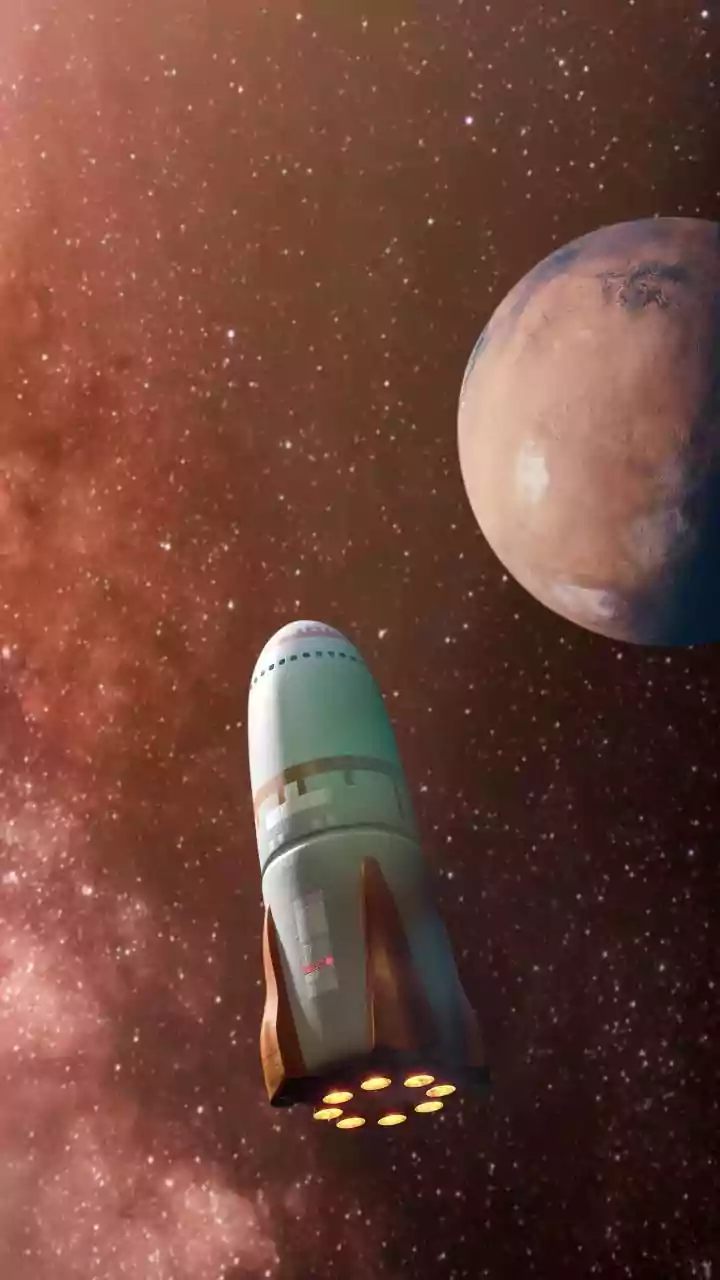
Sending a robotic explorer to Mars, Jupiter's icy moon Europa, or a distant asteroid is one of the most complex endeavours humanity can undertake. These are one-shot opportunities, costing billions and taking years, sometimes decades, to execute. There
are no do-overs. The destination is often a place of extreme temperatures, unknown terrain, and bizarre chemistry. To ensure success, mission teams must be prepared for anything. This is where a series of rigorous rehearsals, known as Operational Readiness Tests (ORTs) and Mission Readiness Reviews (MRRs), come into play. These aren't just simple checks; they are exhaustive simulations designed to validate every piece of hardware, line of software code, and operational procedure before the spacecraft ever leaves Earth.
Digital Twins and Virtual Worlds
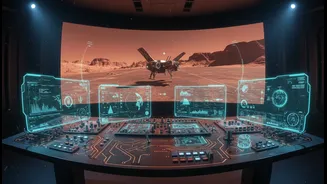
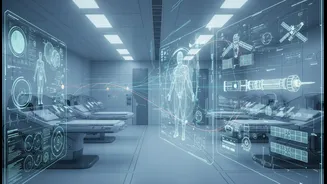
Long before a rover's wheels touch alien soil, they have traversed it thousands of times in a computer. NASA and other space agencies create incredibly detailed simulations, or digital twins, of their spacecraft. These virtual models allow engineers to test every system, from deploying a solar array to firing a thruster, under a multitude of conditions. For instance, the team behind the Europa Clipper mission used a massive thermal vacuum chamber to simulate the harsh environment of space, practicing the deployment of instruments inside this chamber. Mission planners also use simulations to model the entire journey, a practice that allows for the discovery of bonus science opportunities, such as using a planet's gravity to slingshot a spacecraft toward its final destination.
Finding Alien Worlds on Earth
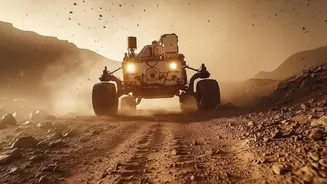
To rehearse for operations on a unique planetary surface, scientists and engineers turn to 'analogue environments' right here on Earth. These are locations that have physical similarities to extreme space environments. The barren, dry Atacama Desert in Chile mimics the soil of Mars, while the volcanic landscapes of Lanzarote in Spain or the Kilauea Volcano in Hawaii offer stand-ins for the Moon or other rocky bodies. In these locations, teams test rover navigation systems, practice collecting samples, and refine the tools astronauts or robots will use. There are even underwater missions, like NASA's NEEMO project, where 'aquanauts' live in an undersea lab to simulate the isolation and operational challenges of spaceflight.
Training the Humans in Mission Control
A mission's success doesn't just depend on the hardware; it relies on the hundreds of people in Mission Control. These teams undergo their own intense rehearsals. They run end-to-end data flow tests and full-mission simulations, often with a time delay built in to replicate the real communication lag with a distant spacecraft. The most critical part of this training is 'fault injection'. Simulation supervisors will deliberately introduce unexpected problems—a stuck wheel, a failed instrument, a communications blackout—forcing the team to diagnose and solve the issue under pressure. These exercises build the expertise, communication, and decision-making skills needed to handle any crisis that might arise millions of kilometres from home.
Living on Mars Time in Houston
For the most ambitious missions, simulations become incredibly immersive. NASA's Crew Health and Performance Exploration Analog (CHAPEA) is a project where volunteers live inside a 3D-printed habitat at the Johnson Space Center for a full year to simulate a Mars mission. They conduct simulated spacewalks in a sandbox, manage limited resources, and deal with the psychological effects of confinement and isolation. Data from these long-duration analog missions is invaluable for understanding the human factors of deep space exploration. They provide crucial insights that will inform everything from habitat design to crew selection for the future Artemis missions to the Moon and eventual human expeditions to Mars.