

A Major Milestone for Crew Safety
The Indian Space Research Organisation (ISRO) recently announced the successful completion of three critical qualification tests for the Gaganyaan crew module. While the announcement covered multiple systems, the focus on structural and pressure integrity
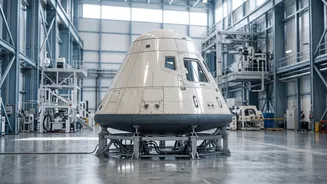
is a massive step forward for the programme. These tests are not just routine checks; they are fundamental to proving that the capsule can protect its human occupants from the unforgiving environment of space and the violent forces of launch and re-entry. The recent trials validated systems vital for crew safety after splashdown and during descent, including the Crew Module Uprighting System (CMUS) and the separation of the umbilical cord connecting the crew and service modules.
What Are Pressure and Structural Tests?
Imagine a soda can. It holds its shape perfectly, containing the carbonated pressure inside. But in the vacuum of space, the difference between the breathable air inside a spacecraft and the nothingness outside is immense. A pressure test, in simple terms, verifies that the spacecraft's structure, especially its welds and seals, can contain the life-sustaining atmosphere for the crew without any leaks. Technicians essentially pressurise the capsule to levels even greater than what it will experience in flight to confirm its structural soundness. One of the recent tests also qualified the capsule's ability to handle the loads during the jettisoning of its apex cover, which protects the parachutes before they are deployed. This ensures the module doesn't get damaged just moments before a critical part of its landing sequence.
A Fortress for India's Vyomanauts
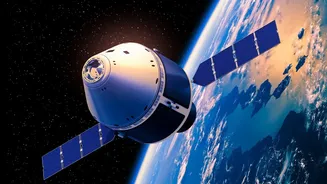
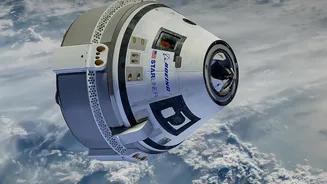
The Gaganyaan Crew Module is the only part of the entire rocket system that returns to Earth. It is a double-walled, cone-shaped fortress designed to carry up to three astronauts. During its mission, it will face extreme temperature swings, micrometeoroid risks, and intense vibrations. The most perilous part of the journey is re-entry, where the capsule will hit the atmosphere at tremendous speed, generating scorching heat. The structural integrity validated by these tests ensures the capsule can withstand these forces. Other recently validated systems, like the flotation bags tested for the uprighting system, are designed to make the final moments of the mission—splashing down in the ocean—as safe as possible by ensuring the capsule stays upright for recovery.
The Road to the Launchpad
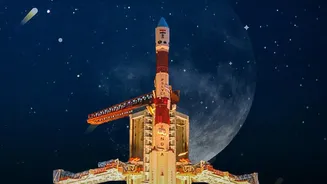
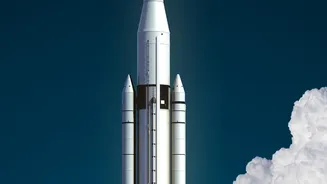
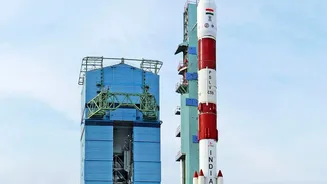
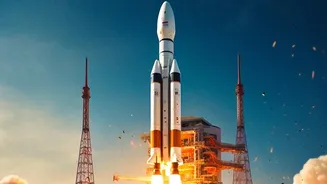
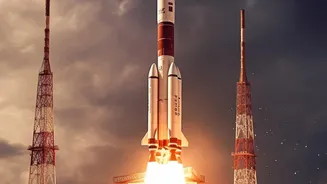
This successful test is a significant piece of a much larger puzzle. The Gaganyaan programme is proceeding through a meticulous series of validations before the first human flight. The Human-Rated LVM3 rocket (HLVM3), the powerful launch vehicle for the mission, has already had its propulsion stages tested. Before astronauts board the capsule, ISRO plans to conduct uncrewed test flights. The first of these, carrying the humanoid robot Vyommitra, is targeted for late 2026. These flights will validate the entire system—from launch and orbital manoeuvres to re-entry and recovery—in real-world conditions. Each successful test, from ground-based pressure checks to full-scale uncrewed missions, builds the confidence needed to finally put a human crew on board.
More Than Just a Mission
The Gaganyaan mission represents more than just a technological achievement; it's a statement of India's ambition and capability in the 21st century. Successfully sending humans into orbit will place India in an elite club of nations, alongside the United States, Russia, and China, who have independent human spaceflight capabilities. The program is a catalyst for research and development across the country, inspiring a new generation of scientists and engineers and fostering an ecosystem of high-tech manufacturing. As ISRO methodically ticks off each requirement, it's not just building a spacecraft; it's building a new future for India in space.