






The Whole Fruit Advantage: Fibre is Key
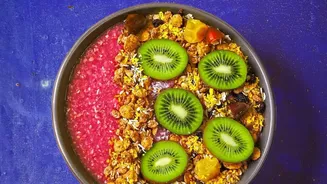
The most significant difference between eating a fruit and drinking its juice comes down to one crucial component: dietary fibre. When you eat a whole apple or orange, you consume the pulp and skin, which are rich in fibre. This fibre plays a vital role
in your digestive health, but it also does something remarkable with the fruit's natural sugars. It binds to the sugar, slowing down its absorption into your bloodstream. This prevents the sharp spikes in blood sugar that can happen after consuming a high-sugar drink. Slower sugar absorption means more stable energy levels and a greater feeling of fullness, which can help prevent overeating later.
What's Lost in the Squeeze?
The process of juicing, whether in a factory or at home, strips away most of this beneficial fibre. When you squeeze an orange, the fibrous pulp is left behind. This means you get a concentrated dose of the fruit's liquid and, with it, all its sugar, but without the structural component that helps your body manage it. Beyond fibre, some vitamins and antioxidants that are bound to the fruit's pulp and skin can also be lost or degraded during processing, especially when heat is involved. While fresh juice still delivers a good amount of vitamins like Vitamin C, it's not the complete nutritional package that the whole fruit provides.
Your Guide to the Juice Aisle
Navigating the claims on packaged juice in India can be confusing, but understanding a few key terms regulated by the FSSAI can empower you to make better choices. The most important tool you have is the ingredients list, where items are listed in descending order by weight. If the first ingredient is water and the second is sugar, that's mostly what you are buying.
Decoding the Labels
'100% Fruit Juice': This label means the product is made entirely from fruit juice with no added sugars or flavours. However, this can still be 'from concentrate'. 'From Concentrate': This means the fruit was juiced, its water was evaporated to create a thick syrup for easy transport, and then water was added back before packaging. This process can lead to the loss of some heat-sensitive nutrients and flavour. 'Not From Concentrate' (NFC): This is generally a higher-quality option, as the juice is simply pasteurised and bottled, preserving more of its original flavour and nutrients. 'Fruit Drink' or 'Nectar': Be wary of these terms. Under FSSAI regulations, these products contain much less actual fruit juice—sometimes as little as 5%—and are mostly water, sugar, and artificial flavours. 'No Added Sugar': This is a common but tricky claim. It means the manufacturer did not add extra sugar during processing, but the juice itself still contains a significant amount of naturally occurring fruit sugars. Always check the 'Total Sugar' content in the nutrition panel.
Making Smarter Choices
While eating whole fruit is the undisputed winner for overall health, juice can still be part of a balanced diet if you're mindful. When you do opt for juice, try to choose '100% Juice' that is 'Not From Concentrate'. Check the ingredients list to ensure fruit is the first and primary ingredient. Pay attention to serving sizes; a small glass of about 150ml is a reasonable portion. Many nutrition panels list values 'per 100g', but a single serving might be 200ml or more, so you may need to do some quick maths to understand what you're actually consuming.