


Valley of Fire State Park, Nevada
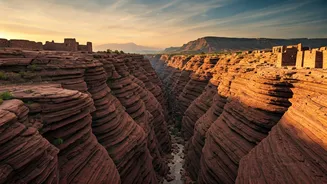
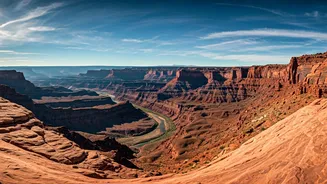
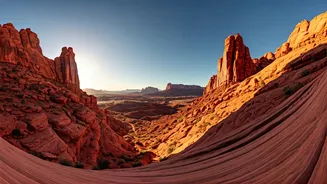
Just an hour's drive from the neon glow of Las Vegas, the Valley of Fire offers a landscape so intensely red it seems to burn. This is Nevada's oldest and largest state park, a geological wonderland of Aztec sandstone forged from shifting dunes 150 million
years ago. While the Grand Canyon awes with its scale, the Valley of Fire captivates with its intimacy and colour. Winding roads dip through brilliant red rock formations, revealing scenic pull-offs and trailheads at every turn. Hike to Mouse's Tank to see ancient petroglyphs carved into the stone, or capture the iconic shot at Fire Wave, a swirling bowl of pink, white, and red sandstone. It’s a manageable day trip that feels a world away from the ordinary, offering cinematic vistas that have served as backdrops for films seeking an otherworldly, Mars-like setting. The best times to visit are spring and autumn, when the desert heat is less intense and the 'fiery' rocks glow under the soft light of sunrise and sunset.
Cathedral Valley, Utah
While millions flock to Utah's Zion and Arches National Parks, a quieter, more profound experience awaits in the remote northern district of Capitol Reef National Park: Cathedral Valley. This is not a place you stumble upon; it requires a high-clearance vehicle and a spirit of self-reliance. The reward is near-total solitude amidst some of the most striking monoliths in the Southwest. The main attractions are the Temple of the Sun and Temple of the Moon, colossal Entrada sandstone formations that rise starkly from the flat desert floor. They feel ancient and spiritual, like ruins of a city built by giants. The 58-mile scenic loop takes you past other wonders, including the Bentonite Hills—mounds of colourful clay that look like they were painted in pastel stripes—and the eerie Glass Mountain, a large mound of selenite crystals. Visiting Cathedral Valley is an adventure in itself, a journey back in time to a raw and untamed landscape that remains largely untouched by modern tourism.
Bisti/De-Na-Zin Wilderness, New Mexico
For those who truly want to feel like they've stepped onto another planet, the Bisti/De-Na-Zin Wilderness in northwestern New Mexico is the ultimate destination. This is not a park with visitor centres and paved paths. It's a 45,000-acre expanse of badlands where erosion has sculpted sandstone, shale, and coal into bizarre and fascinating shapes. You can wander for hours through a maze of mushroom-like hoodoos, cracked egg formations, and fields of petrified wood. Known to photographers for its surreal 'Cracked Eggs' and 'Bisti Wings' formations, the area is a lesson in geological artistry. There are no marked trails, so navigation with a GPS is essential. The lack of amenities is part of its appeal, preserving a sense of wildness that has become rare. This is a place for the prepared adventurer, someone willing to trade comfort for the unforgettable experience of exploring a stark, silent, and hauntingly beautiful moonscape under a vast desert sky.
White Sands National Park, New Mexico
While technically a basin filled with dunes rather than a valley, White Sands National Park delivers a desert experience unlike any other in the world. Located in the Tularosa Basin, it contains the world's largest gypsum dunefield, a sprawling 275 square miles of pure white, wave-like dunes. The effect is breathtaking and deeply serene. In the harsh sunlight, the landscape is a brilliant, almost blinding white against a deep blue sky. At sunrise or sunset, the dunes are painted in soft shades of pink, orange, and purple. Walking barefoot on the cool gypsum sand is a unique sensory experience. Visitors can drive the scenic Dunes Drive, which takes you into the heart of the dunefield, hike one of the marked trails, or simply pick a dune and slide down its face on a sled (available at the gift shop). It’s a place of stark minimalism and immense beauty, where the silence is broken only by the sound of the wind.