




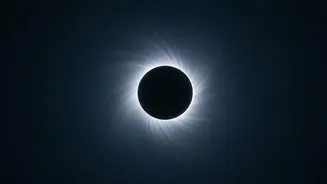
The Sun's Ghostly Crown
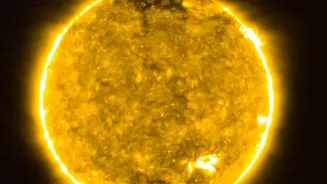
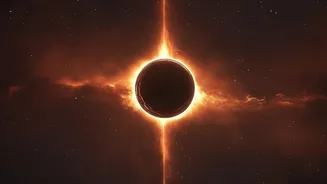
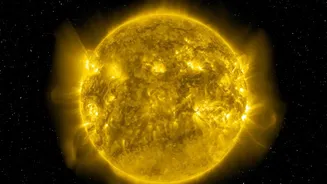
The object of their attention was the solar corona, the Sun’s ethereal outer atmosphere. Normally, this faint halo is completely invisible, washed out by the overwhelming brightness of the Sun's main disk. It’s a frustrating reality for scientists because
the corona is a place of bizarre physics. While the Sun's surface simmers at a few thousand degrees Celsius, the corona sizzles at over a million degrees. Figuring out this 'coronal heating problem' is a primary goal of solar physics. The corona is also the source of the solar wind, a constant stream of charged particles that flows out and affects the entire solar system, including Earth's satellites and power grids.
A Celestial Coincidence
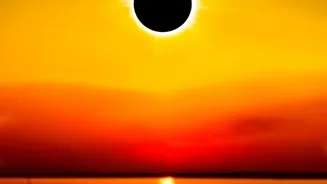
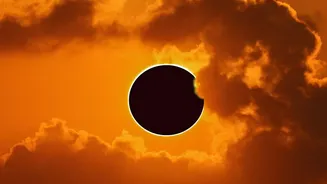
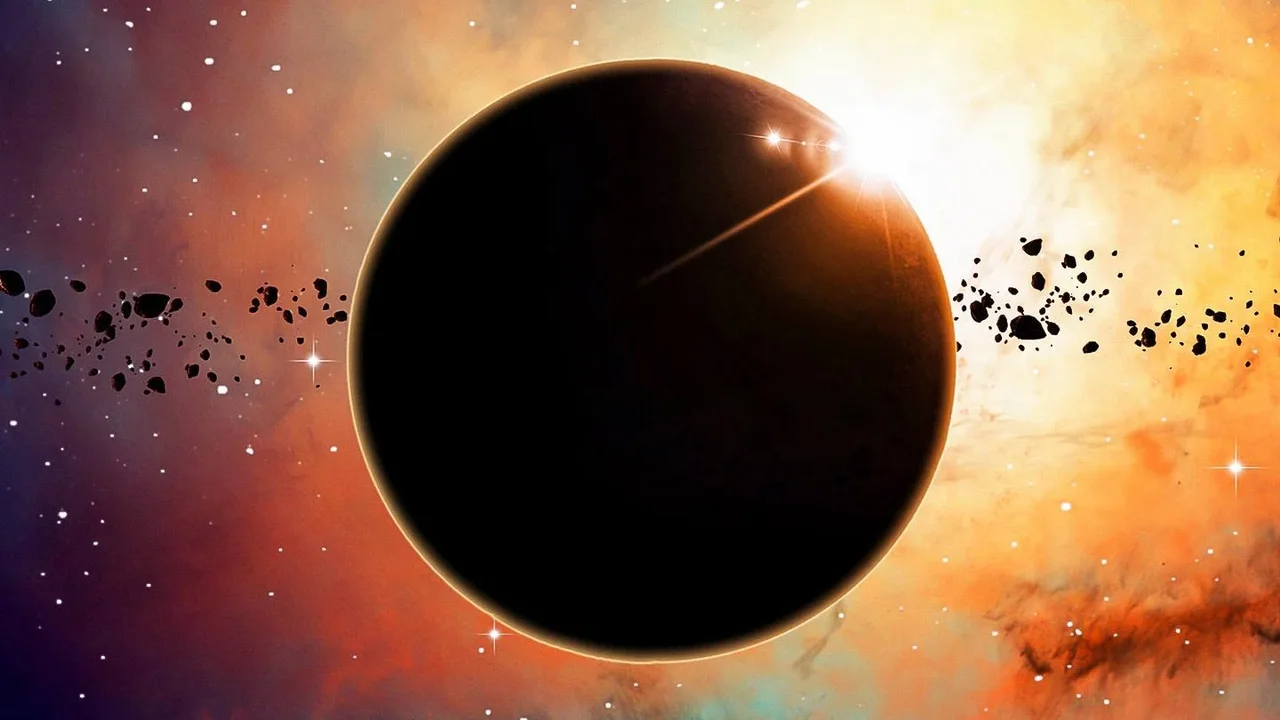
A total solar eclipse is nature’s perfect laboratory. It happens because, by a stunning coincidence, the Moon is about 400 times smaller than the Sun, but also about 400 times closer to Earth, allowing it to almost perfectly block the Sun's face. While scientists have man-made instruments called coronagraphs that create artificial eclipses, they struggle with scattered light that obscures the innermost regions of the corona. The Moon, as a natural blocker, provides a much clearer view, allowing researchers to see the fine structures and dynamics right near the Sun's edge where much of the key action happens.
Science in the Shadow
For the August 2026 eclipse, which crossed over Greenland, Iceland, and Spain, researchers were ready. NASA deployed one of its WB-57 high-altitude research aircraft to chase the Moon's shadow over the Atlantic. Flying at 50,000 feet, the jet not only avoided any pesky cloud cover but also extended its view of totality from just over two minutes on the ground to nearly three minutes in the air. A suite of specialized cameras in the jet's nose cone captured high-resolution images of the corona in multiple wavelengths of light, taking dozens of pictures per second to study its temperature, structure, and the origin of the solar wind.
Balloons, Models, and More
The research wasn't limited to the sky. In Iceland, teams launched 80 scientific balloons to study how the sudden drop in sunlight affected Earth's own atmosphere, specifically the layer closest to the ground. Meanwhile, agencies like the European Space Agency (ESA) used the event to test and refine their computer models of the corona. By predicting what the corona would look like and then comparing it to the real thing, they can improve the tools used to forecast space weather. Every eclipse provides a unique snapshot, as the Sun is constantly changing, revealing new features and allowing scientists to refine their techniques.
The Data Deluge Begins
While the eclipse itself lasted only minutes, the scientific discovery process is just beginning. Researchers now have a treasure trove of new data to analyze, a process that will take months, if not years. The high-speed images from the WB-57 jet will be combed through to understand the rapid changes in coronal structures and suspended material known as prominences. This data, combined with ongoing observations from missions like the Parker Solar Probe and Solar Orbiter, will help piece together the complex puzzle of our star's behaviour. The fleeting darkness of August 12 was just the first step in shedding lasting light on the Sun's secrets.