







The Elusive 'Brain Fog' Challenge
Brain fog isn't a formal medical diagnosis, but it’s a very real and often debilitating experience for millions. Described as a cloudiness of thought, it includes symptoms like poor concentration, memory problems, mental slowness, and difficulty processing
information. This cognitive impairment is a persistent issue for people recovering from depression, and has become a hallmark symptom for those with conditions like postural tachycardia syndrome (POTS), myalgic encephalomyelitis/chronic fatigue syndrome (ME/CFS), and, most recently, Long COVID. For many, brain fog lingers long after other symptoms improve, significantly impacting quality of life, work, and daily tasks. Despite its prevalence, there are currently very few approved treatments specifically designed to tackle this cognitive deficit, leaving patients and doctors searching for effective solutions.
The Gut-Brain Superhighway
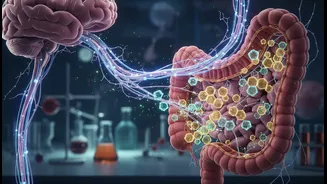
The latest hope comes from an area of growing scientific interest: the gut-brain axis. This is a complex, two-way communication network that connects your digestive system with your central nervous system. What happens in your gut doesn't stay in your gut; it sends signals that influence everything from mood to focus. A key player in this communication is serotonin, a neurotransmitter famous for its role in regulating mood. While we often think of it as a brain chemical, about 90% of the body's serotonin is actually produced in the gut, where it helps regulate digestion. This same chemical also plays a crucial role in learning, memory, and overall cognitive function, making the gut a powerful, if indirect, lever for influencing brain health.
A Constipation Drug Enters the Spotlight
Researchers at the University of Oxford and the University of Birmingham have been exploring whether a licensed constipation drug, prucalopride, could improve cognition. Prucalopride works by targeting and activating a specific type of serotonin receptor known as 5-HT4. These receptors are found in both the gut, where they stimulate bowel movements, and in key areas of the brain associated with learning and memory, such as the hippocampus. The hypothesis was that by stimulating these receptors, the drug might do more than just relieve constipation—it might also enhance cognitive function. Previous studies in healthy volunteers had already shown promising signs that the drug could improve memory.
What the Clinical Trials Reveal
A recent small clinical trial focused on people with a history of depression who often suffer from lingering brain fog. In the study, participants took either prucalopride or a placebo for about a week. The results were compelling. Those who received the drug performed significantly better on a range of cognitive tests measuring memory, attention, and executive function. They were both faster and more accurate in their responses compared to the placebo group. Brain imaging (fMRI) studies have provided a neurological basis for these findings, showing that prucalopride can increase functional connectivity between major cognitive networks in the brain, essentially helping different parts of the brain communicate more effectively. Encouragingly, the trial reported no significant side effects at the dose used.
Cautious Optimism and the Road Ahead
While these findings are exciting, researchers are careful to manage expectations. This was a small, early-stage study, and larger, more extensive trials are needed to confirm the results and understand the long-term effects. The current research focused on brain fog associated with depression, but the underlying mechanism suggests potential benefits for other conditions where brain fog is a major symptom, such as Long COVID. This research opens a new and promising avenue for treatment development. By repurposing a drug that is already known to be safe for human use, the path to a widely available treatment could be significantly shorter. It underscores a major shift in medicine, highlighting that targeting the gut could be a revolutionary way to treat the brain.