






Understanding the Real-World Impact
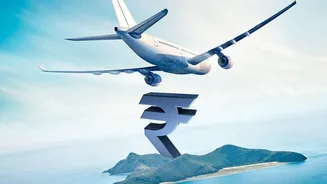
When the rupee weakens, its purchasing power on the global stage shrinks. Everything priced in US dollars—from your flight ticket to the coffee you buy in a New York café—costs more in rupees. The headline figure of ₹95 is a significant psychological
and financial milestone. To understand its impact, let's compare it to a baseline rate of ₹84 per dollar, a level seen in recent times. A move from ₹84 to ₹95 represents a jump of over 13%. This means, for the exact same trip, your budget needs to stretch by at least that much, and often more.
Flights and Hotels: The Biggest Expenses
Your largest pre-trip expenses are almost always flights and accommodation. Airlines often price their tickets with a strong link to the US dollar. Consider a round-trip flight to the USA costing $1,500. At an exchange rate of ₹84, this ticket would cost you ₹1,26,000. But if the rupee slips to ₹95, the same ticket will set you back ₹1,42,500. That is an immediate increase of ₹16,500 for the exact same seat. Similarly, a hotel room priced at $200 per night for a one-week trip totals $1,400. At ₹84 to the dollar, your stay costs ₹1,17,600. At ₹95, that bill swells to ₹1,33,000—an extra ₹15,400 out of your pocket. For just these two items, your trip is already over ₹31,000 more expensive.
Daily Spending: Meals, Transport, and Activities
The pain doesn't stop after you land. Your daily budget for food, local transport, and sightseeing is also directly affected. A modest daily budget of $100 per person is common for destinations in Europe and the US. For a 10-day trip, that's a total of $1,000. Converted at ₹84, this amounts to ₹84,000. At the ₹95 exchange rate, you’d need ₹95,000 to cover the same expenses. This is an ₹11,000 shortfall you'd have to cover. Suddenly, a $20 museum ticket feels more like ₹1,900 instead of ₹1,680. A $50 dinner for two becomes ₹4,750 instead of ₹4,200. These small, daily increases accumulate rapidly over the course of a trip, putting a strain on any carefully planned budget.
The Hidden Costs You Might Forget
Beyond the obvious costs, a weaker rupee inflates several other expenses. Visa application fees for many countries, including the US, are often denominated in dollars. For instance, a $185 visa fee jumps from ₹15,540 to ₹17,575. Travel insurance policies priced in foreign currency also become more expensive. For students heading abroad, the impact is even more severe, as tuition fees running into tens of thousands of dollars can increase by lakhs of rupees. Even the Tax Collected at Source (TCS) on foreign remittances, which is a percentage of your spending, will be calculated on a higher rupee amount, further increasing your outflow.
How to Plan and Protect Your Budget
While you can't control exchange rates, you can adapt your strategy. Booking flights and hotels well in advance can sometimes allow you to lock in prices before further depreciation. Using multi-currency forex cards lets you load funds at a specific rate, protecting you from volatility during your trip. It's also a good time to reconsider your destination. Countries where the rupee hasn't weakened as much, such as those in Southeast Asia like Thailand or Vietnam, will offer better value for your money compared to the US or Europe. Finally, being meticulous with your budget is key. Track your spending and prioritise experiences that matter most to you, perhaps cutting back on shopping to afford a memorable activity.