




Choose Your Sacred Spot
The first step is selecting the right location. In Indian tradition, the northeast corner of the home is considered the most auspicious for a place of worship, as it's associated with divine energy. If that's not feasible, an east or north-facing wall
is also ideal. More importantly, choose a quiet, low-traffic area that feels calm and is away from clutter, like the space under a staircase or next to a bathroom. The goal is to carve out a niche that can be kept clean and serene for all nine days of the festival, creating a psychological boundary between the sacred and the everyday.
Define the Space with a Backdrop
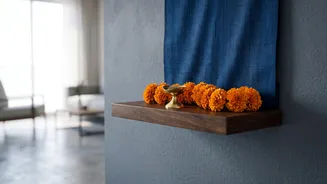
A simple backdrop instantly transforms a regular corner into a focal point. You don't need permanent fixtures. Draping a vibrant fabric, like an old silk sari or a colourful dupatta in festive shades of red or yellow, can create an immediate sense of occasion. For a more modern look, consider removable wallpaper with a subtle pattern. Even pinning a clean, plain cloth to the wall is effective, providing a neat and uncluttered canvas that makes the idols and decorations stand out. This simple act of defining the wall signals that this space is special.
Think Vertically to Save Space
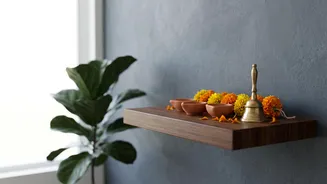
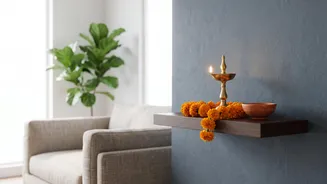
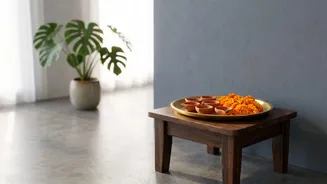
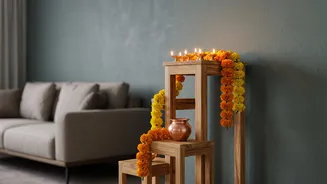
In small homes, floor space is precious. The key is to draw the eye upward. Instead of a large, cumbersome mandap, opt for a wall-mounted unit or floating shelves. These keep the floor clear, making the room feel larger and cleaning easier. You can also use a small chowki (a low stool) or a stack of books under a cloth to create height for your main idol. Tiered stands are another excellent way to arrange diyas, flowers, and offerings without overcrowding a single surface. This vertical styling is your best friend when decorating a compact apartment.
Illuminate with Warmth and Intention
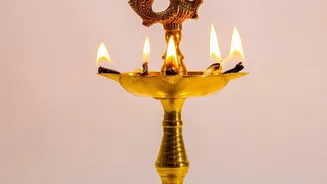
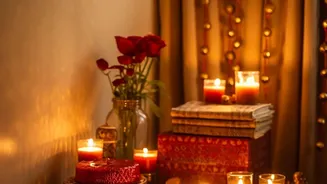
Lighting is crucial for creating a festive and divine ambiance. A soft, warm glow is more effective than harsh overhead light. String fairy lights around the backdrop, hang them in glass jars, or drape them over a nearby plant. Traditional clay diyas and brass lamps are essential for their symbolic meaning and gentle light. Arrange them in clusters or on a decorative tray to amplify their glow. For safety in a small area, placing diyas on a heat-resistant plate or tray is crucial to protect your surfaces and prevent accidents.
Arrange Traditional Elements Compactly
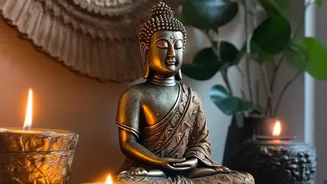
A puja corner feels complete with essential traditional items. The Kalash (a sacred pot), topped with a coconut and mango leaves, is central to Navratri rituals. Place your main idol or picture of Goddess Durga as the focal point. Around it, arrange other essentials like a decorated puja thali, incense holder, and a small bell. The key is to avoid clutter. Choose one or two main idols and supplement with smaller, meaningful items. A well-organized corner with breathing room feels more peaceful than one packed with every possible ornament.
Engage the Senses with Colour and Fragrance
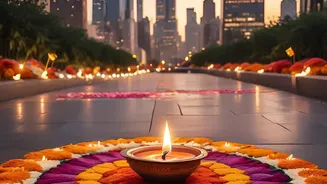
A festive atmosphere engages all the senses. Use fresh flowers like marigolds, jasmine, or lotus to add natural colour and a beautiful scent. You can create small garlands or simply float petals in a bowl of water (urli), which takes up very little space but has a big impact. A simple rangoli at the base of your corner, made with flower petals or rice flour, defines the area beautifully. For a continuous pleasant aroma, consider a reed diffuser with a sandalwood scent placed nearby, which complements the traditional dhoop and agarbatti without creating excess smoke in a small apartment.