


The Magic of Amber and Green
Before we dive into the 'how', let's talk about the 'why'. Why this specific combination? The money plant (Epipremnum aureum), or pothos, is a famously resilient and fast-growing vine, making it perfect for beginners. Its heart-shaped leaves bring a touch
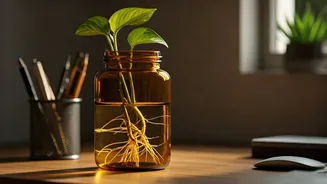
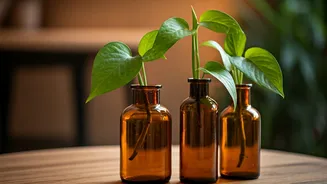
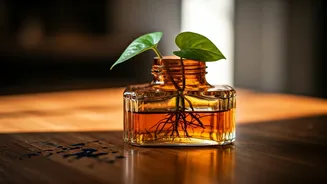
of nature indoors, known to reduce stress and improve focus. Pairing it with amber apothecary bottles is a masterstroke in desk styling. The deep, warm tone of the amber glass contrasts beautifully with the vibrant green leaves, creating a look that is both vintage and modern. Aesthetically, it adds a touch of scientific curiosity and old-world charm to your desk. But there’s a practical benefit, too: the dark amber glass blocks certain wavelengths of light, which helps slow down the growth of algae in the water. This means your setup stays cleaner and healthier for longer, with less frequent water changes required.
Gather Your Simple Supplies
This project requires minimal investment and uses items you might already have. Here’s your short and simple checklist: * A Healthy Mother Money Plant: Look for a lush, thriving plant with plenty of long vines to choose from. * Sharp Scissors or Pruners: A clean cut is crucial for the health of both the mother plant and the new cutting. Sterilise your blades with a bit of rubbing alcohol to prevent any infection. * Amber Apothecary Bottles: You can find these online or at craft stores. Choose a size that feels balanced for your desk—not too big, not too small. A bottle with a narrow neck is ideal as it will help support the cutting. * Water: Regular tap water that has been left to sit out for 24 hours is usually fine. This allows any chlorine to evaporate. Alternatively, you can use filtered or distilled water.
How to Take the Perfect Cutting
This is the most important step. Don’t worry, it’s straightforward. Unfurl a vine from your mother plant and look closely at the stem. You will see small brown bumps or nubs along it—these are called nodes. This is where new roots (and leaves) will grow from. Your cutting must have at least one or two nodes. 1. Select a healthy vine. Choose one that is at least 6-8 inches long. 2. Identify the nodes. Find a spot on the stem just below a node. 3. Make the cut. Using your clean scissors, snip the vine about half an inch below the node. Your ideal cutting should have 2-4 leaves and at least one node. 4. Prepare the cutting. Remove any leaves that are attached to the bottom part of the stem, especially any that would be submerged in water. This prevents them from rotting and fouling the water. You should have a clean stem with a node at the bottom and leaves at the top.
Setting Up Your Propagation Station
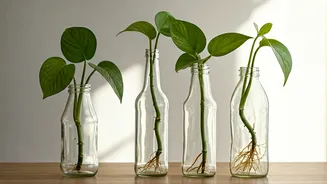
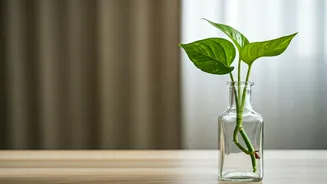
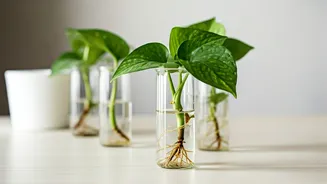
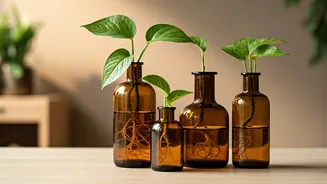
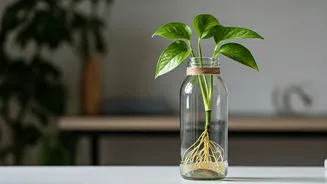
With your cutting ready, the final assembly is a breeze. First, ensure your amber bottle is sparkling clean. Wash it with soap and water, and rinse thoroughly to remove any residue. This prevents bacteria from harming your new plant. Next, fill the bottle with your prepared room-temperature water, leaving about an inch of space at the top. Gently place your money plant cutting into the bottle, ensuring that the node (or nodes) is fully submerged in the water while the leaves remain above the rim, dry and in the air. The narrow neck of the apothecary bottle should provide enough support to hold the cutting upright. That’s it! The propagation process has officially begun.
Rooting, Care, and Styling
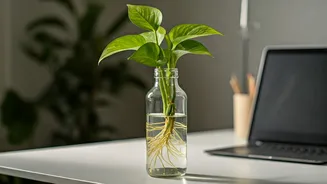
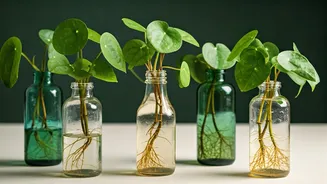
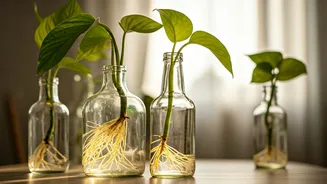
Place your bottle in a spot that receives bright, indirect light. A desk near a window but out of the direct sun is perfect. Now, patience is key. Within one to three weeks, you should start to see fine, white roots emerging from the node. During this time, change the water every 5-7 days to keep it fresh and oxygenated. Once a healthy root system has developed (about an inch or two long), you can choose to either keep the plant in the water indefinitely or transfer it to a pot with soil. For a purely aesthetic desk piece, leaving it in the water is perfectly fine and low-maintenance. Just remember to top up the water as it evaporates. Finally, style your desk. Place your beautiful new creation next to a stack of books, alongside your favourite pen holder, or as a solo green centrepiece. It’s a small, living piece of art that you created yourself.