




A New Space Age for India
For decades, ISRO was the beginning and end of India's space story, earning global respect with cost-effective missions to the Moon and Mars. But a monumental shift is underway. The government has rolled out the red carpet for private enterprise, most
notably with the Indian Space Policy 2023. This landmark policy framework has opened the entire space value chain, from building rockets to operating satellites, to non-governmental entities. To oversee this new era, the Indian National Space Promotion and Authorisation Centre (IN-SPACe) was established as a single-window agency to promote, guide, and authorise private space activities. The goal is to transform the sector from a government-led programme into a thriving national ecosystem, boosting India's share of the global space economy from its current 2-3% to a targeted 10%.
The Trailblazers in the Sky
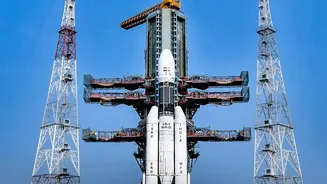
This policy shift has already yielded spectacular results. The most striking example came on July 18, 2026, when Skyroot Aerospace, a startup founded by former ISRO engineers, successfully launched its Vikram-1 rocket. This marked India's first-ever privately developed orbital rocket to reach orbit, a feat that placed India in an elite club with the US and China as nations with private orbital launch capability. But Skyroot is not alone. AgniKul Cosmos is another key player, developing its Agnibaan launch vehicle which features the world's first single-piece 3D-printed semi-cryogenic engine. These companies are demonstrating that private Indian firms can master the complex and challenging technology of rocketry, offering launch services for the booming small satellite market.
More Than Just Launch Vehicles
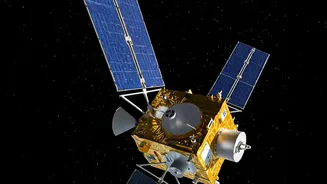
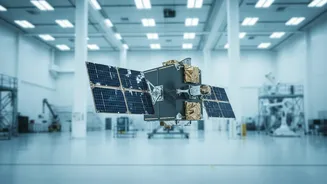
The private sector's contribution extends far beyond just rockets. A whole ecosystem of companies is emerging to tackle different parts of the space value chain. Bengaluru-based Pixxel is building a constellation of advanced hyperspectral earth-imaging satellites, capable of tracking everything from crop health to methane leaks with incredible detail. Companies like Dhruva Space and Azista-BST Aerospace are also making strides in satellite manufacturing. Meanwhile, Bellatrix Aerospace is focused on developing greener and more efficient propulsion systems for satellites. This diversification is crucial, creating a robust domestic supply chain and reducing reliance on foreign components and services.
A Symbiotic Partnership
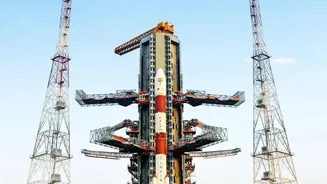
The rise of the private sector does not mean a diminished role for ISRO. Instead, it signals a strategic evolution. By handing over routine manufacturing and operational launches to private firms, ISRO can now dedicate its formidable talent and resources to more ambitious frontiers. This includes deep-space exploration, missions like Gaganyaan (human spaceflight) and Chandrayaan, and advanced research and development. ISRO acts as a mentor and enabler, transferring mature technologies to industry and opening its world-class facilities for use by startups. This collaborative approach is accelerating innovation across the board. The recent talent migration from ISRO to private startups is seen not as a brain drain, but as a strengthening of the overall domestic ecosystem, where experienced engineers apply their expertise to commercial challenges.
The Global Competitive Edge
This public-private synergy is set to turbocharge India's position in the global space market, currently valued at around $8.4 billion but projected to grow to over $40 billion by 2030. The government is actively encouraging this growth by liberalising Foreign Direct Investment (FDI) rules. The updated policy allows up to 74% FDI via the automatic route for satellite manufacturing and operations, and up to 49% for launch vehicles, making the sector more attractive to global investors. With a reputation for cost-effective engineering, combined with the agility of the private sector, India is well-positioned to become a global hub for manufacturing, launch services, and space-based applications.