



What Are Standing Torso Twists?
The standing torso twist is a rotational exercise that targets the muscles around your midsection. Primarily, it strengthens your obliques, the muscles running along the sides of your abdomen. However, a proper twist also engages the entire core, including
the rectus abdominis (the 'six-pack' muscle), the deep transverse abdominis, and the muscles of the lower back. Unlike crunches, which involve forward flexion, this movement trains your body in the transverse plane—the plane of rotation. It's a foundational movement that can be performed with just your bodyweight, making it accessible for nearly everyone, anywhere.
Why Rotational Strength Is Crucial
Many fitness routines focus heavily on forward-and-back movements like squats and presses, neglecting rotation. Yet, twisting is a fundamental pattern in daily life. Think about reaching into the back seat of a car, swinging a golf club, or even just turning to grab something off a shelf. Building rotational strength enhances this functional movement, making everyday activities safer and more efficient. A strong, stable core that can control rotation helps protect the spine, reducing the risk of lower back injuries that often occur from sudden, unprepared twisting motions. For athletes, rotational power is the key to performance in sports like tennis, cricket, and running, where generating force through the torso is essential.
How to Perform the Perfect Twist
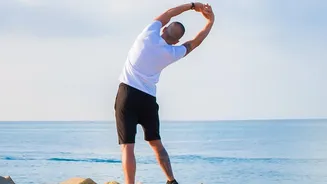
Proper form ensures you reap the benefits while preventing injury. It's about control, not speed. Follow these steps for a perfect bodyweight standing torso twist: 1. Stand with your feet shoulder-width apart and your knees slightly bent. This creates a stable base. 2. Engage your core. Imagine someone is about to poke you in the stomach; brace your abdominal muscles to stabilize your spine. 3. Position your arms. You can cross them over your chest or extend them straight out in front of you at shoulder height. 4. Initiate the twist from your core, not your arms. Slowly and deliberately rotate your torso to one side. The movement should come from your ribcage. 5. Keep your hips stable. Try to keep your lower body and hips facing forward as much as possible to isolate the work in your obliques. 6. Return to the centre with the same control, and then rotate to the other side. Breathe out as you twist and in as you return to the start.
Common Mistakes to Avoid
Many people perform this exercise incorrectly, negating its benefits and risking strain. The most common error is using momentum instead of muscle. Swinging your arms and rushing the movement means your core isn't doing the work. Another frequent mistake is letting the hips rotate along with the torso, which takes the focus off the obliques. Keep your hips as still as you can. Also, watch for a rounding or arching back; maintain a neutral, straight spine throughout the exercise. If you find yourself doing any of these, slow down, reduce your range of motion, and refocus on feeling the contraction in your sides.
Progressions and Variations
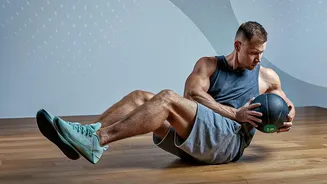
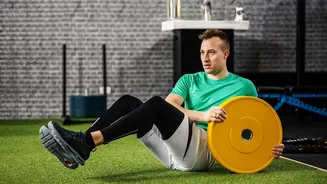
Once you have mastered the bodyweight version, you can increase the challenge. Holding a light weight, like a dumbbell or medicine ball, at your chest adds resistance and forces your core to work harder to control the movement. Another excellent progression is using a resistance band. Anchor the band at chest height to a sturdy object. Stand sideways to the anchor point, hold the band with both hands and arms extended, and rotate your torso away from the anchor. This creates constant tension, significantly increasing the demand on your obliques. For those who need a modification, a seated torso twist on a chair provides more stability while still targeting the same muscles.