





A Shift to Intelligent Orbits
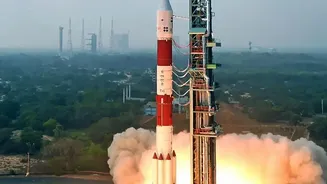
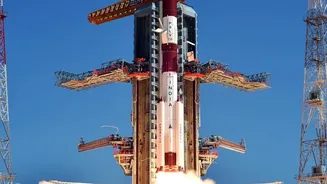
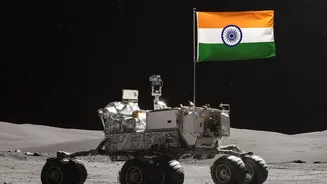
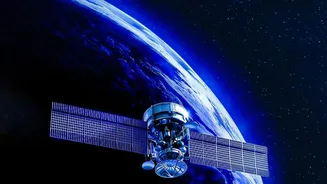
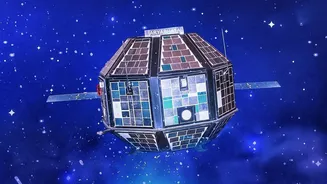
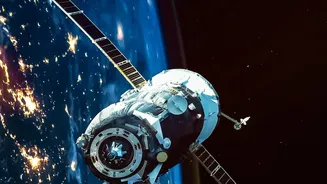
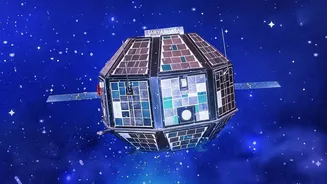
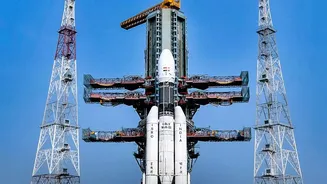
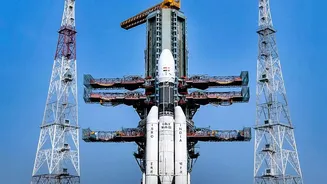
For decades, the Indian Space Research Organisation (ISRO) has made the nation proud with its engineering and frugal innovation, from launching lunar missions to placing a web of satellites in orbit. Now, the frontier is moving from hardware to software,
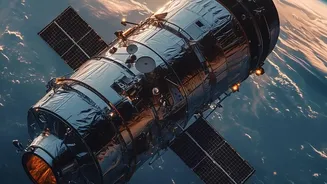
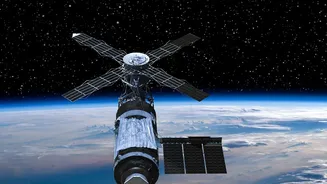
from just seeing to understanding. The integration of Artificial Intelligence (AI) and Machine Learning (ML) is no longer a futuristic concept but a core strategy. The goal is to create smarter, more autonomous space assets that can process data and make decisions in orbit, rather than just relaying raw information back to Earth. This shift to on-board processing and edge computing is seen as transformative, enabling faster, real-time information for governance, disaster management, and strategic planning. This move is essential for handling the sheer volume of data modern satellites can collect and for turning that data into actionable intelligence at unprecedented speeds.
AI on the Frontline of Earth Observation
One of the most significant applications of this new strategy is in Earth observation (EO). India's satellites are the nation's eyes in the sky, monitoring everything from weather patterns and agricultural health to urban sprawl and border activities. AI is poised to make these eyes much sharper. For instance, AI algorithms can sift through terabytes of satellite imagery to automatically detect small-scale deforestation, predict crop yields with greater accuracy, or provide early warnings for natural disasters like floods and cyclones by analysing historical data. ISRO and private firms are developing systems that allow satellites to perform this initial analysis themselves, a concept called edge computing. This means that instead of beaming down massive, unprocessed datasets, the satellite can send down concise, relevant alerts, saving precious bandwidth and time.
Making Human Spaceflight Safer
AI's role is also mission-critical for India's ambitious human spaceflight programme, Gaganyaan. The safety of the astronauts is the highest priority, and AI is being woven into the very fabric of the mission to ensure it. For the initial uncrewed flights, ISRO is using an AI-enabled half-humanoid robot named Vyommitra. This robot will simulate human functions, monitor the cabin environment, and test the life support systems to ensure the vehicle is safe for human travel. For the crewed missions, AI will be crucial for real-time monitoring of astronaut health, managing the spacecraft's life support systems, and providing autonomous navigation and threat detection capabilities, helping the crew respond faster to any challenges.
The Rise of the Private Sector
This technological leap is not being driven by ISRO alone. The opening of India's space sector has unleashed a wave of innovation from private startups. Companies like Digantara are deploying AI-powered sensor networks to track satellites and space debris in real-time, boosting India's space situational awareness. Others, such as Pixxel and Sarvam AI, are collaborating on orbital data centres, aiming to process complex AI models directly in space. The government, through its nodal agency IN-SPACe, is actively encouraging this ecosystem, funding startups working on everything from AI for Earth observation to advanced satellite components. This public-private synergy is creating a vibrant industry, reducing reliance on foreign technology and positioning India as a hub for space innovation.
The Road Ahead: Challenges and Opportunities
The path to a fully AI-integrated space programme is not without its challenges. Developing AI systems that can withstand the harsh radiation and extreme temperatures of space is a significant engineering hurdle. Furthermore, as satellites become more autonomous, ensuring their cybersecurity against potential threats becomes paramount. Building this infrastructure also requires massive investment and a pipeline of skilled talent in both AI and aerospace engineering. However, the opportunity is immense. By successfully integrating AI, India not only strengthens its strategic capabilities but also unlocks powerful tools to address its most pressing developmental challenges, from climate change resilience to resource management. The journey has just begun, but the trajectory is clear: India's future in space is intelligent, autonomous, and increasingly driven by the power of data.