






What is the Merchant Discount Rate (MDR)?
The Merchant Discount Rate, or MDR, is a fee that a merchant pays to their bank for accepting a digital payment from a customer. It's not a charge on the consumer. Instead, it’s a cost of doing business digitally, similar to fees for credit and debit
card transactions. This fee covers the costs incurred by the various parties that make the transaction possible, including the customer's bank, the merchant's bank, and the payment network operator like the National Payments Corporation of India (NPCI). The fee is typically calculated as a percentage of the transaction amount.
How UPI's Pricing Structure Works
For years, most UPI transactions operated under a zero-MDR framework to encourage adoption. However, to ensure the long-term financial sustainability of the UPI infrastructure, a structured MDR was introduced. It's crucial to understand that not all UPI payments are treated the same. Person-to-person (P2P) transfers, like sending money to a friend, remain completely free for both sender and receiver. The new charges only apply to person-to-merchant (P2M) transactions, and even then, there are specific conditions. As of October 2026, a standard MDR of 0.4% applies to merchant payments above ₹2,000. Transactions below this threshold remain free of MDR for merchants.
Why Essential Services Get Special Treatment
This is where the policy becomes strategic. The goal is to keep costs low for critical services and sectors with thin profit margins. Instead of the standard 0.4% MDR, a special, lower flat fee of ₹5 per transaction is applied for payments above ₹2,000 in several 'essential' categories. These categories include railways, telecommunications, insurance, fuel, agricultural inputs, and utility bill payments for services like electricity and water. The logic is straightforward: applying a percentage-based fee could create a significant burden on these high-volume, low-margin sectors. A fixed, nominal fee encourages them to continue accepting digital payments without passing on heavy costs to consumers, ensuring that essential services remain affordable and digitally accessible.
Other Special Categories
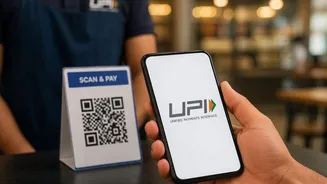
Beyond essential services, the framework also recognizes the unique nature of financial market transactions. To support retail participation in formal investments, payments to stockbrokers, mutual funds, and securities dealers have an even lower MDR of just 0.02% for transactions over ₹2,000, capped at ₹300. This encourages digital investments without the high transaction costs associated with other payment methods. Furthermore, small merchants are also protected. Those receiving up to ₹1 lakh per month via UPI QR codes are exempt from MDR, protecting the vast network of small vendors and kirana stores that have become central to UPI's success. Automated recurring payments, such as for OTT subscriptions or SIPs via UPI AutoPay, are also exempt from these MDR charges.
What This Means for You
For the average consumer, nothing changes directly. UPI remains free to use for all personal payments, and the government has explicitly advised banks to ensure merchants do not pass the MDR cost on to customers at the checkout counter. The fee is part of the merchant's operational costs. However, the introduction of MDR could indirectly influence business practices. While large retailers might absorb the cost to stay competitive, some smaller merchants just above the exemption threshold might feel the pinch, which could theoretically be reflected in overall pricing down the line. But the tiered and capped structure is designed to minimize this impact, keeping UPI significantly cheaper for merchants than credit or debit cards, which have MDRs ranging from 0.9% to over 2%.