









The Rainfall Paradox Explained
On the surface, it doesn’t make sense. A “weak monsoon” refers to the total amount of rainfall received over the entire four-month season being below the long-period average. For a country dependent on these rains, that signals drought and water scarcity.
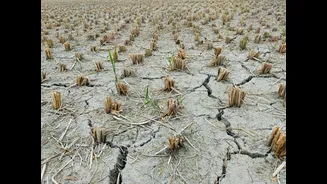
However, this overall deficit can mask a dangerous trend: the rain that does fall arrives in short, intense, and destructive bursts. Instead of the steady, soaking rains needed to replenish groundwater and nurture crops, we are seeing long dry spells punctuated by torrential downpours that the land cannot absorb, leading to flash floods and landslides. This means India can simultaneously suffer from a lack of useful water while being inundated by destructive floods.
The Science Behind the Shift
This erratic behaviour is a clear fingerprint of climate change. A warmer atmosphere holds more moisture. For every degree Celsius of warming, the air’s capacity to hold water vapour increases, leading to heavier downpours when it does rain. Studies show that while the overall monsoon circulation has weakened since the 1950s, the frequency of extreme rainfall events has increased threefold in some parts of central India. The rapid warming of the Indian Ocean and the Arabian Sea, in particular, fuels these intense moisture surges. Phenomena like El Niño can further complicate matters, often linked to weaker monsoons but also potentially contributing to more extreme, concentrated rainfall events. The monsoon's character is fundamentally changing from a reliable seasonal pattern to one of volatility and chaos.
A Nightmare for Indian Agriculture
For India’s farmers, this new pattern is calamitous. Agriculture is built around the timing and predictability of the monsoon. Long dry spells at the beginning of the season can cause newly sown seeds to fail, forcing farmers to replant and incur more debt. When the rains finally arrive in a deluge, they don't gently water the crops but instead cause soil erosion and wash away young plants. This dual threat of 'too little, then too much' disrupts the entire cropping calendar, from sowing to harvest. It impacts not just crop yields but also the quality of the produce, threatening food security and fuelling food price inflation that affects every citizen. The problem is no longer just the quantity of rain, but its collapsed timing and intensity.
Our Cities Are Not Sponges
Urban India faces a parallel crisis. The same weak monsoon that fails to fill reservoirs, leading to water cuts and shortages, also delivers rainfall in bursts that our cities are ill-equipped to handle. Unplanned urbanisation, with its vast expanses of concrete and asphalt, prevents rainwater from seeping into the ground. Poorly maintained or inadequate drainage systems are quickly overwhelmed by a few hours of extreme rain, resulting in severe waterlogging and flash floods that bring cities to a standstill. This creates a situation where urban areas suffer from both water scarcity and flooding. The infrastructure designed for a different kind of monsoon is proving dangerously inadequate for the new climate reality.
Adapting to the New Normal
This trend of weak monsoons with extreme rain events is not a freak occurrence; it is the new normal. Scientific models project that this variability will only increase in the future. This demands a fundamental shift in India's approach to water management, urban planning, and agriculture. It means investing in climate-resilient crops that can withstand both dry spells and intense rain. It requires building better early warning systems for extreme weather events and redesigning our cities with improved drainage and more green spaces to absorb water. Simply looking at the seasonal rainfall total is no longer enough; we must plan for the volatility that now defines India's most critical weather system.