







Reimagining Rainy-Day Cravings
As the skies open up, a collective craving for warm, spicy, and often deep-fried snacks sweeps across India. From Mumbai's vada pav to Delhi's samosas, these foods are deeply woven into the country's culinary culture. The cool, damp weather naturally
makes us yearn for something hot and comforting. However, a growing awareness around health and wellness is inspiring a delicious evolution. Chefs and home cooks are no longer just recreating old favourites; they are reinventing them. The focus is shifting towards making these indulgent treats lighter and more nutritious without sacrificing the soul-warming comfort they provide. This is being achieved by incorporating powerful, flavour-packed ingredients like fresh herbs and gut-friendly fermented foods, which have always been a part of traditional Indian diets but are now being used in innovative ways.
The Power of Fresh Herbs
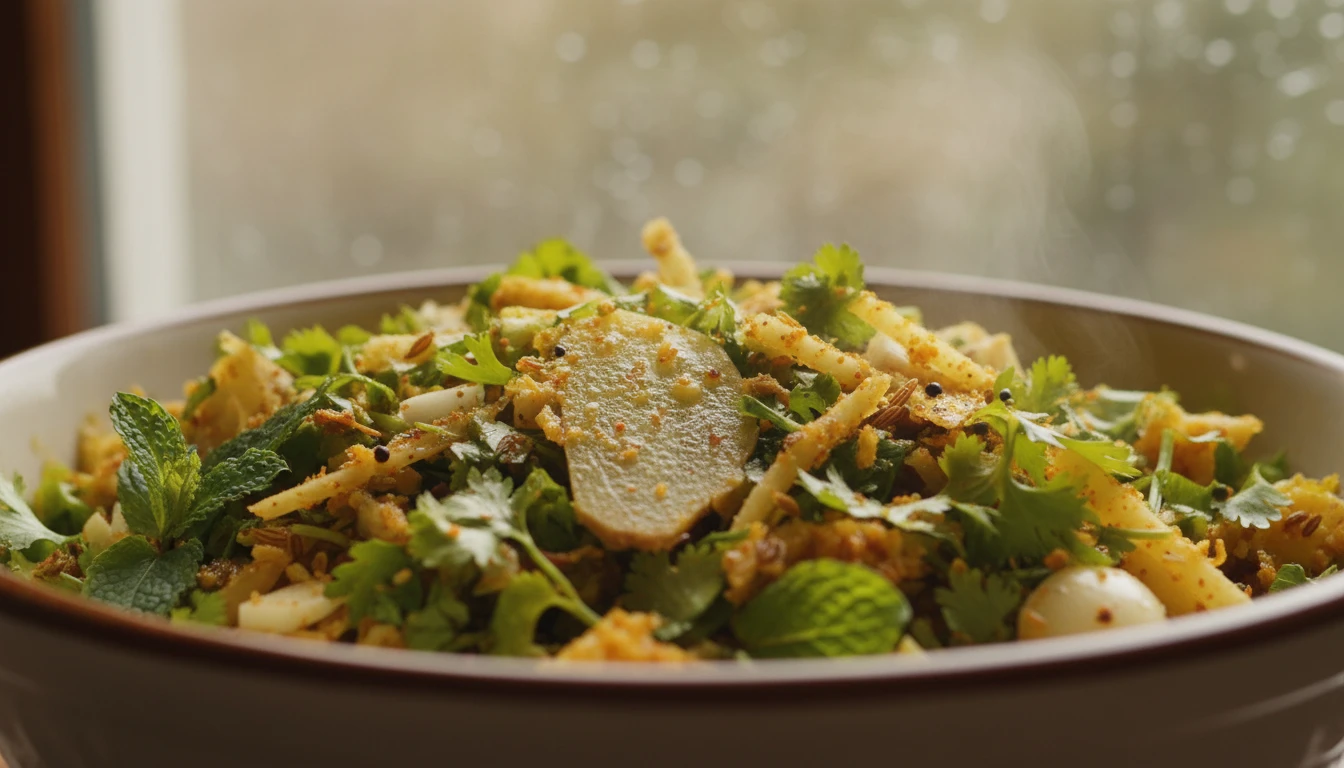
Traditionally, Indian monsoon cooking has always used spices like ginger, turmeric, and black pepper for their warming and digestive properties. The modern twist involves a more pronounced use of fresh herbs, not just as a garnish but as a core ingredient. Think pakoras infused with fresh mint and cilantro, or soups and curries brightened with basil and parsley. Herbs like ginger, garlic, and mint are being celebrated for their ability to boost immunity and aid digestion, which can be sluggish during the humid season. Chefs are incorporating adrak (ginger) into grilled meats and even halwa for its comforting warmth, while garlic is being used generously in dishes for its digestive benefits. This approach not only adds layers of fresh flavour but also packs a nutritional punch, providing essential vitamins and antioxidants.
The Fermentation Factor
Fermentation is an ancient Indian culinary technique, central to staples like dosa, idli, and dahi (yogurt). This process enhances nutrient absorption, makes food easier to digest, and introduces beneficial probiotics that support gut health. Today, this age-old wisdom is being applied to monsoon comfort foods in new and exciting ways. Chefs are experimenting with sourdough-inspired batters for idlis and kombucha-infused chutneys. Leftover rice is fermented overnight to create nourishing porridges like 'poita bhaat' in Assam. Even traditional snacks are getting a fermented upgrade. Instead of plain besan, some are using fermented batters made from rice and lentils for pakoras, making them lighter and easier on the stomach. In the Northeast, fermented bamboo shoots and soybeans are staples that add a unique umami depth to monsoon dishes.
Healthier Cooking, Same Great Taste
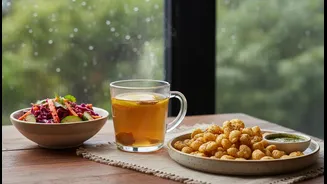
This nutritional makeover isn't just about adding new ingredients; it's also about rethinking cooking methods. The beloved deep-fried pakora, for instance, is being reimagined. Many are now opting for baked, air-fried, or pan-fried versions that drastically reduce the oil content while maintaining a satisfying crunch. Recipes for baked pakoras often use a mix of chickpea and rice flour to achieve crispiness without deep-frying. Similarly, samosas are being baked instead of fried, and snacks like roasted makhana (fox nuts) and steamed corn chaat are gaining popularity as lighter alternatives to heavy, oily snacks. The idea is to satisfy the craving for something crispy and savoury in a way that aligns with a healthier lifestyle, proving that monsoon indulgence doesn't have to be a guilty pleasure.
Bring the Trend Home
Embracing this trend in your own kitchen is simple. Start by adding finely chopped herbs like mint, parsley, or even dill to your regular bhajiya or vada batter. Experiment with a side of fermented dip, like a simple yogurt and herb sauce, instead of a sugary chutney. For a gut-friendly twist, try making dhokla, which uses a fermented batter of rice and chickpea flour. When making pakoras, try baking them on a parchment-lined sheet at a high temperature until golden. You can also make a comforting and medicinal pepper rasam or a nourishing khichdi, both classic monsoon dishes that are inherently healthy and warming. The goal is to enhance, not replace, the beloved flavours of the season.