

What is a 'Smoke Point'?
The 'smoke point' is the temperature at which a cooking fat stops shimmering and starts visibly smoking. This isn't just a sign that your pan is hot; it's a crucial chemical warning. When an oil or fat is heated past its smoke point, its structure begins
to break down. This process, called thermal degradation, does two undesirable things. First, it creates an acrid, burnt flavour that can ruin your dish. Second, and more importantly for your health, it generates harmful compounds like free radicals and acrolein. These compounds can contribute to inflammation and oxidative stress in the body if consumed regularly. Using a fat within its safe temperature range ensures your food tastes better and retains more of its nutritional value.
Ghee's Secret Weapon: High-Heat Stability
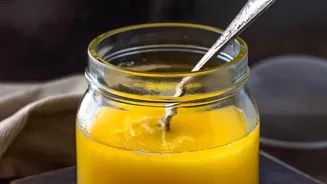
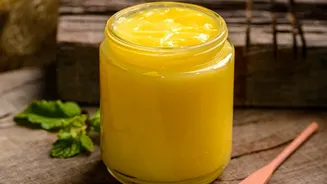
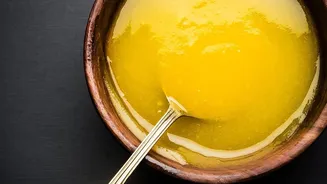
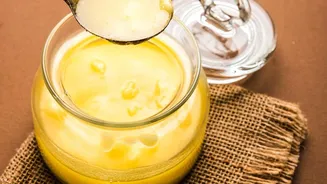
This is where ghee, a staple of traditional Indian kitchens, truly shines. Ghee has an impressively high smoke point, typically around 250°C (482°F). This is significantly higher than many common cooking oils. For instance, butter begins to smoke at a much lower 175°C, while unrefined oils like extra virgin olive oil and coconut oil also have lower smoke points. Even many refined vegetable oils, like sunflower or soybean oil, often have smoke points that sit below ghee's, typically in the 204-232°C range. Ghee's stability comes from the clarification process, where milk solids and water are removed. It is these milk solids that cause butter to burn quickly. What’s left is pure, stable butterfat that can handle the high temperatures required for many Indian cooking techniques.
The Problem with Common Cooking Oils
Many modern, refined vegetable oils were once marketed as 'heart-healthy' alternatives to traditional fats. However, many of these oils are rich in polyunsaturated fats which, while beneficial in some contexts, can be unstable under heat. When used for high-temperature cooking like tadka or deep-frying—methods where temperatures can easily approach or exceed 200°C—these oils can break down. This not only destroys beneficial nutrients but also produces the harmful compounds mentioned earlier. Furthermore, many refined oils undergo industrial processing with chemical solvents and deodorizers, which strips them of natural nutrients. Ghee, in contrast, is created through a simple process of heating and filtering, retaining fat-soluble vitamins like A, D, E, and K.
A Modern Twist: The Rise of Infused Ghee
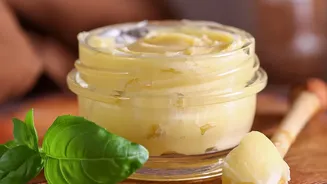
Infused ghee takes the benefits one step further. It involves steeping herbs and spices like turmeric, garlic, or even chillies into the ghee as it clarifies or during a gentle reheating. This process marries the flavour of the botanicals with the rich, nutty taste of the ghee. Because the base is still pure, clarified fat, the high smoke point remains intact. The infusion adds a layer of complex flavour without compromising the ghee's stability for high-heat cooking. This makes infused ghee a powerful two-in-one ingredient: a stable cooking fat and a flavour enhancer. It's a perfect way to add depth to dals, sautés, and roasted vegetables from the very first step.
Best Uses in the Indian Kitchen
Understanding smoke points helps you become a smarter cook. Ghee's high tolerance for heat makes it the ideal choice for methods like deep-frying pakoras, searing kebabs, or preparing a sizzling tadka for dal. Its stability ensures you get a crispy, golden-brown texture without the risk of burnt flavours or harmful byproducts. For dishes where the fat is added at the end or used for low-heat cooking, other oils can be suitable. For instance, a drizzle of cold-pressed mustard oil over a dish for pungent flavour is a regional classic. But for any cooking that involves a truly hot pan, ghee offers a level of safety and performance that many common oils can't match. It’s not just about tradition; it’s about good food science.