


An Upward Journey to the Stratosphere
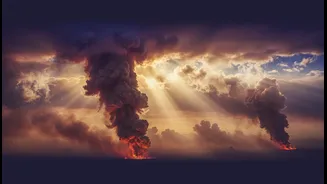
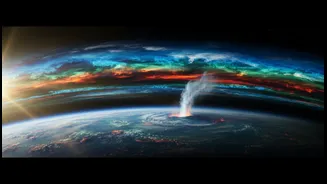
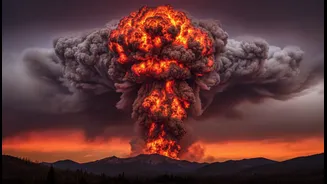
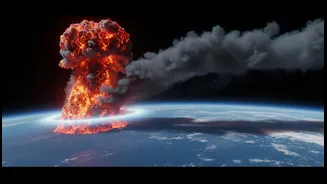
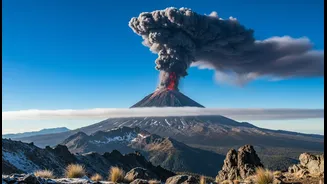
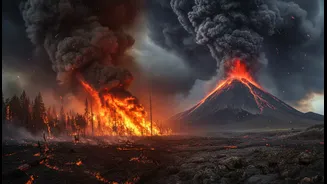
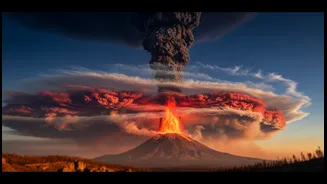
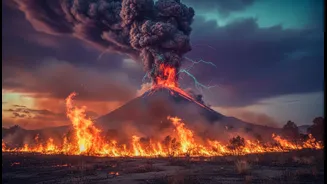
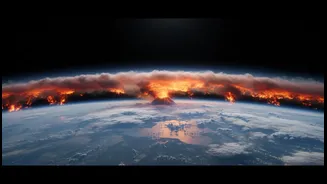
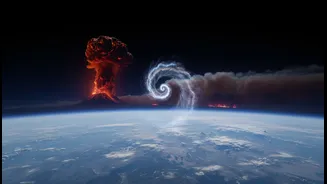
When a massive wildfire burns or a volcano erupts, the intense heat creates powerful updrafts. These updrafts act like atmospheric elevators, punching through the troposphere—the lowest layer of the atmosphere where we live and where most weather occurs—and
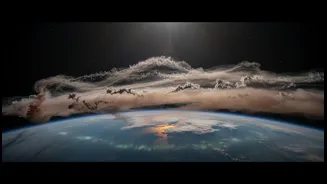
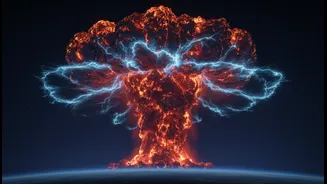
injecting a cocktail of particles directly into the stratosphere. This layer, which extends from about 10 to 50 kilometers above Earth, is typically calm and very dry. The injected materials are known as aerosols, a broad term for tiny solid particles or liquid droplets suspended in the air. Volcanic eruptions primarily inject sulfur dioxide, which converts into sulfate aerosols, while wildfires release vast quantities of black carbon and organic carbon particles. This process is often facilitated by fire-induced thunderstorms, known as pyrocumulonimbus clouds, which are powerful enough to act like chimneys for smoke.
Moisture in a Normally Dry Layer
It's not just particles that make the journey. These powerful events also transport enormous amounts of water vapor into the stratosphere. The eruption of the underwater Hunga Tonga volcano in 2022, for example, launched an unprecedented volume of nearly 150 million tons of water vapor into this high-altitude layer. Extreme wildfires can also directly inject moisture through the formation of pyrocumulonimbus clouds, which are essentially smoke-infused thunderstorms. This injection of moisture is significant because the stratosphere is naturally arid. Introducing large amounts of water fundamentally alters its composition and sets the stage for new chemical interactions. Recent findings show that these episodic injections from volcanoes and wildfires are now considered principal factors influencing stratospheric moisture levels, a role previously underestimated.
A High-Altitude Chemical Reaction
Once in the stratosphere, aerosols and water vapor don't just float passively. The surfaces of these aerosol particles provide platforms for chemical reactions that wouldn't otherwise occur. The presence of excess water vapor, alongside aerosols from wildfires or volcanoes, can accelerate chemical cycles that affect the ozone layer. Studies of the 2019-2020 Australian wildfires showed that smoke particles led to a decrease in stratospheric nitrogen dioxide, a key chemical fingerprint indicating reactions that can contribute to ozone depletion. The combined effect of more surface area for reactions (from the aerosols) and more ingredients (like water) changes the stratosphere's chemical balance. These changes can persist for months or even years, as the particles can remain suspended in the stable stratospheric layer for long periods.
Global Consequences on Climate and Ozone
The impacts of these stratospheric changes are global, not local. Sulfate aerosols from volcanoes are well-known for reflecting sunlight back into space, which can cause a temporary cooling of the Earth's surface. The 1991 eruption of Mount Pinatubo, for instance, cooled the planet by about half a degree Celsius for a few years. Wildfire aerosols are more complex; their dark, carbon-based particles can absorb solar radiation, leading to a warming of the stratosphere itself. This stratospheric warming can alter atmospheric circulation patterns. Furthermore, the chemical changes triggered by these events can impact the recovery of the ozone layer. While the world has made progress in healing the ozone hole through the Montreal Protocol, increased frequency of large wildfires could potentially slow this recovery by enhancing ozone-depleting chemical processes.