

A New Chapter in an Ancient Quest
For millennia, humanity has looked to the stars and wondered, “Are we alone?” In recent decades, that question has evolved from a philosophical one into a scientific one. With thousands of exoplanets—planets orbiting other stars—now discovered, the challenge
is no longer just finding them, but sorting them. The ultimate goal is to find rocky, Earth-sized planets with atmospheres that could support life. To do this efficiently, astronomers are realising that knowing where life cannot exist is just as important as knowing where it might. This process of cosmic elimination is becoming a cornerstone of the search for habitable worlds, and the James Webb Space Telescope (JWST) is the most powerful tool ever built for the job.
The Case of the Barren World
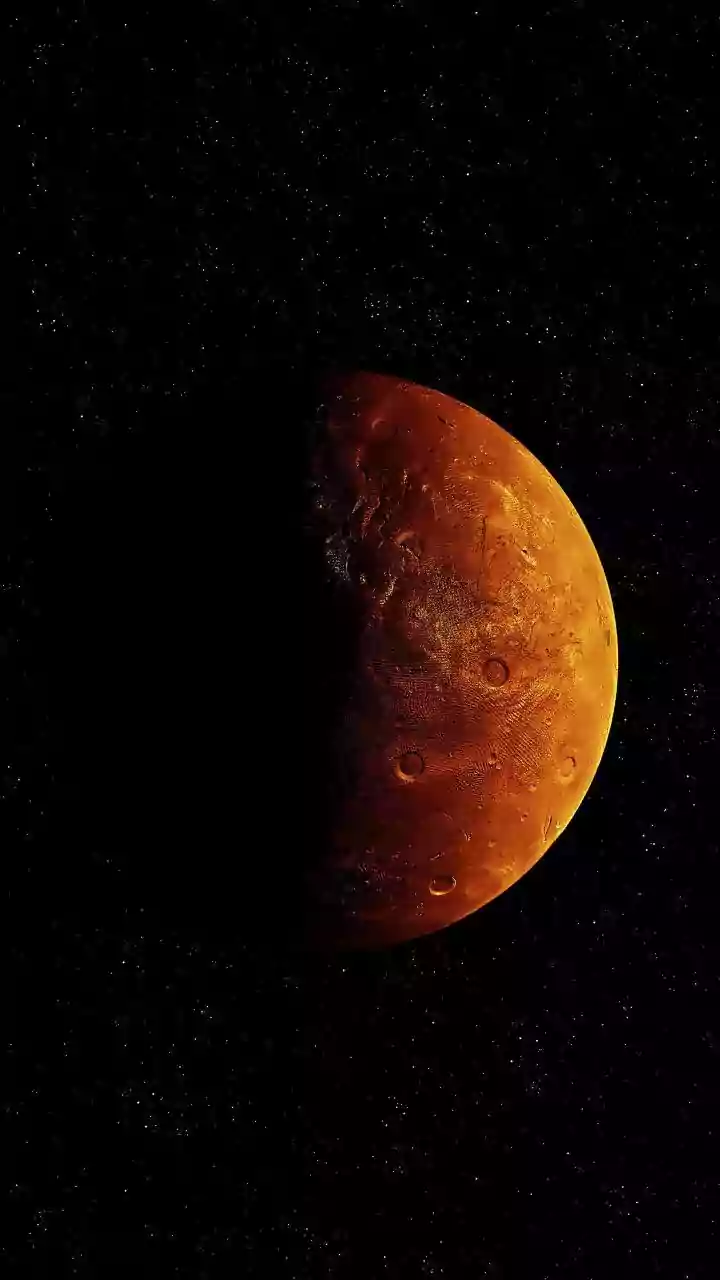
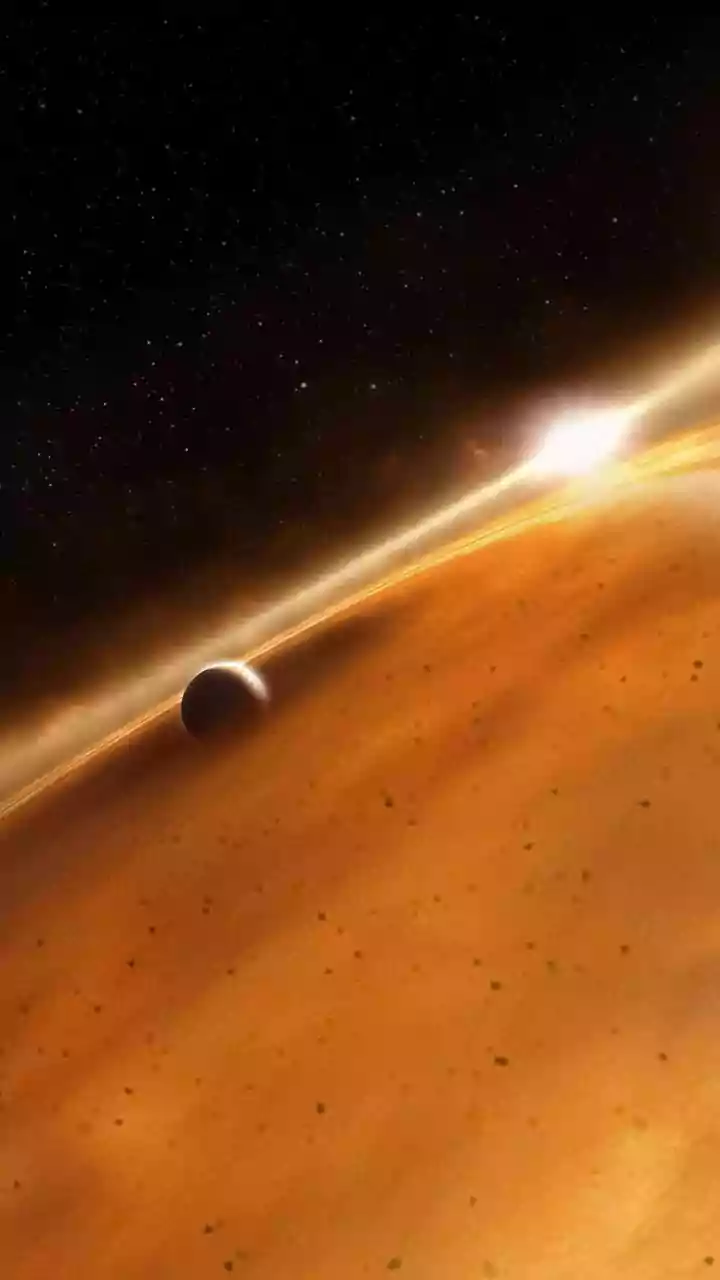
A key example in this detective story is a planet named GJ 1252 b, located about 65 light-years away. It’s a “super-Earth,” slightly larger than our own planet, but its situation is far more extreme. It orbits its star so closely that a single year lasts just 12 Earth hours. Initial observations made with NASA’s earlier Spitzer Space Telescope revealed a world scorched by intense heat. The dayside temperature is estimated to reach a staggering 1,228 degrees Celsius—hot enough to melt gold, silver, and copper. This intense heat, combined with the brutal radiation from its parent star, led scientists to a startling conclusion: GJ 1252 b likely has no atmosphere at all. It was blown away into space.
Why No Atmosphere Is Big News
Confirming a planet has no atmosphere might sound like a disappointing discovery, but scientifically, it is incredibly valuable. GJ 1252 b orbits a red dwarf, the most common type of star in our Milky Way galaxy. While these stars are smaller and cooler than our Sun, they are notoriously volatile, especially in their youth, frequently blasting nearby planets with powerful flares and stellar winds. This radiation can strip a planet’s atmosphere, leaving behind a barren rock. By studying worlds like GJ 1252 b, where atmospheric stripping appears complete, scientists can test and refine their computer models. It provides a real-world example of what happens in the worst-case scenario, helping astronomers understand the minimum conditions a planet needs to hold onto its precious blanket of gas.
Webb Sharpens the Search
This is where the James Webb Space Telescope takes center stage. While earlier observatories like Spitzer gave us tantalizing clues, JWST has the unprecedented sensitivity to study the atmospheres of rocky exoplanets in stunning detail. Using a technique called secondary eclipse observation, Webb can measure the faint heat radiating from a planet itself. By measuring this thermal emission, scientists can determine if a planet has an atmosphere that traps heat or if it's just a bare rock exposed to space. Webb is now conducting major surveys of rocky worlds orbiting red dwarfs, a project that builds directly on the initial findings from planets like GJ 1252 b. By definitively identifying which planets have lost their atmospheres, astronomers can remove them from the list of potential targets, allowing them to focus precious and expensive telescope time on more promising candidates.
Beyond the 'Goldilocks Zone'
This research is fundamentally changing our understanding of the “habitable zone,” often called the “Goldilocks zone.” This is the orbital region around a star where temperatures are just right for liquid water to exist on a planet’s surface. However, the case of GJ 1252 b and others like it prove that location isn’t everything. A planet can be in the perfect spot for liquid water, but if its star is too active and has stripped away its atmosphere, the planet will be uninhabitable. The ability to retain an atmosphere is emerging as a critical factor for habitability, just as important as temperature. This adds a crucial new filter to the search, helping scientists create a much more nuanced and realistic map of where to look for life.