




Stiff, tight hamstrings are a common complaint, especially for those of us who spend hours sitting at a desk. This tension doesn't just feel uncomfortable; it can contribute to poor posture and lower back pain. But there is good news.
Why Healthy Hamstrings Matter
The hamstrings are
a group of three large muscles running along the back of your thighs, connecting your pelvis to your knees. They are crucial for everyday movements like walking, bending, and standing upright. When they become tight, they can pull on the pelvis, causing it to tilt. This tilt can flatten the natural curve of your lower back, leading to increased stress on your spine and that all-too-familiar lower back ache. Conversely, maintaining flexible hamstrings helps support proper posture, reduces the risk of injury, and improves your overall range of motion, making daily activities feel easier and more fluid. For those who enjoy running or other sports, flexible hamstrings can even enhance athletic performance.
Seated Forward Bend (Paschimottanasana)
This classic seated pose is one of the most effective for a deep hamstring stretch. Start by sitting on the floor with your legs extended straight in front of you. For a better pelvic tilt, sit on the edge of a folded blanket. Inhale and lengthen your spine, sitting up tall. As you exhale, begin to hinge forward from your hips, not your waist, imagining your belly moving towards your thighs. Keep your back as straight as possible. Don’t worry about touching your toes; rest your hands on your shins or ankles. If your hamstrings are very tight, keep a slight bend in your knees. To deepen the stretch without compromising form, you can loop a yoga strap or a towel around the balls of your feet, holding an end in each hand. Hold for 30 to 60 seconds, breathing deeply.
Head-to-Knee Pose (Janu Sirsasana)
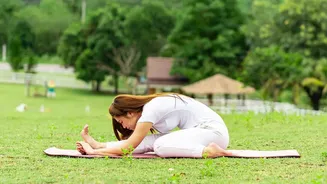
This pose is a gentler variation that stretches one hamstring at a time, making it very accessible for beginners. From a seated position, extend your left leg straight. Bend your right knee and bring the sole of your right foot to your inner left thigh. Inhale to lengthen your spine, and gently twist your torso so your navel is aligned with your extended left leg. On an exhale, fold forward over the left leg, again hinging from the hips. Reach for your left foot, ankle, or shin, whatever is accessible without rounding your back significantly. This pose not only stretches the hamstrings but also the groin and provides a mild twist for the spine. Hold for at least five deep breaths before slowly coming up and repeating on the other side.
Wide-Angle Seated Forward Bend (Upavistha Konasana)
This pose targets both the hamstrings and the inner thighs (adductors). Sit on the floor and open your legs into a wide 'V' shape. Again, sitting on a folded blanket can help you hinge forward. Only spread your legs as wide as you can while still being able to sit comfortably upright with your spine straight. Flex your feet so your toes and kneecaps point toward the ceiling. Inhale to lengthen your spine, and as you exhale, walk your hands forward between your legs. Keep your back straight, leading with your chest. Stop when you feel a comfortable stretch. You don't need to bring your torso to the floor; the benefits come from maintaining the forward tilt from your hips. Hold the pose for 30 to 60 seconds, focusing on your breath.
Creating Your Daily Ritual
The key to unlocking flexibility is consistency. Aim to practice these simple seated poses for 5-10 minutes every day rather than one long session per week. You could do them in the morning to wake up your body, or in the evening to release the tension from the day. Always listen to your body. A stretch should feel like a mild pulling sensation, not a sharp pain. Move slowly and use your breath to guide you, exhaling as you deepen into a stretch. Over time, you'll notice not just increased hamstring flexibility but also a greater sense of ease in your lower back and improved posture in your daily life.