


A Sweet Discovery in a Cosmic Cloud
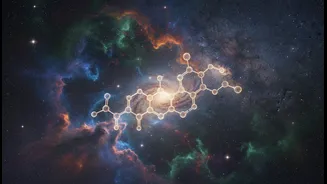
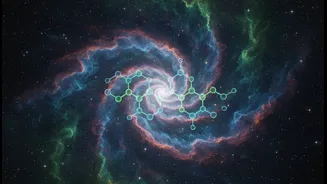
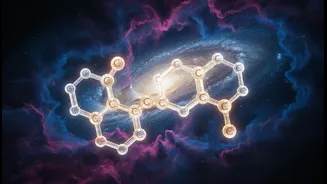
An international team of scientists has detected molecules of a sugar called erythrulose in a vast cloud of gas and dust near the centre of our Milky Way galaxy. This marks the first time a “true sugar” has been unambiguously identified in the interstellar
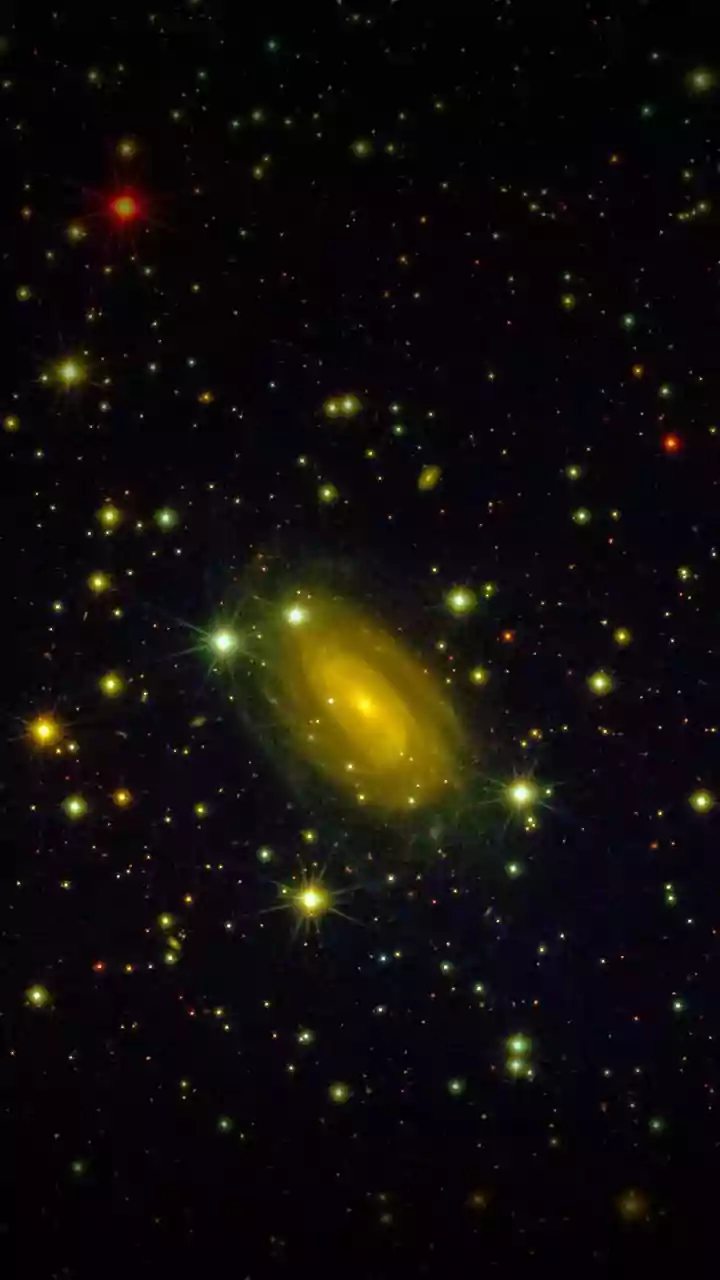
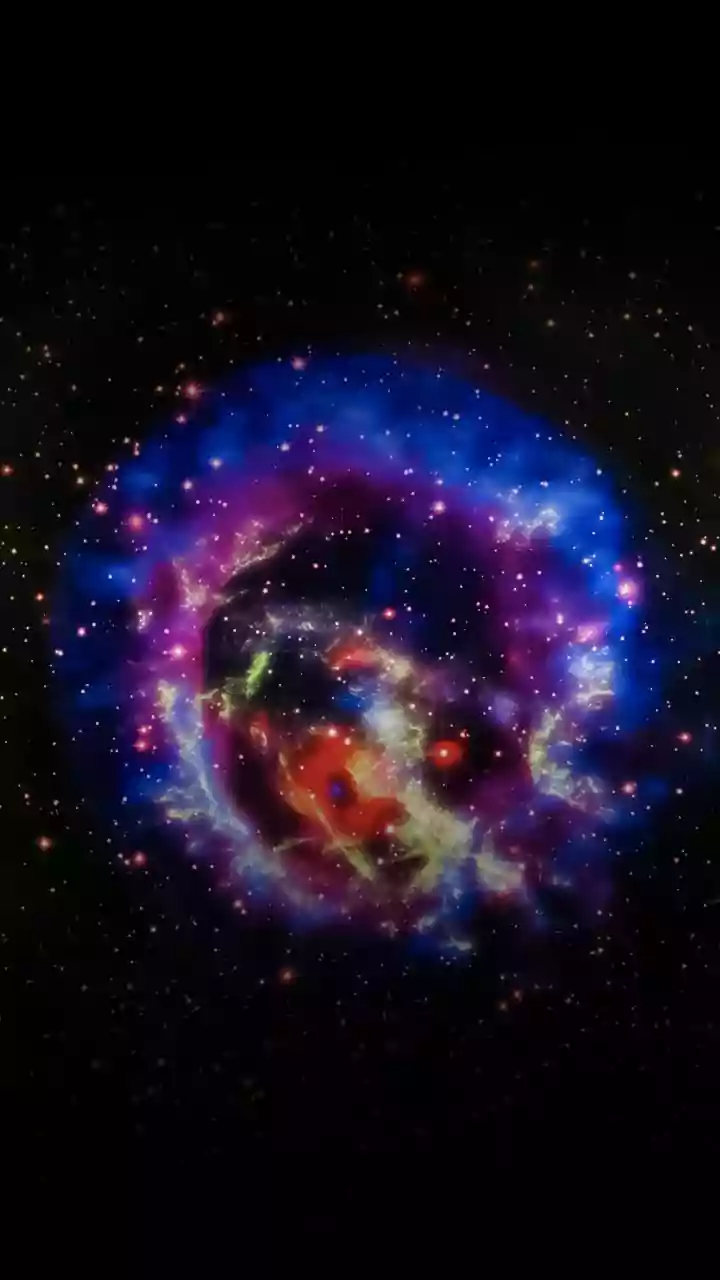
medium, the seemingly empty space between stars. The discovery was made using the highly sensitive Yebes 40-m and IRAM 30-m radio telescopes, which scanned a chemically rich molecular cloud known as G+0.693-0.027, located about 27,000 light-years from Earth. By analysing the faint radio signals, researchers identified 12 distinct spectral lines that perfectly matched the unique signature of erythrulose. Here on Earth, this particular four-carbon sugar is found in things as common as raspberries and some sunless tanning products.
The Building Blocks of Life
This discovery is more than just a cosmic curiosity; it strikes at the heart of one of science's biggest questions: how did life begin? Sugars are fundamental to biology as we know it. They are not only a key energy source for metabolic processes but also form the structural backbone of RNA and DNA, the molecules that carry life's genetic code. For years, scientists have puzzled over how the first sugars formed on the early Earth, as laboratory conditions mimicking that environment have failed to produce them in sufficient quantities. While sugars have previously been found in meteorites and asteroid samples, this new finding provides direct evidence that they can form in interstellar space, long before planets even exist. This suggests that the raw ingredients for life are not unique to planets but are manufactured in the vast chemical factories of interstellar clouds.
From Stardust to Planets
Molecular clouds like G+0.693-0.027 are stellar nurseries, the very places where stars and planetary systems are born. The detection of erythrulose within one supports the theory that prebiotic molecules are cooked up in these clouds, frozen onto dust grains, and then incorporated into the swirling disks of material that eventually form comets, asteroids, and planets. These cosmic bodies then act as delivery vehicles. Scientists estimate that during the Late Heavy Bombardment, a period from about 4.1 to 3.8 billion years ago, Earth was pelted by space rocks. Based on the abundance of erythrulose found, researchers calculate that anywhere from half a million to 50 million tonnes of this sugar could have been delivered to our young planet, contributing to the “prebiotic soup” from which life may have emerged.
An Unexpected Abundance
What surprised researchers was not just finding sugar, but which sugar they found. The prevailing theory in astrochemistry suggested that complex molecules grow one carbon atom at a time. Following this logic, scientists expected to find simpler, three-carbon sugars in greater abundance. Yet, despite the telescopes' high sensitivity, no three-carbon sugars were detected at all. Erythrulose, a more complex four-carbon sugar, was at least eight times more plentiful. This unexpected result challenges existing models and suggests that erythrulose might form by combining two-carbon molecules on the surface of interstellar ice grains, a more efficient pathway than previously thought.
The Search for Our Cosmic Recipe
The detection of erythrulose is a significant milestone, confirming that the universe is capable of making complex, life-relevant molecules far from any planet. For researchers, this is a thrilling step forward. As co-author of the study Carlos Briones notes, it “opens up the possibility of discovering in space other sugars such as ribose, which is part of RNA, and other important molecules for the origin of life.” Each new molecular discovery is like finding another ingredient in the cosmic recipe for life. By understanding what’s available out there in the galaxy’s pantry, scientists can piece together a more complete picture of how a barren, rocky planet like the early Earth could have transformed into the vibrant, living world we inhabit today.