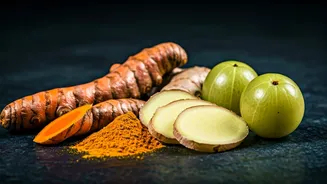





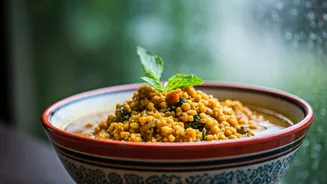


Turmeric (Haldi): The Golden Healer
This vibrant yellow spice, a staple in Indian kitchens, is a powerhouse of wellness. [8] Turmeric's active compound, curcumin, has potent anti-inflammatory and antioxidant properties that are especially beneficial during the monsoon. [2, 24] A strong
immune system is your first line of defense against common seasonal ailments like colds and the flu, and turmeric helps bolster it. [24] Incorporating it into your diet is simple. Add a pinch to your curries and vegetables, or enjoy a warm, soothing glass of turmeric milk before bed to help your body fight off infections. [3, 8]
Ginger (Adrak): The Digestive Aid
Ginger is another kitchen essential renowned for its medicinal benefits. [25] It is particularly effective during the rainy season because it aids digestion, which can become sluggish in the humid weather. [14, 26] Its anti-inflammatory properties can help soothe a sore throat, while its antimicrobial compounds may help your body fight respiratory infections. [23, 24] A hot cup of ginger tea is not only comforting on a rainy day but also a great way to boost your metabolism and keep illnesses at bay. [23, 26]
Garlic (Lehsun): The Immunity Booster
Don't underestimate the power of this pungent herb. Garlic contains allicin, a compound known for its strong antibacterial and antiviral properties. [2] Regular consumption of garlic can stimulate the production of white blood cells, which are crucial for fighting infections. [2, 25] This makes it an essential addition to your diet when the risk of falling sick is higher. You can easily add chopped garlic to your daily meals, from dals to stir-fries, to strengthen your body's natural defenses against seasonal bugs. [17, 26]
Jamun (Indian Blackberry): The Seasonal Star
Eating seasonal fruits is one of the best ways to align your body with the changing weather. [10] Jamun, a deep purple fruit available during the monsoon, is packed with nutrients. [10, 14] It is an excellent source of Vitamin C, iron, and antioxidants, all of which contribute to a stronger immune system and help prevent infections. [7, 10, 21] Jamun is also low in calories and high in dietary fiber, aiding digestion and promoting gut health, which can be a concern during this season. [7, 10, 12]
Pomegranate (Anaar): The Antioxidant Powerhouse
This vibrant fruit is more than just a pretty addition to your plate. Pomegranates are loaded with antioxidants that help protect your body's cells from damage and reduce inflammation. [5, 16] They are also a great source of Vitamin C, which supports the immune system's ability to fight off viral infections that are common during the monsoon. [5, 21] Enjoying the juicy seeds on their own or adding them to salads and yogurt is a delicious way to keep your body strong.
Yogurt (Dahi): The Gut Guardian
A healthy gut is fundamental to a strong immune system. Yogurt is a fantastic source of probiotics, which are beneficial bacteria that help maintain a healthy balance in your digestive tract. [2, 4] This is crucial during the monsoon, when the risk of digestive issues and water-borne diseases increases. [4] Opt for plain, low-fat yogurt to reap the maximum benefits. You can have it with your meals or as a snack, perhaps with some fruit, to support both your gut and your overall immunity. [2]
Bitter Vegetables: The Body Cleansers
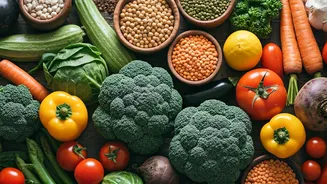
Vegetables like bitter gourd (karela) might not be everyone's favourite, but they are incredibly beneficial during the rainy season. [17] These vegetables are packed with essential vitamins, antioxidants, and have detoxifying properties that help cleanse the body. [14, 17] Bitter gourd, for instance, is rich in Vitamin C and has antiviral properties. [14, 21] Lightly cooked preparations of seasonal vegetables like bottle gourd (lauki) are also recommended as they are easy on the digestive system. [14]