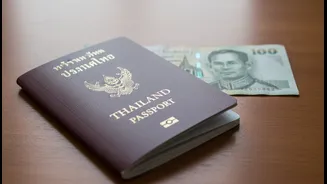








The Golden Ticket: 30 Days, No Visa
In a move that brings clarity and relief to travellers, the Thai government has confirmed that Indian passport holders can continue to enter the country without a visa. After a period of uncertainty following a proposal in May 2026 to change the rules,
the cabinet has decided to retain the visa exemption. The updated policy allows for a stay of up to 30 days. While this is a reduction from the previous temporary 60-day allowance, it firmly establishes a clear, hassle-free entry process. This decision was made after officials noted that confusion over the proposed changes led to a nearly 20% drop in arrivals from India, a key tourism market. By reverting to a straightforward visa-free system, Thailand is rolling out the welcome mat for Indian visitors.
What This Means For Your Trip
For the average Indian tourist, this policy is a significant advantage. The 30-day visa-free stay aligns perfectly with typical holiday patterns, as most Indian visitors spend between 7 to 10 days in the country. The primary benefits are twofold: cost and convenience. You save on visa application fees and, more importantly, avoid the paperwork and potential processing delays associated with applying for a visa in advance. This allows for more spontaneous and flexible travel planning. The decision to scrap the planned requirement for a Visa-on-Arrival and instead offer a true visa exemption simplifies the entry process immensely, reducing queues and stress at the airport.
Beyond the Visa: What You Still Need
While you won't need a visa sticker in your passport, 'visa-free' doesn't mean 'document-free'. To ensure a smooth entry, Indian travellers should still have several key documents ready for immigration. This includes a passport with at least six months of validity, a confirmed return or onward flight ticket, and proof of accommodation for your stay. You may also be asked to show proof of sufficient funds for your trip, typically around 10,000 Thai Baht per person. Additionally, all foreign travellers are required to complete the Thailand Digital Arrival Card (TDAC) online before arrival. Having these items organised will make your arrival seamless.
How Thailand Stacks Up in Asia
The continuation of this policy keeps Thailand highly competitive as a destination for Indian tourists. Many of its regional peers also offer simplified entry. Malaysia, for instance, provides a 30-day visa-free stay for Indians until the end of 2026. Vietnam offers an e-visa that is popular with Indian travellers, while Singapore also requires an e-visa. By maintaining a true visa-free regime, Thailand positions itself alongside Malaysia as one of the most accessible destinations in Southeast Asia, eliminating an extra step and fee that an e-visa or visa-on-arrival requires. This distinction is crucial for attracting the large and growing market of Indian outbound tourists.
A Strategic Welcome Mat
Thailand's decision is a clear strategic move to bolster its vital tourism industry. India ranks as one of the top three sources of tourists for the country, alongside China and Malaysia. The government's quick reversal on the proposed visa changes demonstrates a recognition of the Indian market's importance. By ensuring entry remains easy, Thailand aims to not only recover the recent dip in arrivals but also to solidify its reputation as a premier, welcoming destination. The policy balances the economic imperative of tourism with national security by enhancing digital screening through the TDAC system.