





A Library Made of Ice
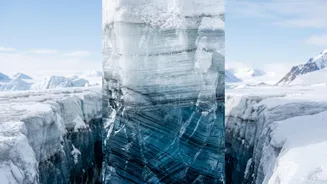
Imagine a library where every book is a layer of snow, compressed over millennia into solid ice. This is the reality of glacial ice archives. In places like Antarctica, Greenland, and high-altitude mountain ranges, including the Himalayas, each year's
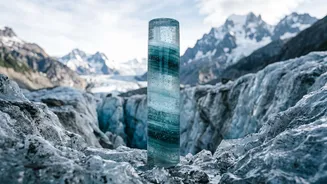
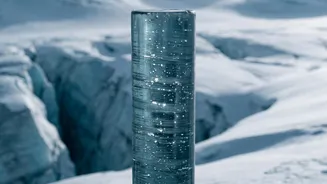
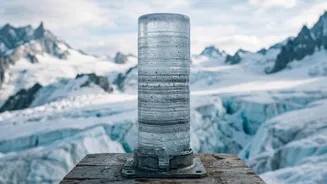
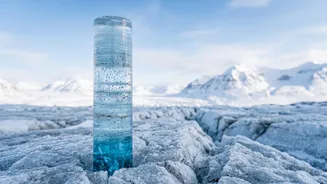
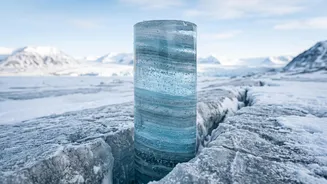
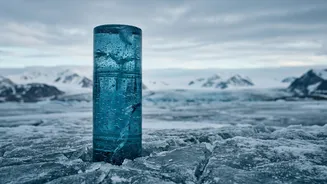
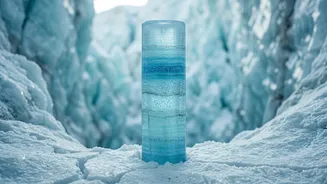
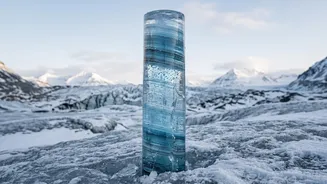
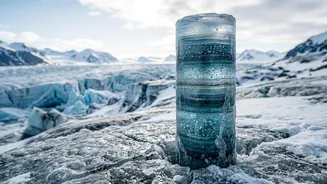
snowfall buries and compacts the last. This process traps not just water, but also whatever was in the atmosphere at the time: dust, volcanic ash, pollen, and, most importantly, tiny bubbles of air. Scientists drill deep into these ice sheets to extract long cylinders of ice called 'ice cores'. These cores are like frozen time capsules, with the oldest ice at the bottom and the most recent at the top. The longest cores can offer a continuous climate record stretching back an astonishing 800,000 years.
How to Read the Layers of Time
Once an ice core is extracted, the scientific detective work begins. The most direct information comes from the air bubbles trapped within the ice. In a vacuum chamber, scientists can carefully crush the ice to release these ancient pockets of air and measure their composition. This provides a direct sample of past atmospheres, allowing researchers to determine the precise concentrations of greenhouse gases like carbon dioxide (CO2) and methane. Beyond the air bubbles, the ice itself tells a story. By analysing the isotopes of water molecules—different 'weights' of oxygen and hydrogen atoms—scientists can reconstruct past temperatures with remarkable accuracy. Layers of dust can indicate how windy or dry a period was, while deposits of volcanic ash provide distinct markers that help synchronise the dates between different ice cores from around the world.
Connecting Past Data to Future Models
This historical data is not just a curiosity; it is a vital tool for predicting the future. Climate models are complex computer simulations that represent the physics and chemistry of the Earth's oceans, atmosphere, and ice. To trust their future predictions, scientists must first ensure these models can accurately replicate the past. This is where ice cores become indispensable. Researchers can 'test' their models by feeding them the conditions of the ancient past—such as changes in Earth's orbit or volcanic activity—and seeing if the model produces the same climate outcomes that are recorded in the ice cores. For example, ice core data has unequivocally shown a tight correlation between atmospheric CO2 concentrations and global temperatures over hundreds of thousands of years. When models successfully replicate this known relationship, it builds confidence in their ability to forecast the consequences of today's unprecedented CO2 levels.
A Race Against Time
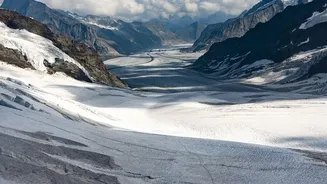
Ironically, the very climate change that ice cores help us understand is now threatening their existence. Glaciers outside of the polar regions are melting at an accelerated rate. This means that these invaluable archives, which hold detailed records of regional climate history, are at risk of being lost forever. For regions like India, the loss of Himalayan ice archives is particularly critical, as these glaciers are a crucial source of water for major rivers. In response, an urgent global effort is underway. Initiatives like the Ice Memory Foundation are racing to collect ice cores from the world's most threatened glaciers. The goal is to create a global archive, storing these precious samples in a 'sanctuary' in Antarctica, where they will be preserved at stable, freezing temperatures for future generations of scientists. This ensures that even if the glaciers themselves disappear, their memories will live on, providing insights for decades to come with analytical technologies we haven't even invented yet.