





The Promise of NavIC
NavIC, or Navigation with Indian Constellation, is India's homegrown regional navigation satellite system. Its development was fast-tracked after the 1999 Kargil War, when access to the US-operated GPS was denied to Indian forces, highlighting a critical
strategic vulnerability. The system is designed to provide accurate positioning, navigation, and timing (PNT) services over India and a region extending 1,500 kilometres beyond its borders. It offers two services: a Standard Positioning Service (SPS) for all users and an encrypted Restricted Service (RS) for authorised users like the military. With applications ranging from disaster management and vehicle tracking to guiding missiles, NavIC is a cornerstone of India's goal for technological self-reliance, or 'Atmanirbhar Bharat'.
A Constellation in Crisis
The initial constellation of first-generation satellites, known as IRNSS, was completed by 2018. However, the system soon ran into serious trouble. The primary issue was the repeated failure of the imported rubidium atomic clocks on board. These clocks are the heart of any navigation satellite, providing the ultra-precise timekeeping needed to calculate a user's location. Even a nanosecond's error can throw a position off by several meters. Over the years, multiple satellites, including IRNSS-1A, lost their functionality due to these clock failures. The problem became so acute that by early 2026, the number of fully operational satellites providing navigation data had fallen below the minimum of four required for accurate positioning, crippling the system's core function. This left NavIC unable to provide standalone positioning services, a major setback for the strategic programme.
Enter NVS-03: The Second-Generation Solution
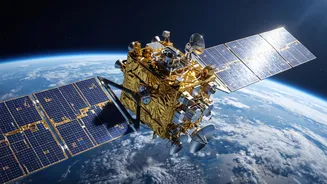
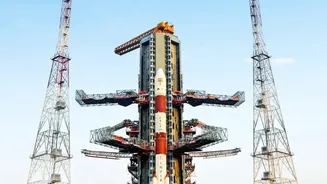
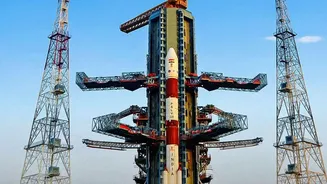
To salvage the system, the Indian Space Research Organisation (ISRO) began launching a new, more robust series of satellites called the NVS series. The launch of NVS-03 in October 2026 was a pivotal moment, restoring the NavIC constellation to the minimum four operational satellites needed for basic service. But NVS-03 is more than just a replacement; it's a significant technological upgrade designed to address the very problems that plagued its predecessors. It is the third satellite in the second-generation series, engineered for continuity and enhanced performance. These new satellites are built not only to fill the gaps left by failing ones but also to make the entire NavIC system more reliable and versatile for the future.
The Indigenous Heartbeat
The most crucial upgrade in the NVS series, including NVS_03, is the inclusion of an indigenously developed rubidium atomic clock. Developed by ISRO's Space Applications Centre, this homegrown clock is designed to be more reliable than the imported ones that failed in the earlier satellites. This move is a massive step towards complete self_reliance in a critical space technology. By developing its own atomic clocks, ISRO reduces its dependence on foreign suppliers and gains greater control over the quality and performance of its navigation satellites. NVS_03 carries both the new indigenous clock and imported ones, providing redundancy and a real_world test for the new technology.
Speaking a Universal Language: The L1 Band
Another game-'changing'' feature of NVS-'03'' is its ability to transmit signals in the L1 frequency band, in addition to the existing L5 and S bands. This is significant because the L1 band is the most widely used frequency for civilian GPS receivers globally, including those in smartphones and other consumer devices. By adding an L1 signal, NavIC becomes more interoperable with the global standard. This makes it much easier for manufacturers to integrate NavIC compatibility into everyday gadgets, potentially accelerating its adoption by the general public and moving it from a specialised service to a mainstream alternative to GPS in India.
Why It Matters for India
The successful deployment of NVS-'03'' is a testament to ISRO's resilience. It not only revives the NavIC system but also makes it better, with a longer mission life of 12 years compared to the 10-'year'' lifespan of the first generation. For the armed forces, a robust NavIC ensures a secure, encrypted navigation service that cannot be denied or disrupted by foreign powers during a conflict. For civilians, it promises more accurate navigation, especially in challenging terrain, and underpins services from tracking public transport to providing disaster warnings for fishermen. NVS-'03'' is more than just a satellite; it is a critical piece of infrastructure that strengthens India's strategic autonomy, boosts its technological prowess, and paves the way for a more reliable,' Made in India'' navigation experience for all.