



1. Aerospace Software and AI Engineer
Forget the old stereotype of a purely mechanical aerospace engineer. Today, software is the invisible force behind every successful mission. Aerospace software engineers are in high demand to develop everything from on-board flight systems and mission-planning
algorithms to autonomous navigation code. This is one of the fastest-growing specialisations, sitting at the lucrative intersection of space and software. Companies need engineers with strong skills in C++, Python, and embedded systems to build the brains of modern spacecraft. This role is critical as satellites become more autonomous and missions more complex, requiring AI and machine learning to manage flight paths, process data, and even conduct scientific experiments in orbit.
2. Satellite Data Scientist
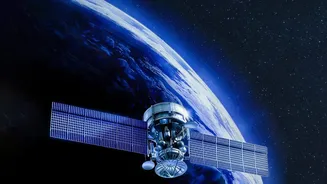
India’s private space boom isn’t just about launching rockets; it’s about what we do with the information they gather. Startups like Pixxel and SatSure are deploying constellations of Earth-observation satellites, creating a massive stream of data. This has given rise to the satellite data scientist, a role that combines data analytics, machine learning, and environmental science. These professionals analyse satellite imagery to provide 'decision intelligence' for industries like agriculture, finance, and infrastructure. They build models to forecast crop yields, monitor climate change, and assist in disaster management. Key skills include proficiency in geospatial software, image processing, and a deep understanding of data modeling.
3. Propulsion Systems Engineer
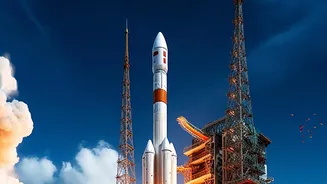
While ISRO remains a leader, private companies like Skyroot Aerospace and Agnikul Cosmos are innovating rapidly in launch vehicle technology. This has spurred demand for propulsion systems engineers who are experts in new technologies. The focus is no longer just on traditional solid and liquid fuels. These new-age roles involve developing reusable rocket stages, electric propulsion for satellites, and engines created with advanced techniques like 3D printing. Agnikul, for instance, has developed a fully 3D-printed, single-piece semi-cryogenic engine. Engineers with expertise in cryogenics, advanced materials, and fluid dynamics are essential to making space access more cost-effective and sustainable.
4. Space Robotics Engineer
As India’s space ambitions expand to include in-orbit servicing, space debris removal, and planetary exploration, the need for advanced robotics is soaring. Space robotics engineers design and build the systems that can repair satellites, assemble structures in orbit, or explore the surfaces of the Moon and Mars. Companies like NewSpace Research & Technologies are working on collective robotics and autonomous systems. This field requires a blend of mechanical engineering, artificial intelligence, and control systems expertise to create machines that can function reliably in the harsh and unstructured environment of space.
5. Avionics and Embedded Systems Engineer
Avionics are the electronic heart of any spacecraft, encompassing navigation, communication, and control systems. As rockets and satellites become more compact and powerful, avionics engineers with skills in embedded systems are becoming indispensable. These engineers design the complex, high-reliability electronic circuits and software that must perform flawlessly under extreme conditions of vibration, temperature, and radiation. Private companies building their own launch vehicles and satellite platforms are hiring aggressively for specialists who can integrate everything from GPS receivers and communication transmitters to the core flight computer into a single, cohesive system.
6. Space Cybersecurity Analyst
With satellites controlling everything from financial transactions to military surveillance, their security is paramount. A space cybersecurity analyst is responsible for protecting satellites, ground stations, and data links from digital threats. As our reliance on space infrastructure grows, these assets become high-value targets for cyberattacks. This emerging role requires a unique combination of expertise in cybersecurity, satellite communications, and network architecture. Professionals are needed to design secure systems, monitor for threats, and develop protocols to ensure that our vital space assets cannot be hijacked or disabled.