



The Link Between Yoga and Posture
Before we dive into the poses, it's helpful to understand why yoga is so effective. Poor posture often stems from a combination of muscle imbalances—some muscles become tight while others grow weak. Long hours of sitting, for example, can lead to tight chest
muscles and hip flexors, coupled with a weak core and upper back. This pulls the shoulders forward and strains the lower spine. Yoga addresses this by simultaneously stretching tight areas and strengthening neglected ones. Regular practice builds core strength, which is essential for supporting the spine, and increases body awareness, helping you notice and correct your posture throughout the day.
1. Marjaryasana-Bitilasana (Cat-Cow Pose)
This gentle, flowing sequence is a perfect warm-up that brings flexibility to the spine. It helps relieve tension in the neck and back, making it ideal after a long day of sitting.How to do it: Start on your hands and knees in a 'tabletop' position, with your wrists directly under your shoulders and your knees under your hips. As you inhale (Cow Pose), drop your belly towards the mat, lift your chest and tailbone, and look forward. As you exhale (Cat Pose), round your spine towards the ceiling, tucking your chin to your chest and pressing the mat away. Continue flowing between these two poses for 5-10 breaths, coordinating your movement with your breath.
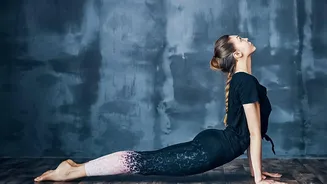
2. Bhujangasana (Cobra Pose)
Cobra Pose is a gentle backbend that specifically counteracts the effects of slouching. It strengthens the muscles along the spine, opens up the chest and shoulders, and can significantly improve posture over time.How to do it: Lie on your stomach with your forehead on the mat and your legs extended behind you. Place your palms on the mat under your shoulders, keeping your elbows tucked in close to your body. On an inhale, gently lift your head and chest off the floor, using your back muscles. Keep your lower ribs on the floor and roll your shoulders back and down. Focus on lengthening your spine rather than bending deeply. Hold for a few breaths, then exhale and release back down.
3. Setu Bandhasana (Bridge Pose)
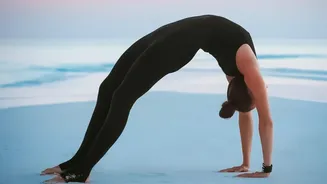
Bridge Pose is excellent for strengthening your glutes and lower back, which provides better support for your spine. It also opens up the chest and the front of the shoulders, which tend to get tight and contribute to a hunched posture.How to do it: Lie on your back with your knees bent and your feet flat on the floor, hip-width apart. You should be able to just touch your heels with your fingertips. Place your arms by your sides with your palms facing down. On an exhale, press through your feet and lift your hips off the floor. Keep your thighs parallel. For a deeper shoulder stretch, you can clasp your hands together underneath your back. Hold for 20-30 seconds, then slowly roll your spine back down to the mat.
4. Balasana (Child's Pose)
This restorative pose is a fantastic way to gently stretch and release tension in your lower back, hips, and shoulders. It provides a moment of rest and decompression for the spine, making it a perfect counter-pose after sitting for extended periods.How to do it: Kneel on the mat, touch your big toes together, and sit back on your heels. Separate your knees about as wide as your hips. Exhale and fold forward, resting your torso between your thighs. Allow your forehead to rest on the floor. You can stretch your arms out in front of you or rest them alongside your body with palms facing up. Breathe deeply into your back, and hold the pose for 30 seconds to a minute or longer.