





The Dawn of a New Powerhouse
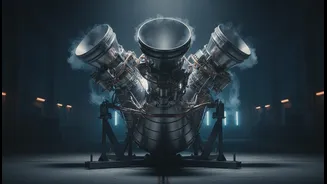
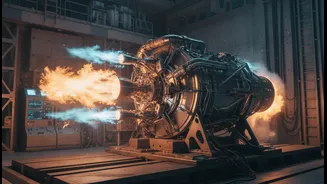
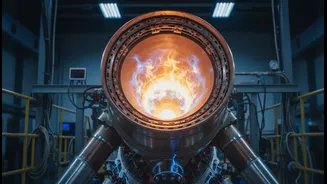
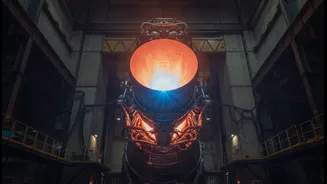
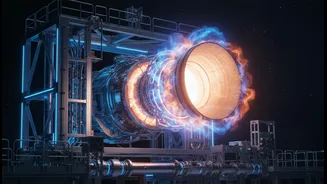
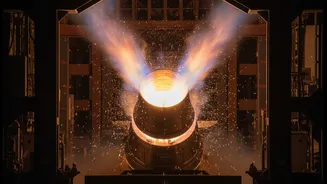
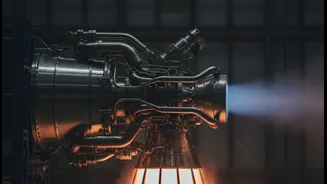
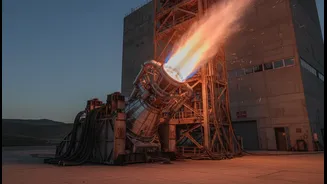
At its Propulsion Complex in Mahendragiri, ISRO has been putting its new semicryogenic engine, the SE-2000, through its paces. In a series of crucial ground tests, engineers successfully fired the engine's power head, a critical component, achieving 88%
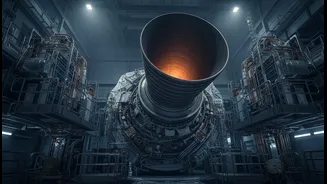
of its target thrust, equivalent to 175 tonnes of force. This series of successful trials provides the confidence needed to proceed towards demonstrating the engine's full power—a massive 200 tonnes of thrust. This engine is the heart of a new propulsion system designed to be more powerful, efficient, and cost-effective than what ISRO currently uses on its heaviest rockets, representing a strategic leap in India's launch capabilities.
What is a Semicryogenic Engine?
Think of a rocket engine as needing two things to work: a fuel and an oxidiser (to help the fuel burn in space). A fully cryogenic engine uses super-chilled liquid hydrogen and liquid oxygen. ISRO has mastered this technology, but it's complex and expensive. A semicryogenic engine offers a powerful compromise. It uses the same liquid oxygen (the 'cryogenic' part) but pairs it with a refined, rocket-grade kerosene (the 'semi' part), which can be stored at normal temperatures. This fuel, which ISRO calls 'Isrosene', is denser than liquid hydrogen, making fuel tanks smaller and the whole system easier and safer to handle. This blend of high performance and simpler logistics is why semicryogenic technology is a game-changer.
The Crucial Quest for Higher Thrust
Thrust is the force that pushes a rocket off the ground and into space. The more thrust an engine produces, the heavier the payload it can lift. ISRO's new SE-2000 engine is designed to produce 200 tonnes (or 2,000 kilonewtons) of thrust. This is a significant jump from the 80-tonne thrust of the Vikas engines currently used in the core stage of its rockets. More thrust directly translates into the ability to launch heavier communication satellites, larger scientific probes for interplanetary missions, and multiple satellites in a single flight. It's the foundational upgrade needed to carry out more ambitious projects, from the Gaganyaan human spaceflight mission to potentially building a future Indian space station.
Upgrading the LVM3 'Bahubali' Rocket
ISRO's primary workhorse for heavy launches is the Launch Vehicle Mark-III (LVM3). The plan is to replace the LVM3's current liquid-fueled core stage, the L110, with a new stage powered by a single SE-2000 engine. This new stage, known as the SC120, will dramatically boost the rocket's muscle. This upgrade, combined with an enhanced cryogenic upper stage, is expected to increase the LVM3's payload capacity to Geostationary Transfer Orbit (GTO) from 4 tonnes to over 5 tonnes. This means India will no longer need to rely on foreign launchers for its heaviest communication satellites, saving significant costs and capturing more of the global launch market.
Paving the Way for Future Ambitions
The development of the semicryogenic engine is not just about upgrading one rocket; it's a foundational technology for ISRO's entire future roadmap. This engine is a key building block for the proposed Next Generation Launch Vehicle (NGLV), a future family of rockets designed to be more powerful and even partially reusable. Mastering this technology strengthens India's self-reliance in space, enabling more complex deep-space exploration and enhancing its position in the competitive commercial launch sector. ISRO aims to increase its share of the global launch market from about 2% to 10%, and having a more powerful, cost-effective launch vehicle is critical to achieving that goal.