



The Sun-Like Comfort Zone
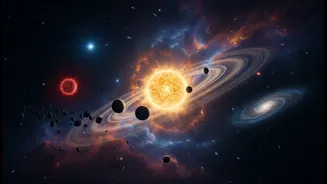
For as long as we have been searching for other Earths, the guiding principle has been simple: look for a star like our Sun. These G-type main-sequence stars, as they are technically known, have long been considered the 'goldilocks' standard for life.
They are relatively stable, live for billions of years, and provide a temperate zone where a rocky planet, not too close and not too far, could maintain liquid water on its surface. This concept, the 'habitable zone', has been the central dogma of astrobiology, shaping where we point our most powerful telescopes. Our own existence is proof that this model can work. The Sun has provided a steady, reliable source of energy for nearly four billion years, allowing complex life to evolve on Earth. It was natural to assume that the best place to find a sequel to our own story would be in a similar setting.
The New Hot Property: Red Dwarfs
The first major expansion of the search moved to the most common type of star in our galaxy: red dwarfs. These M-type stars are smaller, cooler, and far more numerous than their sun-like cousins, making up perhaps 75% of the Milky Way's stellar population. Their sheer numbers make them an unavoidable target for planet hunters. However, they present a unique set of challenges. Their habitable zones are much closer to the star, meaning planets are often tidally locked, with one side in permanent daylight and the other in endless night. Furthermore, many red dwarfs, especially when young, are prone to violent flares of radiation that could strip a nearby planet's atmosphere and make life untenable. Despite these hurdles, recent climate models suggest that atmospheres could potentially redistribute heat on tidally locked worlds, and the longevity of these stars—trillions of years, compared to the Sun's 10 billion—offers an immense timeframe for life to potentially arise.
Life After Stellar Death
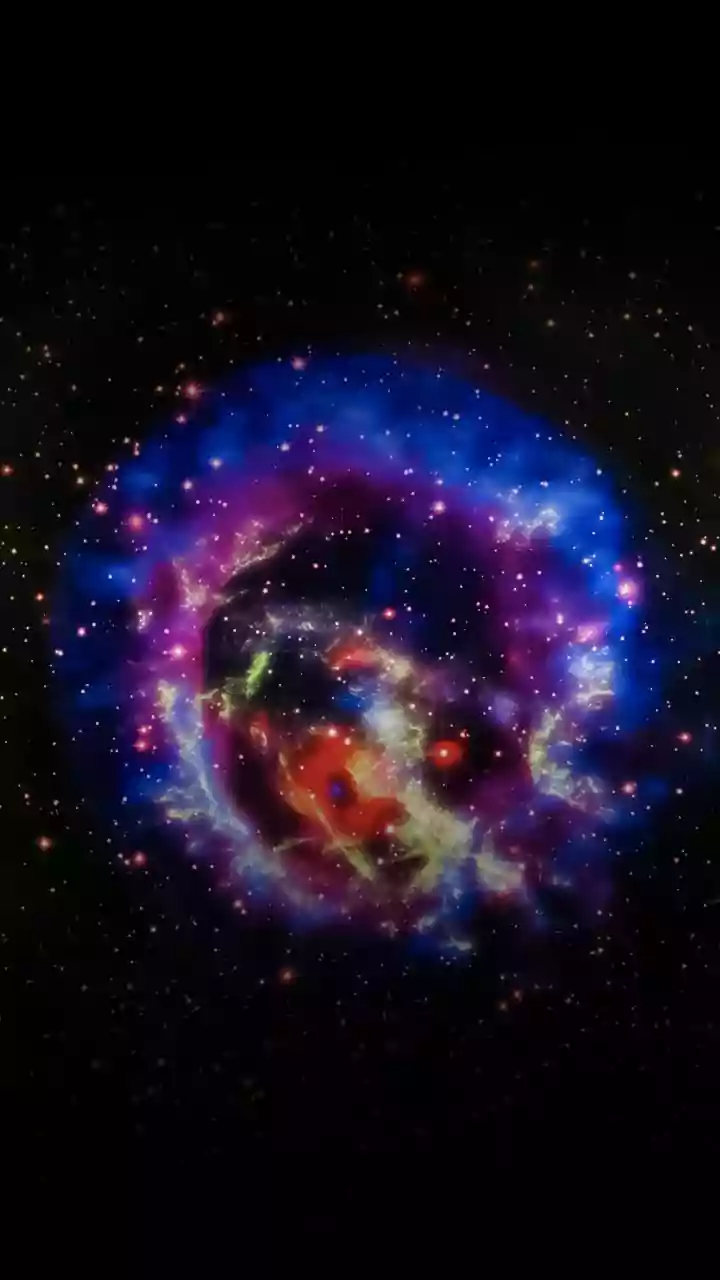
Perhaps the most revolutionary shift in thinking is the focus on stars that are no longer 'living' in the traditional sense. Scientists are now seriously considering the habitability of planets orbiting white dwarfs—the dense, cooling embers left behind after a sun-like star exhausts its nuclear fuel. Our own Sun will become one in about five billion years. The idea was once considered science fiction. After all, a star's death throes as it expands into a red giant would seemingly destroy any nearby planets. However, recent discoveries and sophisticated models suggest that planets can survive this process, or even migrate inward afterward. The James Webb Space Telescope has studied a giant planet, WD 1856 b, that orbits a white dwarf, proving survival is possible. While these dead stars produce no new heat from fusion, they glow with residual energy for billions of years, creating a small, stable habitable zone close in.
A New Toolkit for New Worlds
This expansion of the search is not just a change in philosophy; it is driven by new technology. The James Webb Space Telescope (JWST) is the primary engine of this revolution. Its unparalleled sensitivity and focus on infrared light allow it to study the faint light from cool red dwarfs and even dimmer white dwarfs. It can do what was previously impossible: detect the chemical fingerprints of atmospheres on planets orbiting these faint stars. By analyzing starlight that filters through a planet's atmosphere, JWST can search for molecules like methane, carbon dioxide, and water vapour—the building blocks and byproducts of life as we know it. Recent findings have already detailed the atmosphere of a lava planet and analysed a gas giant around a white dwarf, showcasing the telescope's power to reveal the secrets of these exotic systems.