


The ‘Zero-Gravity’ Myth
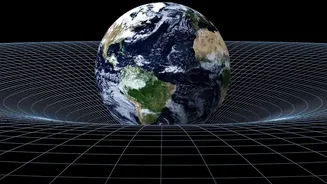
First, let's get the big misconception out of the way. The term 'zero gravity' is a popular misnomer. Gravity isn't a force that simply switches off once you leave the atmosphere. In fact, gravity's reach is infinite. It keeps the Moon tethered to Earth
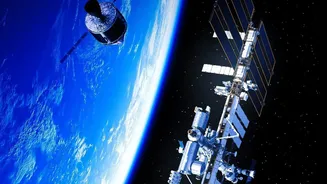
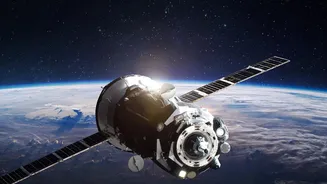
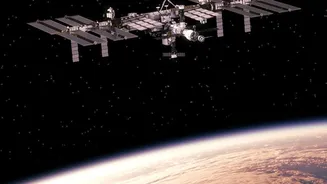
and all the planets in orbit around the Sun. The idea that space is a gravity-free zone is one of the most common myths in science. The International Space Station orbits at an altitude of about 250 miles (or 400 kilometers). At that height, Earth's gravitational pull is still surprisingly strong—about 90% as powerful as it is on the surface. So, if an astronaut who weighs 180 pounds on Earth could stand on a very, very tall ladder reaching the ISS, they'd still weigh about 162 pounds up there. Clearly, a lack of gravity isn't why they float.
The Real Reason: Constant Free Fall
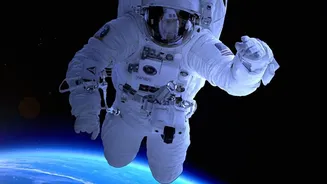
So, if gravity is still firmly in charge, why do astronauts float? The answer is both simple and mind-bending: they are in a perpetual state of free fall. Imagine you're in an elevator and the cable snaps. For a terrifying few seconds, before the emergency brakes kick in, you and anything you were holding would float inside the elevator car. That's because you, the elevator, and everything in it are all falling at the same rate. This is precisely what is happening on the ISS. The space station, the astronauts inside it, and all their equipment are continuously falling toward Earth under the influence of gravity. Because everything is falling together, the astronauts don't press against the floor or walls of the station; instead, they float relative to their surroundings. The sensation of weight doesn't come from gravity pulling on you, but from a surface—like the floor or a chair—pushing back. In free fall, that push-back force is gone.
Orbit Is Just Falling Sideways... Very Fast
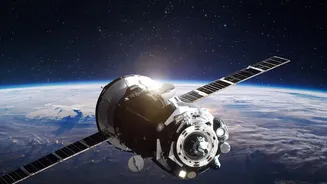
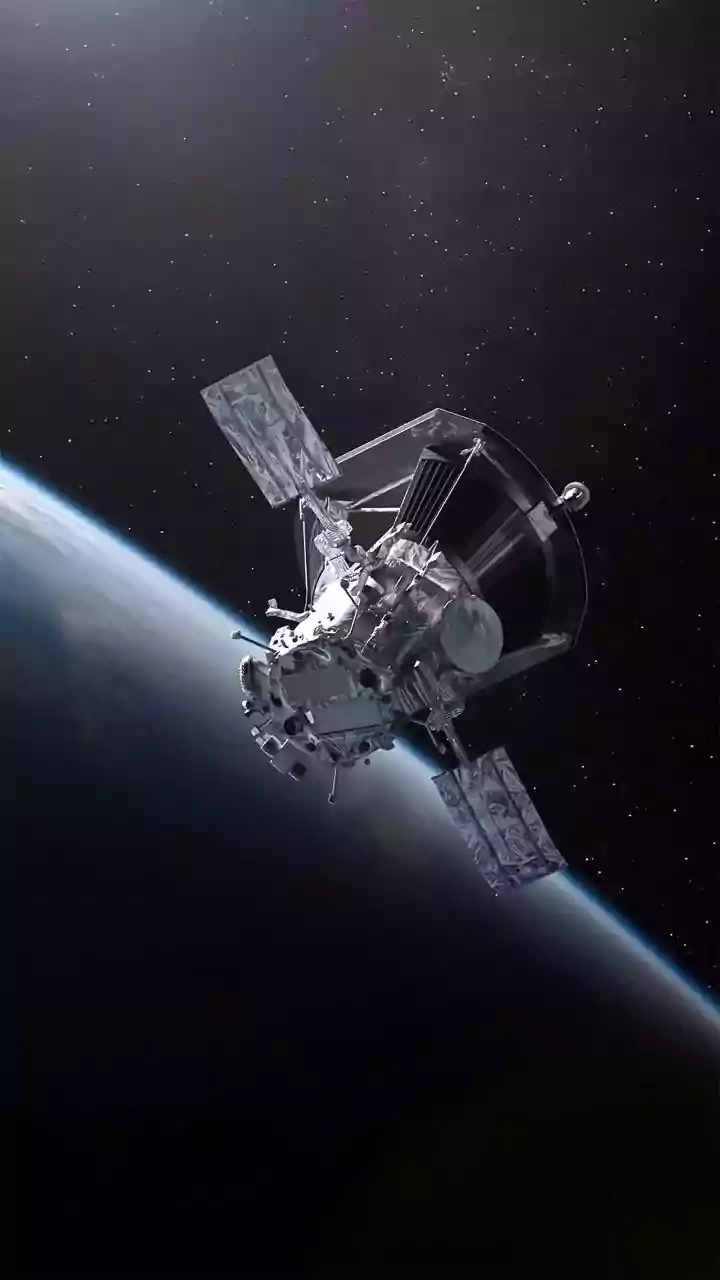
This leads to the next question: if the ISS is constantly falling, why doesn't it crash into the Earth? The secret lies in its incredible sideways velocity. The station zips along at about 17,500 miles per hour (roughly 7.7 kilometers per second). At that speed, as it falls downwards, the Earth's surface curves away beneath it at the exact same rate. So, it continuously 'misses' the ground. This delicate balance between the forward momentum (inertia) and the downward pull of gravity is what defines an orbit. It's not about going 'up' into space, but about going 'sideways' fast enough to achieve this state of perpetual falling without ever landing. This is the same principle that keeps the Moon in orbit around the Earth.
So, What Is 'Microgravity'?
If it isn't zero gravity, what is the right term? Scientists use the word 'microgravity'. The prefix 'micro' means 'very small'. This is a more accurate description because while the station is in almost perfect free fall, it's not absolutely perfect. Tiny forces, much weaker than Earth's main pull, are still at play. These include minuscule drag from the thin outer atmosphere, vibrations from the station's machinery, and even the movement of the astronauts themselves. There are also tiny tidal forces because one side of the space station is slightly closer to Earth than the other, so it experiences a slightly stronger gravitational pull. These residual forces are minuscule—about one-millionth of the gravity we feel on Earth—which is why the term microgravity is the most scientifically accurate way to describe the near-weightless environment in orbit.