







The New Consumer Expectation: Instant Gratification
The Indian consumer's relationship with shopping has fundamentally changed. Patience is no longer a virtue; it's an inconvenience. Spurred by the pandemic and the subsequent rise of 'quick commerce' platforms, the expectation of ultra-fast delivery has become
the norm. This isn't just about traditional e-commerce anymore. The pressure is on for everything from daily essentials and electronics to food and medicines to arrive at the doorstep within hours, if not minutes. This demand has forced e-commerce and logistics companies to completely re-engineer their supply chains from a national or regional model to a hyperlocal one. To deliver goods in under an hour, you can't ship them from a massive warehouse on the outskirts of a major city. The products need to be stored just a few kilometres from the customer, creating a need for a dense network of 'dark stores' and small fulfillment centers.
The Tier 2 Advantage
So why are cities like Lucknow, Jaipur, Coimbatore, Nagpur, and Bhubaneswar becoming the new hotspots for this hiring boom?. The answer lies in a convergence of factors. Firstly, consumer demand in these cities is exploding. With rising disposable incomes and digital literacy, Tier 2 and 3 cities now account for over 60% of all e-commerce shipments in India. Secondly, operational costs are significantly lower. Setting up warehouses and delivery hubs in non-metro areas is more affordable due to cheaper real estate. This allows companies to build out the dense network required for express delivery more cost-effectively. Finally, improved infrastructure, thanks to government initiatives like the PM Gati Shakti plan, has enhanced connectivity, making it easier to transport goods and manage logistics in these emerging urban centers.
An Engine for Blue-Collar Jobs
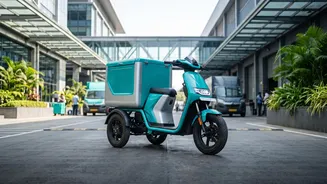
This strategic shift is creating a surge in blue-collar and entry-level employment. The quick commerce sector alone is projected to create hundreds of thousands of new jobs by 2027. These are not just delivery roles; the ecosystem requires a vast workforce for various functions. Key positions in high demand include delivery executives and riders, who form the backbone of last-mile fulfillment, and warehouse associates for sorting, packing, and managing inventory in the mushrooming dark stores and delivery centers. Companies like Delhivery, Amazon Logistics, Ecom Express, and Shadowfax are in a constant state of recruitment across thousands of local delivery stations in both metropolitan and smaller urban areas. Monthly earnings for these roles, often ranging between ₹20,000 and ₹35,000 including incentives, are proving to be a significant draw for the local workforce.
Beyond Delivery: A Widening Job Market
While delivery partners are the most visible part of this boom, the recruitment drive extends to a wider range of roles. As companies scale, they require skilled professionals in operations and supply chain management to ensure efficiency. There's a growing need for dispatch coordinators, hub supervisors, and delivery center executives to manage the complex flow of goods. Furthermore, the entire ecosystem is powered by technology, leading to a rise in demand for software engineers, AI specialists, and DevOps engineers to build and maintain the platforms, automate warehouses, and optimise delivery routes. This creates a multi-layered employment structure that offers opportunities for both entry-level workers and experienced professionals, fundamentally altering the job landscape in these cities.
The Road Ahead: Sustainability and Challenges
This rapid growth is not without its challenges. The logistics sector faces a significant skills gap, with a need for millions of trained workers to manage modern, tech-enabled operations. For the gig workers, particularly delivery partners, concerns around income stability, gruelling work conditions, and the lack of social security benefits remain prominent. Recent strikes and government interventions have pushed companies to reconsider aggressive promises like '10-minute delivery' in favour of more sustainable and safer working models. As the industry matures, the focus is shifting from pure speed to creating a more resilient and balanced ecosystem that ensures both customer satisfaction and worker well-being, solidifying the role of Tier 2 cities as the long-term engine of India's e-commerce growth.