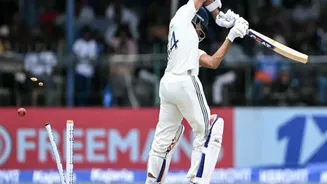

A Century of Class and Calm
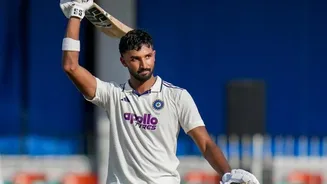
Walking in with the team in a precarious position is the ultimate Test for a middle-order batsman. Dhruv Jurel's performance in the second Test against Sri Lanka was a masterclass in handling that pressure. His unbeaten 115 was not just a score, but a statement
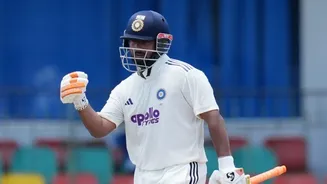
of intent. The innings was marked by composure, a solid technique, and the crucial ability to marshal the lower order. He forged a vital 112-run partnership with Rishabh Pant, showcasing his adaptability by playing second fiddle and then taking charge as the innings progressed. This wasn't just a case of scoring runs; it was about controlling the game's tempo, a quality that separates good players from great ones. His ability to find boundaries without taking undue risks and rotate the strike with the tail was particularly impressive.
The Ghost of Number Six
For an entire generation of Indian cricket fans, the No. 6 position belongs to one man: VVS Laxman. The wristy artist from Hyderabad was more than a batsman; he was a crisis manager. Laxman's legacy was built on turning hopeless situations into famous victories, often in the company of the last few batsmen. His epic 281 against Australia, though scored at No. 3, is the spiritual blueprint for his career—an exhibition of skill, stamina, and an unbreakable will. But his most defining contributions often came from the lower-middle order, where he averaged over 50. He was the ultimate saviour, a batsman who could blend silken grace with a steely resolve to rescue India time and again. To be compared to Laxman, therefore, is not just about technique, but about temperament and impact.
Echoes of a Hyderabadi Artist
So, why the Jurel-Laxman comparison? It begins with the wrists. Like Laxman, Jurel shows a preference for using his supple wrists to guide the ball into gaps, turning good deliveries into scoring opportunities. But the similarities run deeper. During his crucial 90 against England in Ranchi in 2024, Jurel displayed an uncanny ability to bat with the tail, protecting his partners and farming the strike in a manner that drew immediate parallels to Laxman. Both batsmen possess a calm demeanour at the crease, appearing unflustered by the chaos around them. This mental fortitude, the capacity to think clearly under immense pressure, is the most crucial trait they share. It's this quiet confidence and tactical acumen in managing a difficult situation that makes the comparison so tantalizing.
A Modern Role, A Different Player
However, it's important to temper excitement with realism. Jurel is not a Laxman clone. For one, his primary role in the team is that of a wicketkeeper-batsman, a dual responsibility that Laxman, a specialist batsman and superb slip fielder, never had. The physical and mental toll of keeping wickets for over a hundred overs and then being expected to perform miracles with the bat is immense. Furthermore, the game itself has changed. The pace of Test cricket is faster, and the influence of T20 means batsmen are expected to be more dynamic. While Laxman could be a classical grinder, Jurel has also shown the explosive ability honed in the IPL. His challenge is not to be the next Laxman, but to be the first Dhruv Jurel, blending his own attacking instincts with the classical virtues of a Test No. 6.
The Long Road Ahead
One brilliant century is a promise, not a guarantee. To truly step into the conversation as a long-term solution at No. 6, Jurel's journey is just beginning. He has already shown immense potential in his brief Test career, with crucial knocks in challenging conditions. But the shadow of a legend is long, and the weight of expectation can be heavy. Consistency is the currency of greatness in Test cricket. Jurel will need to replicate this success across different conditions, from the swinging pitches in England to the bouncy tracks in Australia. He has shown the foundational skills and, crucially, the temperament. The team management has shown faith in him, even considering him for a specialist batter's role to accommodate him in the playing eleven alongside Rishabh Pant. The potential is undeniable.