



1. Master the Post-Walk Wipe-Down
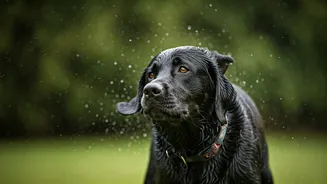
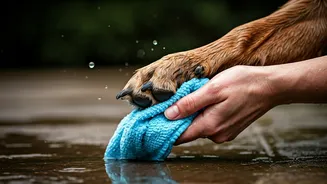
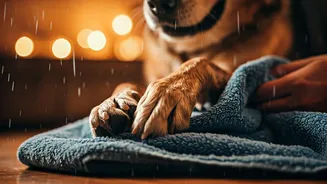
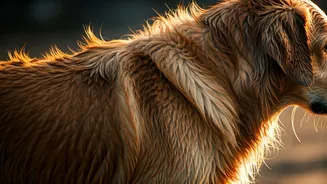
The first line of defence after any rainy walk is a proper wipe-down, but it needs to be more than a quick rub. Constant dampness is a breeding ground for bacteria and fungi. Instead of a single wet towel, use a two-step process. First, use a highly absorbent
microfiber towel to soak up the majority of the water and mud from their coat, legs, and belly. Pay special attention to areas that trap moisture, like armpits and the groin. Step two is a dry towel or a low-heat blow-dryer for a thorough finish, especially for long-haired breeds. This prevents the damp, musty smell and significantly lowers the risk of hotspots and fungal infections.
2. Prioritise Paw Protection
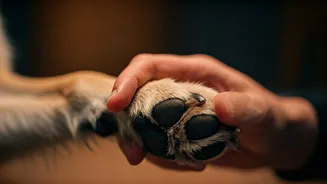
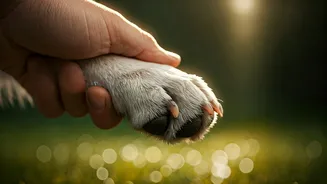
Paws take the biggest beating during the monsoon. They are constantly exposed to dirty water, mud, and potential irritants. After every walk, wash your pet’s paws with lukewarm water and a mild, pet-safe antiseptic solution. The most crucial step is drying them completely, especially between the toes where moisture can lead to painful yeast or bacterial infections (pododermatitis). Use a soft cloth or cotton buds to get into these crevices. Trimming the hair between their paw pads can also help reduce moisture retention and make cleaning easier. Inspect their pads daily for any cuts or redness.
3. Combat Humidity and Odour
High humidity can make your pet’s coat feel greasy and smelly, even without getting drenched. Regular brushing is non-negotiable during this season. It helps remove loose fur, dirt, and tangles that can trap moisture against the skin. For dogs, using a good quality slicker brush or a de-shedding tool once or twice a week aerates the coat. After brushing, you can apply a pet-friendly antifungal or dry-shampoo powder. These powders absorb excess oil and moisture, keeping the coat fresh and preventing the growth of microbes that cause that 'wet dog' smell.
4. Re-think Your Bathing Schedule
While it seems counterintuitive, you might need to bathe your pet more frequently during the monsoon if they get particularly dirty. However, it's the type of shampoo that matters most. Opt for a medicated or antibacterial/antifungal shampoo recommended by your vet. This helps tackle any surface-level microbes before they can cause a full-blown infection. The most important part of the bathing process is ensuring your pet is 100% dry afterwards. Use a blow-dryer on a cool or low-heat setting, keeping it moving to avoid concentrating heat on one spot. A damp undercoat is a major risk factor for skin problems.
5. Don't Forget the Ears
The damp, warm environment of the monsoon is perfect for ear infections, especially in breeds with floppy ears like Beagles and Cocker Spaniels. Moisture trapped in the ear canal can lead to yeast and bacterial overgrowth, causing pain and irritation. Make it a weekly habit to clean your pet’s ears. Use a vet-approved ear cleaning solution on a cotton ball or gauze—never insert cotton buds into the ear canal. Gently wipe the outer ear flap and the visible parts of the canal. Look for any signs of redness, discharge, or an unusual odour, which warrant an immediate vet visit.
6. Step Up Tick and Flea Vigilance
Ticks, fleas, and other parasites thrive in the warm, humid conditions of the rainy season. Puddles and tall, wet grass are their favourite hiding spots. Even if your pet is on a regular preventive treatment, you need to be extra vigilant. After every walk, perform a thorough check of their entire body, paying close attention to areas like inside the ears, between the toes, around the neck, and near the tail. A flea comb can help you spot any unwanted guests. If you find a tick, remove it carefully with tweezers, ensuring you get the head. Consistent prevention and daily checks are the best strategy.