


Why the Amber Glass Aesthetic Works
There’s a reason why the warm, translucent glow of amber glass has captured the imagination of designers and home decor enthusiasts. It evokes a sense of vintage charm, reminiscent of old apothecary shops and carefully concocted potions. Unlike clear
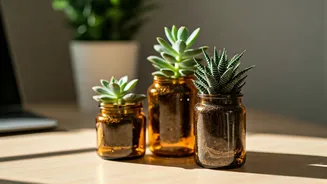
glass, the amber hue adds a layer of warmth and sophistication to any space. On a cluttered desk, a cluster of these small, brown-tinted vials can create a cohesive and calming visual anchor. The colour is not just for looks; amber glass is specifically designed to filter out UV light, which is why it’s traditionally used for light-sensitive medicines and oils. While this protective quality is less crucial for a simple plant cutting, the aesthetic benefit is undeniable. It provides a beautiful, earthy contrast to the vibrant green leaves of a plant, making the entire composition pop.
Sourcing Your Vials Sustainably
The beauty of this trend is its emphasis on upcycling. Before you rush to buy new vials, take a look around your home. Many vitamin supplements, essential oils, serums, and even some cough syrups come in amber glass bottles. Once you’ve used up the product, simply give the bottle a thorough wash with soap and warm water, and carefully peel off the label. A bit of oil or rubbing alcohol can help remove any sticky residue. This approach is not only cost-effective but also environmentally friendly. If you don’t have any on hand, ask friends or family. Alternatively, you can find them in bulk at surprisingly low prices from craft supply stores or online marketplaces. Look for vials ranging from 10ml to 50ml, as this size is perfect for a single plant cutting and doesn't take up too much precious desk space.
Choosing the Perfect Plant Partner
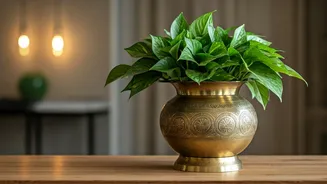
The headline mentions “money planters,” and the best candidate for this project is the plant most commonly known as the Money Plant in India: the Golden Pothos (*Epipremnum aureum*). This hardy, fast-growing vine is practically indestructible and, most importantly, thrives when propagated in water. Its trailing nature looks stunning cascading from the small mouth of a vial. Another excellent choice is the Chinese Money Plant (*Pilea peperomioides*), with its iconic coin-shaped leaves, although it can be a bit more delicate. Other great water-friendly options include the Spider Plant (*Chlorophytum comosum*), with its tiny “pups,” and cuttings from a Philodendron. The key is to choose a plant that can live happily in water for an extended period and doesn't require a large root system to get started. These plants are not only beautiful but are also known for their air-purifying qualities—a definite bonus for any indoor space.
Your Step-by-Step Propagation Guide
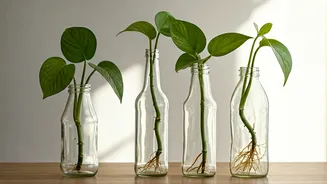
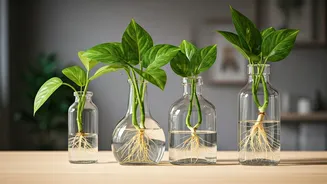
Ready to create your mini-planter? It’s easier than you think. First, prepare your plant. Using clean, sharp scissors, take a cutting from your mother plant. For a Pothos or Philodendron, ensure the cutting is about 4-6 inches long and has at least two or three leaves and a couple of nodes (the little bumps on the stem where roots will sprout). Remove any leaves from the bottom half of the stem that would otherwise be submerged in water, as they will rot. Next, fill your clean amber vial with room-temperature water. Tap water is usually fine, but if your water is heavily chlorinated, let it sit out for a day before using. Gently place the plant cutting into the vial, making sure the nodes are underwater but the leaves are not. That’s it! You’ve just created a beautiful, living piece of decor.
Care, Maintenance, and Styling
The best part about these water-based planters is their incredibly low maintenance. Place your vials in a spot that receives bright, indirect light—a desk near a window is perfect, but avoid direct, harsh sunlight which can scorch the leaves and encourage algae growth in the water. Every week or so, top up the water. Once every two to three weeks, it’s a good idea to change the water completely to keep it fresh and provide oxygen to the developing roots. Once your cutting has a healthy root system (typically after a month or two), you can either transplant it to soil or continue growing it in the vial. For styling, think in groups. A cluster of three or five vials of varying heights creates a dynamic and interesting display. Arrange them on a small tray, a stack of books, or directly on your desk to bring life and personality to your work corner.