





The Challenge of Living Off-World
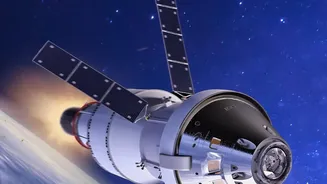
Any long-term human presence on the Moon, like the one planned for the Artemis program, depends on a principle called in-situ resource utilization (ISRU). In simple terms, it means living off the land. One of the most critical resources astronauts will
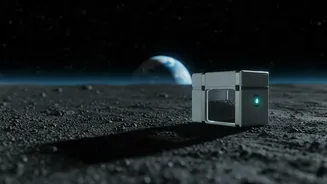
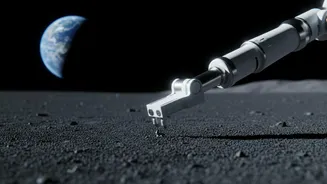
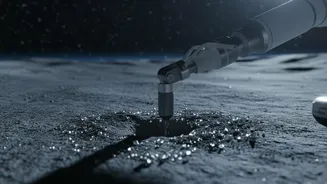
need is oxygen, not just for breathing but also as a component of rocket propellant. Launching heavy tanks of oxygen from Earth is incredibly expensive and limits the duration and scope of missions; nearly 95% of a rocket's launch mass is fuel. To make a lunar base sustainable, astronauts must be able to produce their own oxygen. The good news is that the Moon is surprisingly rich in this element. Lunar regolith, the dusty, rocky soil covering the surface, is about 45% oxygen by mass. The catch is that this oxygen is chemically bonded to minerals like silicon and iron, forming solid oxides. Unlocking it requires a sophisticated and reliable process that can work in the harsh lunar environment.
Cooking Moon Dust for Oxygen
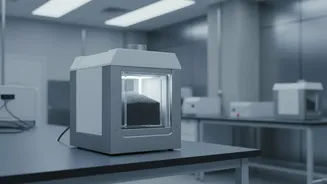
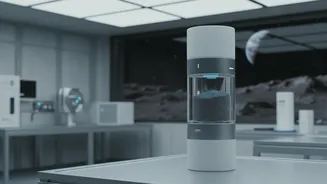
NASA is pioneering several methods to 'mine' the Moon for air, with a leading technology known as carbothermal reduction. The process essentially involves heating lunar regolith to very high temperatures inside a specialized reactor. When carbon is introduced into this molten soil, it bonds with the oxygen, pulling it out of the minerals to create carbon monoxide (CO) gas. This CO gas can then be collected and processed further to separate the oxygen, providing a steady supply of breathable air for life support and oxidizer for fuel. Recent breakthroughs have focused on a project called the Carbothermal Reduction Demonstration, or CaRD. This initiative has successfully demonstrated that the process works, not just in a lab, but in a way that could be deployed on the Moon. The goal is to create a system that is robust, efficient, and capable of operating with minimal materials brought from Earth.
A Solar-Powered Breakthrough
The latest advancement in this field involves a clever and sustainable power source: sunlight. The CaRD team recently completed a crucial integrated test where they used a solar concentrator—a sophisticated array of mirrors—to focus intense solar energy directly onto simulated lunar soil inside the reactor. The test successfully heated the simulant to the required temperature and confirmed the production of carbon monoxide, proving that a solar-driven chemical reaction can extract the oxygen. This is a significant milestone because it means a future lunar oxygen plant could be powered solely by sunlight, a plentiful resource on the Moon. The prototype, a collaboration between multiple NASA centers and industry partners like Sierra Space, combined the reactor, solar concentrator, and control systems to show that the entire chain can work together. This successful test moves the technology much closer to being ready for an actual flight demonstration on the lunar surface.
Paving the Way for Artemis and Beyond
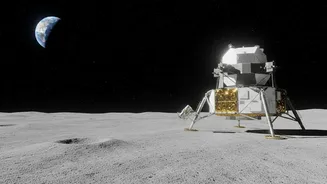
This technology is a cornerstone of NASA's long-term Artemis program, which aims to establish a permanent base camp at the Moon's south pole. Being able to generate oxygen on-site would revolutionize lunar operations, enabling longer missions, supporting more astronauts, and creating a refueling station for spacecraft. This significantly reduces the cost and complexity of sustaining a human presence so far from home. Furthermore, the principles behind the CaRD project are adaptable for future missions to Mars. The Martian atmosphere is rich in carbon dioxide, and similar technology could be used to convert it into oxygen and methane, providing both breathable air and rocket fuel. This work represents a critical step in developing the architecture for building sustainable human bases on other worlds, moving humanity closer to becoming a multi-planetary species.