





The Undisputed Champion: Snake Plant
Known as Mother-in-Law's Tongue, the Snake Plant (Sansevieria trifasciata) is virtually indestructible, making it perfect for beginners and busy professionals. Its stiff, architectural leaves tolerate profound neglect, infrequent watering, and low light
conditions. What truly sets it apart is its ability to release oxygen at night, a rare trait among houseplants, making it an ideal companion for bedrooms to improve sleep quality. This plant is a superstar at filtering indoor air pollutants like formaldehyde and benzene. It thrives in the Indian climate, handling both dry air and seasonal humidity with ease, asking only for well-draining soil to prevent root rot.
The Nearly Indestructible: ZZ Plant
If you have a habit of forgetting to water your plants, the ZZ Plant (Zamioculcas zamiifolia) is your new best friend. With its glossy, dark green leaves, it adds a touch of modern elegance to any room. This plant is a master of survival, storing water in its underground rhizomes, which allows it to go for weeks or even months without a drink. It's exceptionally tolerant of low-light environments, making it suitable for offices, hallways, and apartments that don't receive much direct sun. Its resilience and minimal demands make it one of the most popular choices for those new to indoor gardening or who travel frequently.
The Versatile Vine: Money Plant (Pothos)
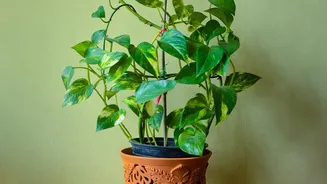
A staple in Indian homes for generations, the Money Plant (Epipremnum aureum), or Pothos, is beloved for its fast-growing, trailing vines and heart-shaped leaves. It's incredibly adaptable, thriving in a wide range of light conditions from low to bright indirect light. This versatility extends to its growing medium; it can flourish in both soil and a simple bottle of water. Known for its air-purifying qualities, it effectively removes common toxins like formaldehyde and carbon monoxide from the air. Its cascading nature makes it perfect for hanging baskets, placing on top of shelves, or letting it climb a wall, adding a lush, green feel to any space.
The Graceful Purifier: Peace Lily
For those who want a touch of floral elegance without the high maintenance, the Peace Lily (Spathiphyllum) is an excellent choice. It is renowned for its beautiful white blooms, which are actually modified leaves called spathes that can appear even in lower light conditions. The Peace Lily is one of the top-rated plants for air purification, known to remove all five major toxins tested by NASA. It has a helpful, if dramatic, feature: its leaves will droop noticeably when it needs water, taking the guesswork out of its care routine. It prefers consistently moist soil and performs well in humid environments, making it a good fit for many parts of India.
The Lush Humidifier: Areca Palm
If you want to create a tropical oasis in your living room, look no further than the Areca Palm (Dypsis lutescens). Its feathery, arching fronds add a sense of life and volume to a space. This plant is not just about looks; it is an excellent natural humidifier, releasing moisture into the air, which can be a relief in dry climates or air-conditioned rooms. It's also a powerful air purifier, adept at removing toxins like formaldehyde and xylene. While it prefers bright, indirect light to thrive, it's relatively easy to care for, making it a popular choice for bringing a bold, green statement into Indian homes.
The Prolific Parent: Spider Plant
The Spider Plant (Chlorophytum comosum) is a charming and forgiving houseplant, perfect for beginners. It's known for being one of the most effective plants at removing carbon monoxide and other impurities from the air. Its slender, variegated leaves arch gracefully, and it gets its name from the spider-like plantlets, or "pups," that dangle from the mother plant. These pups can be easily repotted to create new plants, making it a fun and rewarding species to own. It adapts well to various indoor conditions and prefers indirect light. Being non-toxic, it's also a safe choice for homes with pets and children.