

Assess Your Fitness and Experience
The first step is an honest self-assessment. A trail's difficulty in the Rockies is primarily defined by its elevation gain and terrain. Parks Canada and other resources typically use a rating system from 'easy' to 'difficult' or 'strenuous'. An 'easy' trail is often
shorter, relatively flat, and suitable for families, like the Johnston Canyon Lower Falls walk or the loop around Johnson Lake. 'Moderate' hikes involve significant climbing and uneven ground, requiring a good fitness level. 'Difficult' trails are for experienced hikers and feature long, steep climbs, considerable elevation gain, and potentially technical sections. Don't just look at the distance; a short but steep trail can be more challenging than a long, flat one. If you're new to mountain hiking, start with an easy or low-moderate trail to see how you handle the altitude and terrain.
Consider Your Time Commitment
How much time do you have? Hikes can range from a one-hour stroll to a multi-day backcountry epic. If you only have a morning, a short and rewarding hike like Tunnel Mountain in Banff provides incredible 360-degree views without consuming your whole day. For a full-day adventure, you could tackle a route like the Plain of Six Glaciers, which offers world-class scenery and takes several hours. If you're planning a multi-day trip, routes like the Rockwall Trail or Mount Assiniboine require significant planning, permits, and backcountry experience. Be realistic about your itinerary. Don't try to cram a six-hour hike into a day packed with other activities. Always factor in extra time for photos, breaks, and unexpected weather changes.
What Scenery Do You Crave?
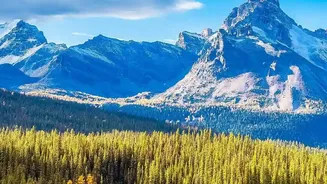
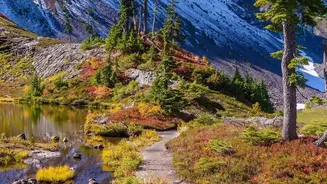
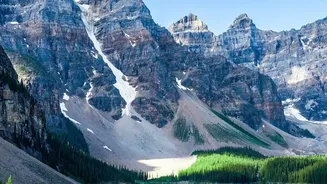
The Rockies serve up a diverse scenic menu. Are you dreaming of impossibly blue lakes, towering glaciers, or panoramic ridge walks? For iconic turquoise lakes, trails around Lake Louise, Moraine Lake, and Lake O'Hara are world-famous. If you want to get up close to glaciers, routes like the Athabasca Glacier trail in Jasper or the Plain of Six Glaciers in Banff are excellent choices. For wildflower-filled alpine meadows, visit in mid-summer (July and August). And for a truly unique spectacle, plan a trip in late September to see the larch trees turn a brilliant gold, a phenomenon that draws hikers to trails like Larch Valley near Moraine Lake. By identifying the type of landscape you most want to see, you can narrow your search to specific areas and trails known for those features.
Timing is Everything: Plan for the Season
The hiking season in the high country of the Canadian Rockies is surprisingly short. The best and most reliable time for hiking is from July through mid-September, when most alpine trails are snow-free and weather is generally favourable. Visiting in the shoulder seasons of spring (May-June) or autumn (late September-October) can mean fewer crowds, but also more unpredictable conditions. In spring, many higher elevation trails are still covered in snow and may have avalanche risks. In autumn, you'll be rewarded with golden larches and cooler temperatures, but days are shorter and snow can return to the peaks at any time. Always check the Parks Canada trail conditions report before you go, as conditions can change rapidly and vary by elevation.
Essential Safety and Preparation
Safe hiking in the Rockies requires preparation. The region is home to abundant wildlife, including grizzly bears, black bears, and elk. It is crucial to carry bear spray and know how to use it. Make noise while you hike—by talking loudly or singing—to avoid surprising a bear. Hiking in groups of four or more is recommended. Beyond wildlife, always tell someone your plan, check the weather forecast, and pack essential gear including extra layers, water, food, and a map or GPS device. Trail closures and wildlife warnings are common, so consult the official Parks Canada website for the latest alerts before heading to the trailhead. Respecting wildlife and being prepared for changing conditions are key to a safe and memorable experience.