
The Cosmic Giant Next Door
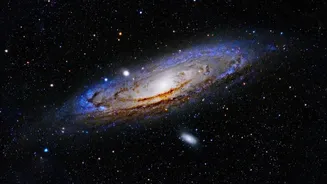
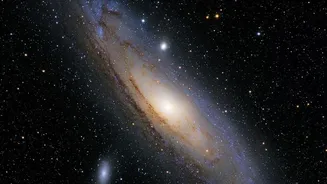
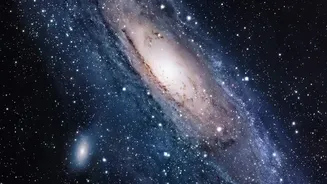
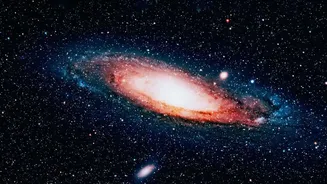
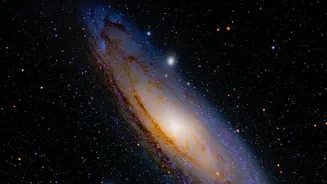
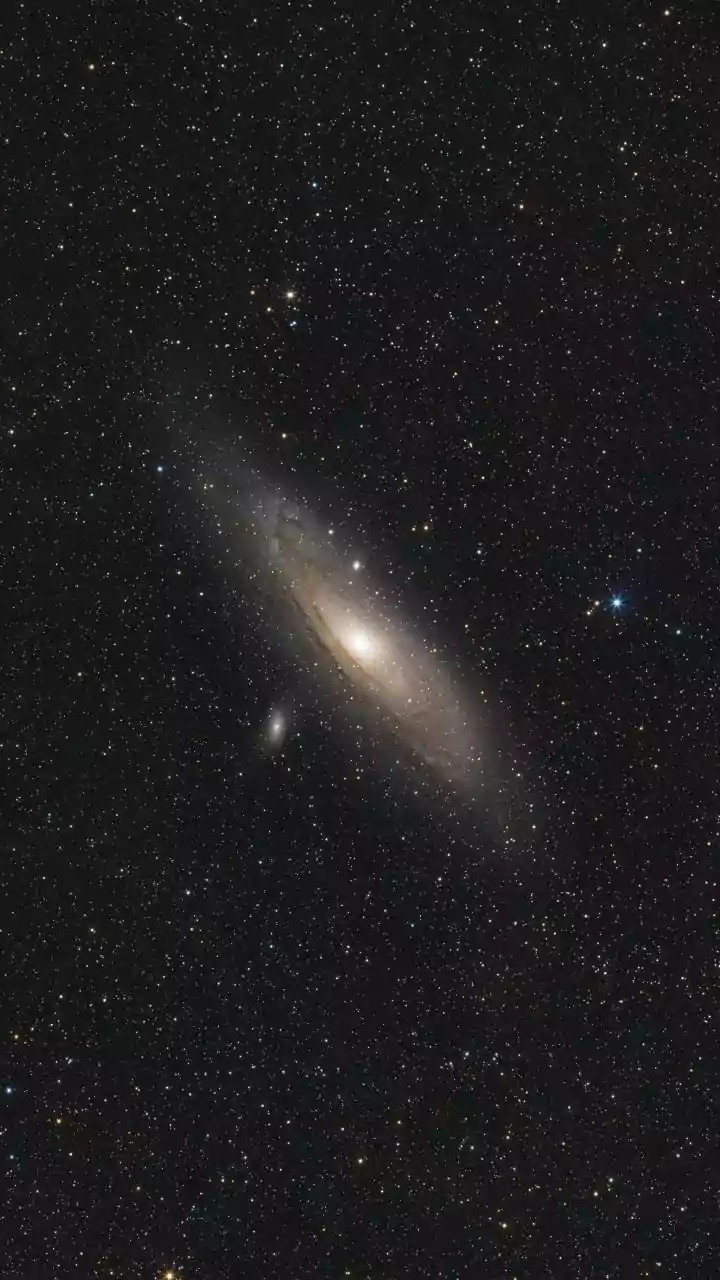
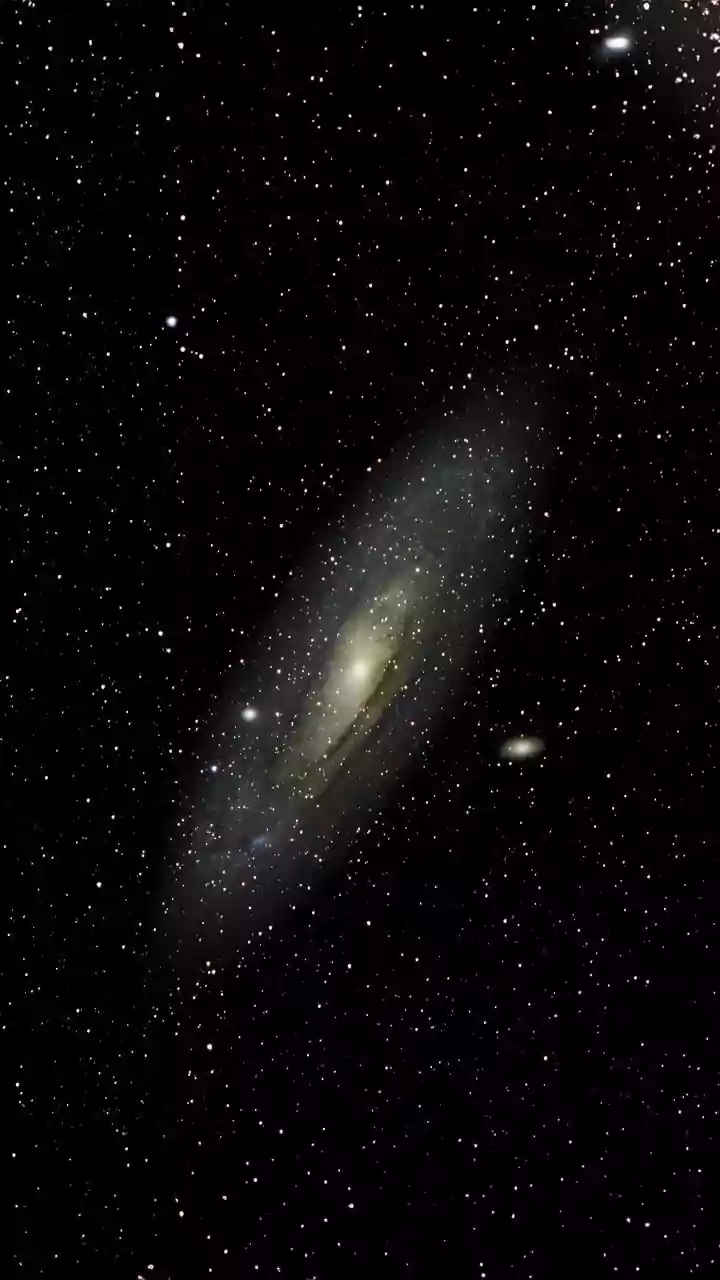
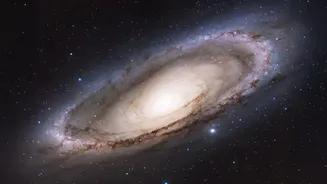
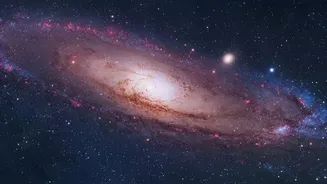
Before you step outside, it helps to know what you’re looking for. The Andromeda galaxy, also known by its catalogue name M31, is the closest major galaxy to our own Milky Way. It's a colossal spiral galaxy, even larger than our own, containing an estimated
one trillion stars. The light you see from Andromeda tonight began its journey through space 2.5 million years ago, long before modern humans walked the Earth. Seeing it is like looking back in time. To the naked eye, it isn't a dazzling swirl of arms but a faint, fuzzy patch of light, a ghostly oval against the blackness of space. Yet, the fact that we can see this distant island universe at all without a telescope is a remarkable testament to its sheer size and brightness.
Autumn's Perfect Celestial Position
So, why is autumn the prime season for this celestial quest? It's all about celestial timing and position. During autumn evenings in the Northern Hemisphere, the Andromeda galaxy rises high in the eastern sky just as darkness falls. By around midnight in October, it passes nearly directly overhead, which is the ideal viewing position. Looking straight up means you are looking through the thinnest part of Earth’s atmosphere, reducing distortion. The galaxy remains well-positioned for viewing throughout the night, drifting toward the west by dawn. This convenient evening and overnight placement makes autumn the most accessible time of year for stargazers to comfortably find and observe our galactic neighbour for hours on end.
More Than Just Earlier Sunsets
While the longer nights of autumn are a definite advantage, giving us more hours of darkness, the quality of the air itself also plays a crucial role. The often-humid air of summer gives way to the cooler, drier air of autumn. This change is a gift to stargazers. Less moisture in the atmosphere means less haze and better transparency, resulting in clearer, sharper views of the stars. The stars appear to twinkle less and shine more steadily, and faint objects like Andromeda become easier to distinguish from the background sky. This improved clarity, combined with the galaxy's high position, is what makes spotting it in autumn comparatively 'easy'.
How to Find the Faint Smudge
Finding Andromeda is a classic stargazing challenge, but it's simpler than you might think. The key is to use brighter, more familiar constellations as signposts—a technique called star-hopping. One of the easiest guides is the constellation Cassiopeia, which forms a distinctive 'W' or 'M' shape in the northeastern sky. The 'V' shape on one side of the 'W' acts like an arrow. If you follow the direction it points, it will lead you straight to the area where Andromeda is located. Another method involves the Great Square of Pegasus, a large square of stars also prominent in the autumn sky. From the corner star of the square that belongs to the constellation Andromeda (Alpheratz), you can hop along two other bright stars in Andromeda, and they will point you toward the galaxy. Be patient, let your eyes adjust to the dark for at least 15 minutes, and look for a small, elongated, misty cloud.
The Most Important Tip: Escape the Lights
The word 'easy' in the headline comes with one major condition: you must be in a dark location. While the core of Andromeda can sometimes be spotted from areas with moderate light pollution, its faint glow is easily washed out by city lights. To give yourself the best chance, you need to get away from the glow of urban areas. A rural location, a national park, or even a spot a few dozen kilometres outside of a major city can make a world of difference. The darker the sky, the brighter Andromeda will appear. On a truly dark, moonless night, it is unmistakably there—the most distant object you can see with your unaided eye.