





The Unseen World on Your Blade
We trust our knives to chop vegetables for a sabzi or slice fruit for a snack. But even when a blade looks clean, its surface can tell a different story. Over time, every knife develops microscopic scratches and grooves from daily use against a cutting
board. While invisible to the naked eye, these tiny imperfections are the perfect hiding spots for food particles and dangerous bacteria like Salmonella and E. coli. A study from the University of Georgia highlighted how easily viruses and bacteria can latch onto kitchen utensils like knives and spread from one food item to another. This means that small, unseen particles from raw chicken could end up in your fresh salad through cross-contamination, a primary cause of foodborne illness.
Where Germs Love to Hide
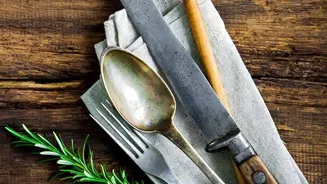
It’s not just the blade you need to worry about. The anatomy of a knife offers several nooks and crannies where germs can thrive. The bolster, which is the junction where the blade meets the handle, is a prime location for moisture and food debris to get trapped. Rivets used to secure the handle can also create tiny gaps. Even the handle material matters. Knives with wooden handles are particularly vulnerable, as wood is porous and can absorb liquids, making it a difficult surface to fully sanitize. If not cleaned and dried properly, these areas become breeding grounds for bacteria.
The Dangers of the Dishwasher
It might seem like the easiest way to get your knives clean, but putting them in the dishwasher is one of the worst things you can do for both the knife and your hygiene. The high heat of a dishwasher can damage the knife's tempered steel, making it dull faster. More importantly, the harsh detergents can be corrosive and may not effectively clean the hard-to-reach areas. The powerful water jets can also cause knives to knock against other items, creating more nicks and scratches on the blade where bacteria can hide. Wooden handles can crack and warp, creating even more spaces for germs. Hand washing is always the recommended method for cleaning knives.
The Proper Cleaning and Sanitizing Method
A truly clean knife is a safe knife. Follow this simple but effective process after every use. First, rinse the knife under warm running water immediately after you finish using it to remove any loose food particles. Then, using a soft sponge or cloth with mild dish soap and warm water, carefully wash the blade and handle. Be sure to wash with the blade facing away from you to prevent accidents. After washing, rinse it thoroughly. Sanitizing is an important extra step, especially after cutting raw meat, poultry, or fish. You can do this by pouring water heated to at least 77°C over the blade for a few seconds. Finally, and this is crucial, dry your knife immediately and completely with a clean towel to prevent rust and stop bacteria from growing in a moist environment.
Beyond Cleaning: Smart Knife Habits
Good hygiene extends beyond washing. To prevent cross-contamination, consider using separate knives and cutting boards for raw meats and produce. If you only have one knife, be sure to clean and sanitize it thoroughly when switching between food types. Proper storage is also key. Don’t just toss your knives in a drawer where they can get nicked and dulled. Storing them in a knife block, on a magnetic strip, or with individual blade guards protects the edge and keeps them clean. Regularly inspecting your knives for any damage or significant wear can also help you spot potential hygiene risks before they become a problem.