







Know The Rules: A Game of Centimetres and Kilos
The first rule of carry-on travel is that there is no universal rule. Each airline sets its own limits, and they are enforced more strictly than ever. For most domestic economy travel in India, the magic number for cabin baggage weight is 7 kg. However,
some full-service carriers are slightly more generous. Air India, for instance, allows up to 8 kg in economy cabin baggage. Vistara allows 7 kg for Economy, but 10 kg for Premium Economy and 12 kg for Business Class. IndiGo and SpiceJet stick to the 7 kg limit for economy class. Dimensions are just as critical. The standard is a total of 115 cm (Length + Width + Height), often specified as approximately 55 cm x 35 cm x 25 cm. It’s crucial to check your specific airline's policy before you pack, as what works for one carrier might not for another.
Measure Twice, Fly Once
That 55 x 35 x 25 cm dimension isn't just a suggestion; it includes every part of your bag. This means wheels, handles (both extended and retracted), and any protruding pockets. Airport staff often use a rigid metal sizer frame at check-in or the gate. If your bag doesn’t fit, it doesn’t fly—at least not in the cabin. The most common mistake travellers make is using a soft bag that bulges when fully packed, exceeding the allowed dimensions. Before you leave for the airport, use a measuring tape to check your packed bag's height, width, and depth. A hard-shell case can be a safer bet as its dimensions are fixed, preventing you from over-stuffing it beyond the acceptable size.
Weigh-In Before You Go
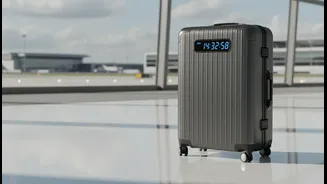
The second surprise after a bag fails the size check is when it fails the weight test. Airlines are increasingly weighing cabin bags at check-in counters and even at the boarding gate. Investing in a small, digital luggage scale is one of the smartest moves a frequent traveller can make. It allows you to get an accurate reading at home, saving you from a frantic last-minute repack at the airport. If you find your bag is overweight, you have options. You can shift heavier items to your pockets or wear your bulkiest clothes (like a jacket or heavy boots) on the plane. Some airlines also allow a small personal item like a handbag or laptop bag in addition to your main carry-on, which offers a bit more capacity. IndiGo, for instance, allows a personal item up to 3 kg. But be careful, as some carriers count this towards your total 7 kg limit.
Price The Alternatives
Committing to carry-on-only isn't just about convenience; it's often about saving money. But failing to meet the requirements can cost you far more than a pre-booked checked bag. Paying for excess baggage at the airport is the most expensive way to travel. Domestic excess baggage charges in India can range from ₹550 to ₹700 per kilogram. A 5 kg overage could cost you over ₹3,000 at the counter. In contrast, pre-booking extra baggage online is significantly cheaper, with savings of up to 50-67%. If your packed carry-on is over the limit at home, your cheapest option is to go online and pre-purchase checked baggage. The most expensive scenario is having your oversized or overweight cabin bag rejected at the boarding gate, where penalty fees are at their highest.
Master The Art of Packing
The real secret to successful carry-on travel lies in efficient packing. Start with a lightweight bag, as a heavy suitcase can eat into your allowance before you've even packed a single shirt. Favour multi-use items and create a capsule wardrobe where a few pieces of clothing can be mixed and matched to create many outfits. Rolling your clothes instead of folding them can save significant space and reduce wrinkles. Packing cubes are another excellent tool, helping you compress clothing and keep your bag organised. Be ruthless with your choices. For liquids, adhere to the 100ml rule for international travel and use travel-sized containers to save space and weight. Don't pack for 'just in case' scenarios; pack for what you know you'll need.