




Why Saturn Captivates Us
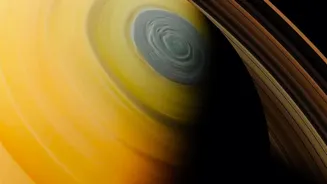
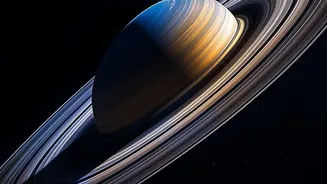
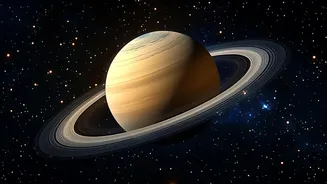
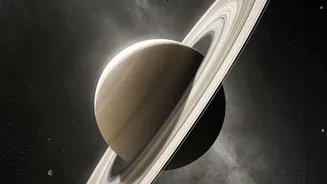
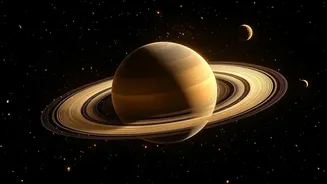
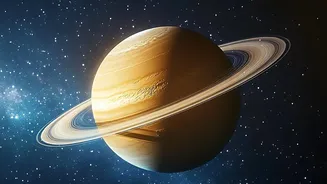
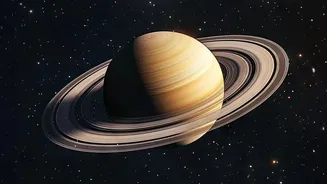
Among all the objects in the night sky, Saturn holds a special place. While many planets appear as bright dots, Saturn is the one that often elicites a gasp when seen through a telescope for the first time. The reason is simple: its magnificent rings.
Seeing them with your own eyes, floating in the dark, is a profound experience that transforms a distant point of light into a real, three-dimensional world. To the naked eye, Saturn looks like a bright, steady, golden-hued star, but even a modest telescope reveals its most famous feature. That moment of discovery is what makes it a favorite target for both new and seasoned stargazers.
The Golden Rule: Safety First, Always
The headline mentions not looking at the sun, and for good reason. This is the number one rule in all astronomy: never point any optical instrument—binoculars or a telescope—at the sun without a proper, certified solar filter. Doing so, even for an instant, can cause immediate and permanent eye damage, including blindness. The intense, focused solar rays can burn through the filter in an eyepiece or, worse, your retina. While you'll be observing Saturn at night, this rule is crucial if you set up your equipment before sunset or pack up after sunrise. An accidental glance at the sun through an unfiltered telescope is a life-altering mistake. Always keep your telescope capped when not in use during daylight hours.
Your Viewing Toolkit: From Eyes to Telescopes
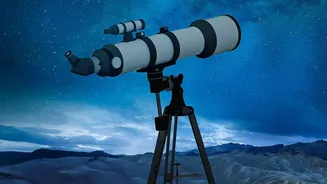
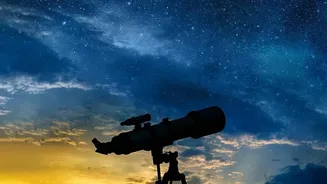
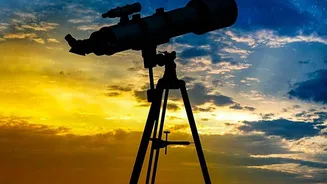
You don't need a professional observatory to see Saturn. Your viewing experience will scale with your equipment. With the naked eye, Saturn is a bright, non-twinkling point of light. A good pair of binoculars might show it as a slightly elongated dot, hinting at the rings. To truly see the rings as separate from the planet, you need a telescope. A small beginner telescope with at least 50-60mm aperture and a magnification of 25x to 50x is enough to reveal the iconic ring shape. It might look small and pale yellow, but it will be unmistakable. Larger scopes will reveal more detail, like the Cassini Division—a dark gap in the rings.
Finding Your Target: When and Where to Look
Saturn, like other planets, travels along a path in the sky called the ecliptic, the same general path the sun and moon follow. The best time to view it is during the weeks around its 'opposition', an annual event when Earth is directly between Saturn and the sun. During opposition, Saturn is at its closest and brightest, visible all night long. To find its current location, use a stargazing app on your phone or consult an online star chart. Generally, you'll want to observe when the planet is high in the sky, away from the turbulent air near the horizon. Find a dark location away from city lights for the best view.
A Step-By-Step Guide to Your First Observation
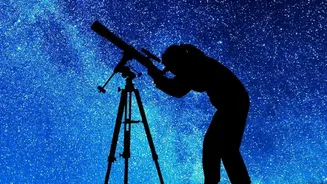
Ready to get started? First, check a weather app for a clear, cloudless night. Atmospheric stability, or 'seeing', is more important than perfect transparency. Head outside to your chosen spot and let your telescope cool down to the ambient air temperature for about 30 minutes to prevent a blurry image. While you wait, let your eyes adjust to the darkness; this can take 20-30 minutes. Use a stargazing app with a red-light mode to locate Saturn without ruining your night vision. Start with your telescope's lowest power eyepiece to get the widest field of view, making it easier to find the planet. Once you've centered Saturn, you can switch to a higher magnification eyepiece to get a closer look. Be patient, as the image may shimmer until the air settles.
Managing Expectations and Seeing More
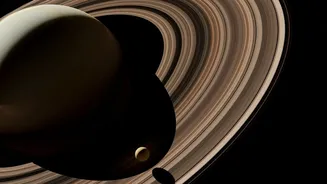
It's important to remember that Saturn will not look like a photo from a NASA spacecraft. Through a beginner telescope, it will be a small but perfect jewel. The thrill comes from seeing it live, with your own eyes. On a good night, you might not only see the rings but also the shadow of the planet on the rings, which gives it a 3D appearance. You may also spot Saturn's largest moon, Titan, which looks like a tiny nearby star. Many stargazers say seeing Saturn for themselves is the moment astronomy becomes 'real'. It’s a sight that inspires wonder and often sparks a lifelong passion for exploring the cosmos.