






Inspect Your Tyres Thoroughly
Your tyres are the only point of contact between your car and the road, making them critical for monsoon safety. Wet roads dramatically increase braking distances and the risk of skidding. Before the rains begin, check that your tyre tread is well above
the legal minimum of 1.6mm; experts recommend at least 3mm for effective water dispersal and grip. Worn-out tyres are a major cause of accidents on slippery roads. Also, check the tyre pressure weekly, as it can fluctuate with temperature changes. Don't forget to inspect your spare tyre — ensure it's properly inflated and in good condition.
Test Your Brakes and Wipers
Visibility and stopping power are non-negotiable in a downpour. Wiper blades often degrade in India's summer heat, leading to streaks and squeaks that impair vision. If your wipers leave smears or skip patches, replace them immediately. Top up your windshield washer fluid with a proper cleaning solution, not just water, to cut through oily road grime. Brakes also need to work harder on wet surfaces. If you notice any grinding sounds or if the pedal feels spongy, get them inspected. Driving through water can deposit grime on brake pads, reducing their effectiveness when you need them most.
Verify All Lights Are Working
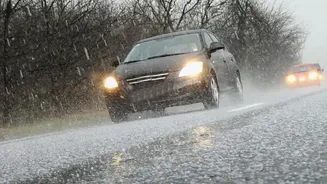
During heavy rain and overcast conditions, being visible to others is as important as seeing the road ahead. Walk around your vehicle and check every single light: headlights (both low and high beam), tail lights, brake lights, and indicators. Using low-beam headlights during the day in heavy rain makes you more visible to other drivers. Avoid using high beams, as they can reflect off the rain and dazzle oncoming traffic, reducing their visibility. If your headlight lenses are foggy or yellowed, use a restoration kit to improve their brightness.
Check the Battery and Electricals
Water and electronics are a bad combination. The increased use of wipers, lights, and the defogger during monsoon puts extra strain on your car's battery. Before the season starts, get your battery load-tested if it's over three years old. Clean any corrosion from the terminals and ensure all wiring in the engine bay is properly insulated to prevent short circuits from moisture. A well-maintained battery is crucial to avoid getting stranded in heavy rain or traffic.
Prepare an Emergency Kit
Even with perfect preparation, things can go wrong. Being stranded in a downpour is stressful, but having an emergency kit can make a huge difference. Your kit should include a basic toolkit, a first-aid kit, a tow rope, and jumper cables. Also pack a powerful flashlight with extra batteries, an umbrella, a towel, and some non-perishable food like energy bars and water. These items can be invaluable if you're stuck waiting for roadside assistance.
Know How to Navigate Waterlogged Roads
One of the biggest monsoon risks in India is flooded roads. If you're unsure about the depth of standing water, do not attempt to drive through it; it's always best to find an alternate route. Just six inches of water can cause a loss of control, and a foot of water can make many cars float. If you must proceed, drive slowly and steadily in a low gear, keeping the engine revs high to prevent water from entering the exhaust pipe. Switch off your car's air conditioning before entering the water. If your car stalls in water, do not try to restart the engine, as this can cause catastrophic damage known as a hydro lock. The safest action is to abandon the vehicle and get to higher ground.