



Choose Your Zone Wisely
The first step is to designate a specific area in your home as the official drying zone. Most people make the mistake of hanging clothes wherever there is space, which slows drying and spreads moisture. Instead, choose one room or a large, protected balcony.
The ideal spot has good ventilation to allow moisture to escape. If you choose a room, keep a window slightly open or an exhaust fan running to improve airflow. A spare bedroom or even a corner of your living room can work. If using a room, it's best to keep the door closed to contain the humidity and let a fan or dehumidifier do its work more effectively. The goal is to centralise the dampness, making it easier to manage and preventing your entire home from feeling humid.
Gather Your Drying Arsenal
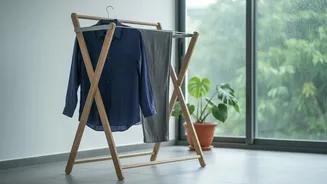
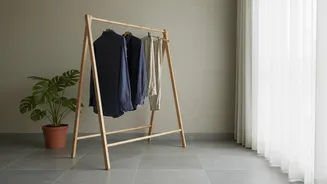
Your drying zone is only as good as its tools. A sturdy, foldable metal drying rack is non-negotiable; wooden ones can warp from the constant moisture. Invest in a multi-tiered stand to hang clothes without them overlapping, which is crucial for air circulation. Hangers are your best friend for shirts, kurtas, and dresses, as they expose more surface area to the air and help prevent wrinkles. A pedestal or table fan is a powerful ally; position it to blow air directly across the clothes to significantly speed up evaporation. For those in very humid areas, a dehumidifier is a game-changing investment. It actively pulls moisture from the air, which not only dries clothes faster but also prevents the growth of mould and mildew. Some models even have a 'laundry mode' designed for this exact purpose.
Master the Art of Drying
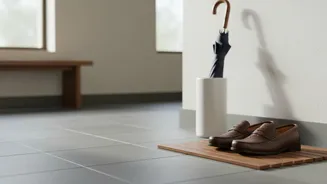
Technique matters. Before hanging, give your clothes an extra spin cycle in the washing machine to remove as much water as possible. Then, give each item a good, strong shake to open up the fibres. When placing items on the rack, space them out generously, leaving a gap of at least a couple of inches between each garment. If clothes touch, moisture gets trapped and the dreaded musty smell begins. For wet shoes, never place them near direct heat like a heater or in the sun, as this can damage the material and glue. Instead, remove the insoles and stuff the shoes with crumpled newspaper, which is excellent at absorbing moisture. Replace the newspaper every few hours for very wet shoes. For dripping umbrellas, open them and place them in a bucket or a corner of your bathroom to dry completely before storing.
Banish the Musty Odour
The biggest complaint during monsoon is the stale, musty smell that clings to clothes. This is caused by bacteria and mould thriving in the damp fabric. The best defence is to dry clothes as quickly as possible. Don't let wet laundry sit in the machine or a basket. For an extra anti-odour boost, add half a cup of white vinegar or baking soda to your wash cycle. Vinegar acts as a natural antibacterial agent and helps dissolve detergent residue, while baking soda neutralises odours. Neither will leave a smell on your clean clothes. Once clothes are dry, ensure your wardrobe is also protected from dampness. Place moisture absorbers like silica gel pouches or even a small bowl of chalk pieces inside to keep the environment dry and your clothes smelling fresh.
Safety First, Always
While creating your drying zone, safety should be a priority. Never drape wet clothes over electronic devices, lamps, or heaters, as this is a significant fire hazard. When using a fan or dehumidifier, ensure the wiring is safe and not overloaded. If you use a room heater to aid drying, maintain a safe distance from the clothes and never leave it unattended. Constant indoor drying raises the humidity level in your home, which can lead to mould growth on walls and furniture if not managed properly. Ensure good ventilation by opening windows when the rain stops or using exhaust fans. A well-managed drying zone should solve the problem of wet clothes, not create a new problem of household mould.